One of our Sangha members sent me this piece the other day and I thought it's a good one to share....................... 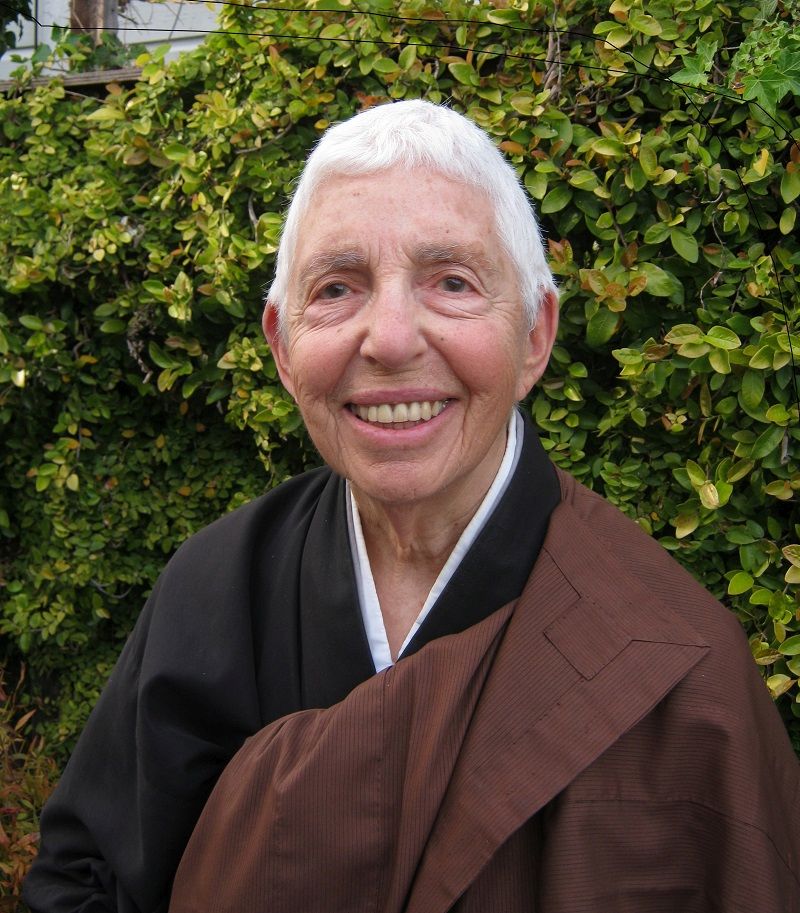 In Zen practice,” writes the Zen teacher Sobun Katherine Thanas, “we give attention to the details of our lives.” By paying close, sustained attention to the most ordinary details in our daily round, we train ourselves to abide in the present moment. Rather than sacrifice our present experience to a past that is already gone, a future that has not yet come, or abstract thoughts that may or may not reflect reality, we attend to the details of the matter at hand: the level of green tea in our measuring spoon, the temperature and volume of water to be added, the specific brewing time for that particular tea. By so doing, we fully engage in relative, historical time, even as we touch the timeless, absolute dimension of our experience. No one understands this paradox more fully or articulates it with greater skill than the Midwestern poet Ted Kooser (b. 1939), who won the Pulitzer Prize for Poetry for his book Delights & Shadows in 2005 and served as US Poet Laureate from 2004-2006. Kooser is not a Zen practitioner, so far as I know, (he's a Unitarian Universalist) but by attending to the details of quotidian life, no matter how mundane, he returns the reader, time and again, to the immediacy of the present moment. And in their acute awareness of impermanence and interdependence, as revealed by such common or discarded objects as curtain rods, enameled pans, and Depression glass, his poems often embody the essence, if not the customary forms and rituals, of Zen practice. A vivid example may be seen in the title poem of Kooser’s collection Splitting an Order (2014). In this gentle poem, set in a diner, the narrator observes an old man cutting his cold sandwich into two equal parts. It pleases the narrator to watch him keeping his shaky hands steady by placing his forearms firm on the edge of the table and using both hands, the left to hold the sandwich in place, and the right to cut it surely, corner to corner, observing his progress through glasses that moments before he wiped with his napkin, and then to see him lift half onto the extra plate that he asked the server to bring, and then to wait, offering the plate to his wife while she slowly unrolls her napkin and places her spoon, her knife, and her fork in their proper places, then smooths the starched white napkin over her knees and meets his eyes and holds out both old hands to him. A more ordinary situation it would be difficult to imagine: an elderly married couple having lunch in a diner. Yet Kooser endows this everyday situation with the glow of heightened attention, both on the part of the husband and wife and on that of the observant narrator. The couple are splitting a plain roast-beef sandwich, perhaps to economize or because neither needs to eat a whole one. To accomplish this division, the husband must steady his shaky hands, a challenge he readily overcomes. By dividing the sandwich “surely” and diagonally, he ensures that the resulting portions will be exactly equal. Meanwhile, his wife carefully unrolls the napkin enclosing her knife, fork, and spoon. These, too, become objects of meticulous attention. Even as the husband and wife are taking their time and paying attention to the details of their humble repast, the narrator is doing the same. His unswerving observation, recorded in a single complex but graceful sentence, not only mirrors that of his subjects toward the actions they are performing. It also establishes a tone of caring, even for common, unexceptional things, and implicitly bestows moral and aesthetic value on a scene that might otherwise have been dismissed as banal. The true significance of the scene becomes apparent in the poem’s closing lines, where the husband’s offering his wife her half of their sandwich completes his act of fairness, solicitude, and kindness. She in turn exhibits an attitude of openness and gratitude. Shizen ichimi, an old Zen saying reminds us: “Poetry and Zen are one.” Although the former depends on fresh language, the latter on silent contemplation, both rely on wholehearted attention to concrete, particular detail. By stopping and looking deeply, both reveal the hidden dimension of human experience, the currents of interdependence and impermanence that underlie the most commonplace of human interactions. And, though they do so in very different ways, both, in the words of the poet Patrick Kavanagh, “snatch out of time the passionate transitory.” _____________ Sobun Katherine Thanas, The Truth of This Life: Essays on Learning to Love This World |
Showing posts with label Zen. Show all posts
Showing posts with label Zen. Show all posts
Wednesday, 20 October 2021
A Poem


Tuesday, 13 August 2019
Zen Group Stop York Minster Meetings After Christian Objections
Some of you may recall a story we ran in May 2016, "Christian Group Protests Meditation in York Minster" where Andrea Williams, chief executive of the pressure group Christian Concern, said: "Buddhism contrasts sharply with Christian teaching about God. The two are incompatible. To try to mix them is deceptive and dishonours Jesus Christ."
"It is remarkable that this is happening at one of the country's best known cathedrals. The Archbishop of York must take swift action. This type of confusion undermines the Church of England's current initiative to encourage Christian prayer."
"It is sobering that last year a Canon of this same cathedral blessed the city's 'Pride' march. The Church of England must take decisive action to deal with this radical agenda."
Well, guess what, the Zen meditation group is to cease meeting in the grounds of York Minster following controversy over “bilingual religion”.
The group has been told that its weekly 90-minute silent meditation sessions in the Old Palace must end in the autumn.
Senior clergy at York Minster had quietly introduced Zen Buddhist zazen meditation sessions. They became a regular fixture, listed among the Minster’s main “spiritual” activities, alongside its Sunday school and youth group, and were enthusiastically supported by the then Dean, the Very Rev Vivienne Faull.
The group was not a religious order and had never met within the cathedral, she said. “The chapter of York would not give permission for any such religious order to be set up at York Minster.”
 But the new Dean of York Minster, the Right Rev Dr Jonathan Frost, who was installed in February, is believed to have decided to end the Minster’s association with the Zen group.
The sessions were initiated by Christopher Collingwood, the canon chancellor of the minster, who practises and teaches Zen meditation and has described himself as “religiously bilingual”. On his Twitter feed, Collingwood says he is “leader of York Zen Group (part of Wild Goose Zen Sangha in the White Plum Asanga)”.
"It is remarkable that this is happening at one of the country's best known cathedrals. The Archbishop of York must take swift action. This type of confusion undermines the Church of England's current initiative to encourage Christian prayer."
"It is sobering that last year a Canon of this same cathedral blessed the city's 'Pride' march. The Church of England must take decisive action to deal with this radical agenda."
Well, guess what, the Zen meditation group is to cease meeting in the grounds of York Minster following controversy over “bilingual religion”.
The group has been told that its weekly 90-minute silent meditation sessions in the Old Palace must end in the autumn.
Senior clergy at York Minster had quietly introduced Zen Buddhist zazen meditation sessions. They became a regular fixture, listed among the Minster’s main “spiritual” activities, alongside its Sunday school and youth group, and were enthusiastically supported by the then Dean, the Very Rev Vivienne Faull.
The group was not a religious order and had never met within the cathedral, she said. “The chapter of York would not give permission for any such religious order to be set up at York Minster.”
But the new Dean of York Minster, the Right Rev Dr Jonathan Frost, who was installed in February, is believed to have decided to end the Minster’s association with the Zen group.The sessions were initiated by Christopher Collingwood, the canon chancellor of the minster, who practises and teaches Zen meditation and has described himself as “religiously bilingual”. On his Twitter feed, Collingwood says he is “leader of York Zen Group (part of Wild Goose Zen Sangha in the White Plum Asanga)”.
Sunday, 29 July 2018
The Wave and the Ocean
I was sent this video by one of our Sangha members, referencing the talk we heard at the Newport Zen group last Thursday which used the Buddha's simile of the Wave and the Ocean.
Friday, 20 July 2018
What Are We Waiting For?
The talk which I took along for last night's meeting of the Newport Soto Zen group was by Catherine McGee and entitled "What Are We Waiting For".
It prompted this thoughtful response from Sylvia.......................
I went to sangha last night and someone brought a taped talk with this title. It struck me, that though the talk was about practice and enlightenment, it applied to everything. Of course, practice and enlightenment are potentially in everything too.
We plan our lives ahead, as if we are always waiting for the next thing. That blocks us in the moment.
THIS IS THE MOST COMMON CAUSE OF UNHAPPINESS.
That joy of being alive in any given moment is the point of mindfulness, it is why we study and practice our meditations, practice watching our breath. To be mindful is to be actually living our lives, not vicariously glancing at others for comparisons, or over our shoulder at the past, or gazing into the future.
Future Gazing can be the most insidious of all since it keeps us moving forward, what will my next best piece of writing be and how will it be received, when I get to this point then I can do that, when I have worked out then I will feel better.
NONONONONONONONONONONONONONONO!!!!!!!!!!
That is all completely topsy-turvy and utterly illogical for two reasons.
1. IF you always make your enjoyment of your life conditional you will probably never reach true happiness and only experience fleeting moments because there will always be the next thing to achieve or complete or accomplish.
2. YOU are missing the chance of being happy right now- yes right now, regardless of the problems in your life or what is making you unhappy, you can change that right now.
External issues cannot make you unhappy, or happy even, unless you give them permission to do so.
Just occasionally they can mount up to an avalanche and take you unawares, making your resilience buckle under the strain. But even then happiness in each and every moment is a choice. We can be stressed out by the enormity of it all but we can also choose to stop and take a mindful breath and enjoy that moment of life just for its own sake.
When the monks in Tibet were being tortured by the Chinese authorities to rescind their practice, they did not. They were able to surpass the physical agony being inflicted upon them and still feel more concern and compassion for the torturers. Losing that capacity was their greatest fear. That is something I have taken as a deep lesson in life.
When my back went a couple of years ago, arthritis and two collapsed discs, I was in an enormous amount of pain,plus my compensations had pushed another disc out of place further up. I decide to consider this example deeply and meditated on it in depth. on most people’s scales that would be considered a major ‘ouch’.
I found I too could transcend the pain if I just accepted it. Instead of struggling against it and rejecting it, I found there was a rhythm to it, the pulses of the neurons, so I watched those instead, and their rhythms became soothing. I used my breathing a lot and found the releases of endorphines very pleasant indeed. I could suddenly understand the so-called religious people historically who used to keep their bodies semi damaged through hair shirts and self-flagellation. It feels quite transcendent.
So I viewed my back as a source of both pleasure and pain. I have since had some medical pain relief treatment which was supposed to last 3–6 months. Eighteen months later on and I am almost pain-free. I have done a deal with my back. I won't put it under any more strain if she doesn’t hurt me more than necessary to remind me to take better care of her. It is working well for both of us.
But life I have just got on with, including continuing my passion for gardening and dancing to my husband's band, and loved every minute. If I’d put a condition on being able to do those things when my back stopped hurting, I would have missed out on many extra joyful moments in those months. I have decided to be happy in each moment as far as I was able to, which is pretty much most of the time.
AS you will know if you have read any other articles of mine, I am also post PTSD and can still get triggered. This is a very unpleasant occurrence, my body locks down into a sort of rigid defensive position and I become somewhat paranoid and distrustful of life, and especially whatever or whoever it was that triggered me.
I have learned that focussing on being happy in the next moment gets me out of it more and more quickly. I have now read that I am doing the right thing since I need to retrain my amygdala to be less sensitive and decommission all the stress related systems further e.g. cortisol and adrenaline, whilst simultaneously increasing the happy ones like dopamine and serotonin.
Guess what, being mindfully happy in the present moment is the best way forward. Mindfulness actually heals nervous systems broken from abuse and trauma.
Furthermore, if you can then reframe those experiences into a positive, it challenges the cognitive retreat into paranoia and distrustfulness and what is basically a whole chronic fear package. It transforms it into a positive opportunity or even better neutralises it into a ‘just what happened, not real any more’, i.e. it was and now it no longer is.
I also take the Tibetan monks example and work on having compassion for those who trigger me, firstly to dissolve the fear-based reactions I get when I encounter the triggers further, and secondly because I genuinely understand that they are also on their own journey and will make mistakes and have to shed dark underbellies full of their own trauma and other negative emotional historical experiences before they can be free of the energy in them which triggered me. Having taken that journey and of course being still on it, I understand how hard it is sometimes to see what your next area of effort should be directed towards. Until it hits you in the face of course, then you are or should not be in any doubt this is next. I will come to them also.
SO yes I need to lose some weight, improve my fitness levels, get more organised, clean my potting shed up and tidy all the pots that are needing to be put away until next years seedling rush. I have a huge list of things I really need to get on with for my bees, for my family etc, etc etc., even for myself. But in this moment, I am not waiting for anything — I am thoroughly happy just doing one of them, which is to write up this thought train to share, and then it is …. oooh I have so much to chose from for next, but I shall let that develop out of the now ending when I hit publish. Because by then it will be a new ‘now’ to be exquisitely happy in for that opportunity to get something done. And in between, a few mindful breaths to remind me of the joy of clean air and life itself.
I am so glad I made the effort to go to that Sangha last night.
It prompted this thoughtful response from Sylvia.......................
I went to sangha last night and someone brought a taped talk with this title. It struck me, that though the talk was about practice and enlightenment, it applied to everything. Of course, practice and enlightenment are potentially in everything too.
We plan our lives ahead, as if we are always waiting for the next thing. That blocks us in the moment.
THIS IS THE MOST COMMON CAUSE OF UNHAPPINESS.
That joy of being alive in any given moment is the point of mindfulness, it is why we study and practice our meditations, practice watching our breath. To be mindful is to be actually living our lives, not vicariously glancing at others for comparisons, or over our shoulder at the past, or gazing into the future.
Future Gazing can be the most insidious of all since it keeps us moving forward, what will my next best piece of writing be and how will it be received, when I get to this point then I can do that, when I have worked out then I will feel better.
NONONONONONONONONONONONONONONO!!!!!!!!!!
That is all completely topsy-turvy and utterly illogical for two reasons.
1. IF you always make your enjoyment of your life conditional you will probably never reach true happiness and only experience fleeting moments because there will always be the next thing to achieve or complete or accomplish.
2. YOU are missing the chance of being happy right now- yes right now, regardless of the problems in your life or what is making you unhappy, you can change that right now.
External issues cannot make you unhappy, or happy even, unless you give them permission to do so.
Just occasionally they can mount up to an avalanche and take you unawares, making your resilience buckle under the strain. But even then happiness in each and every moment is a choice. We can be stressed out by the enormity of it all but we can also choose to stop and take a mindful breath and enjoy that moment of life just for its own sake.
When the monks in Tibet were being tortured by the Chinese authorities to rescind their practice, they did not. They were able to surpass the physical agony being inflicted upon them and still feel more concern and compassion for the torturers. Losing that capacity was their greatest fear. That is something I have taken as a deep lesson in life.
When my back went a couple of years ago, arthritis and two collapsed discs, I was in an enormous amount of pain,plus my compensations had pushed another disc out of place further up. I decide to consider this example deeply and meditated on it in depth. on most people’s scales that would be considered a major ‘ouch’.
I found I too could transcend the pain if I just accepted it. Instead of struggling against it and rejecting it, I found there was a rhythm to it, the pulses of the neurons, so I watched those instead, and their rhythms became soothing. I used my breathing a lot and found the releases of endorphines very pleasant indeed. I could suddenly understand the so-called religious people historically who used to keep their bodies semi damaged through hair shirts and self-flagellation. It feels quite transcendent.
So I viewed my back as a source of both pleasure and pain. I have since had some medical pain relief treatment which was supposed to last 3–6 months. Eighteen months later on and I am almost pain-free. I have done a deal with my back. I won't put it under any more strain if she doesn’t hurt me more than necessary to remind me to take better care of her. It is working well for both of us.
But life I have just got on with, including continuing my passion for gardening and dancing to my husband's band, and loved every minute. If I’d put a condition on being able to do those things when my back stopped hurting, I would have missed out on many extra joyful moments in those months. I have decided to be happy in each moment as far as I was able to, which is pretty much most of the time.
AS you will know if you have read any other articles of mine, I am also post PTSD and can still get triggered. This is a very unpleasant occurrence, my body locks down into a sort of rigid defensive position and I become somewhat paranoid and distrustful of life, and especially whatever or whoever it was that triggered me.
I have learned that focussing on being happy in the next moment gets me out of it more and more quickly. I have now read that I am doing the right thing since I need to retrain my amygdala to be less sensitive and decommission all the stress related systems further e.g. cortisol and adrenaline, whilst simultaneously increasing the happy ones like dopamine and serotonin.
Guess what, being mindfully happy in the present moment is the best way forward. Mindfulness actually heals nervous systems broken from abuse and trauma.
Furthermore, if you can then reframe those experiences into a positive, it challenges the cognitive retreat into paranoia and distrustfulness and what is basically a whole chronic fear package. It transforms it into a positive opportunity or even better neutralises it into a ‘just what happened, not real any more’, i.e. it was and now it no longer is.
I also take the Tibetan monks example and work on having compassion for those who trigger me, firstly to dissolve the fear-based reactions I get when I encounter the triggers further, and secondly because I genuinely understand that they are also on their own journey and will make mistakes and have to shed dark underbellies full of their own trauma and other negative emotional historical experiences before they can be free of the energy in them which triggered me. Having taken that journey and of course being still on it, I understand how hard it is sometimes to see what your next area of effort should be directed towards. Until it hits you in the face of course, then you are or should not be in any doubt this is next. I will come to them also.
SO yes I need to lose some weight, improve my fitness levels, get more organised, clean my potting shed up and tidy all the pots that are needing to be put away until next years seedling rush. I have a huge list of things I really need to get on with for my bees, for my family etc, etc etc., even for myself. But in this moment, I am not waiting for anything — I am thoroughly happy just doing one of them, which is to write up this thought train to share, and then it is …. oooh I have so much to chose from for next, but I shall let that develop out of the now ending when I hit publish. Because by then it will be a new ‘now’ to be exquisitely happy in for that opportunity to get something done. And in between, a few mindful breaths to remind me of the joy of clean air and life itself.
I am so glad I made the effort to go to that Sangha last night.
Tuesday, 1 May 2018
Mirror of Zen - A Day in the Moment of a Modern Zen Monk
I have just been sent this fascinating video by one of our Sangha members.
Zen's ancient teachings seem a mystery to many. But actually, Zen is very simple: Zen means attaining my true self -- "What am I?" In this revolutionary film by acclaimed filmmaker Christine Schmitthenner, we see a Western Zen monk in his daily activities in the world: chanting, meditating, preparing breakfast, riding public transport, meeting with friends, even shaving his head -- from moment to moment, not attached to conceptual thinking, everything is Zen, which just means everything is "moment." The subject of this unusual film, Hyon Gak Sunim, allowed filmmakers to follow his daily living and teaching activities for a week as he met with students and organized his daily activities.
Zen's ancient teachings seem a mystery to many. But actually, Zen is very simple: Zen means attaining my true self -- "What am I?" In this revolutionary film by acclaimed filmmaker Christine Schmitthenner, we see a Western Zen monk in his daily activities in the world: chanting, meditating, preparing breakfast, riding public transport, meeting with friends, even shaving his head -- from moment to moment, not attached to conceptual thinking, everything is Zen, which just means everything is "moment." The subject of this unusual film, Hyon Gak Sunim, allowed filmmakers to follow his daily living and teaching activities for a week as he met with students and organized his daily activities.
Wednesday, 29 November 2017
A Good Day Was Had by All
The Newport Soto Zen Group is affiliated to Reading Buddhist Priory which in turn is a subsidiary of Throssel Hole Buddhist Abbey in Northumberland.
Last Friday the group had a daylong meditation retreat and were joined for the day by the Prior of Reading, the Reverend Gareth Milliken, a certified Buddhist priest and teacher in the Order of Buddhist Contemplatives and a monastic disciple of Rev. Master Daishin Morgan, the Abbot of Throssel Hole.

By all accounts a good day was had by all!
Monday, 23 January 2017
Zen on Freshwater Bay
Spotted this shared photo a friend posted from "Totland and Freshwater Today". The scene is Freshwater Bay in the West Wight and is very Zen....................

Creating delicately balanced piles of rocks is a wide spread Buddhist practice. Its origins are unclear but it has been a long term tradition within Korean Buddhism and Japanese Zen.
Some scholars have speculated that the piles are lay peoples emulations of stupas but others point out that stacking the stones is incidental, and it is the coordination, balance and concentration needed to control the mind and body that is the intended outcome.

Some scholars have speculated that the piles are lay peoples emulations of stupas but others point out that stacking the stones is incidental, and it is the coordination, balance and concentration needed to control the mind and body that is the intended outcome.
Friday, 11 November 2016
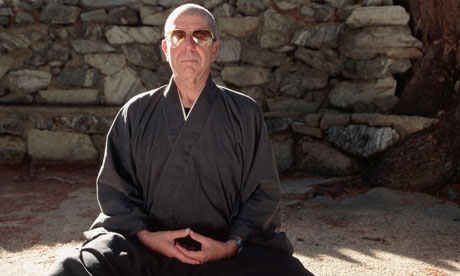
Leonard Cohen 1934 - 2016

"Well Marianne, it's come to this time when we are really so old and our bodies are falling apart and I think I will follow you very soon. Know that I am so close behind you that if you stretch out your hand, I think you can reach mine.
And you know that I've always loved you for your beauty and for your wisdom, but I don't need to say anything more about that because you know all about that. But now, I just want to wish you a very good journey.
Goodbye old friend. Endless love, see you down the road."
Leonard Cohen died early today..................................
Wednesday, 10 August 2016
Tassajara Zen Centre Threatened by Wildfires Yet Again
You may recall that back in July 2013 we reported that a fierce fire was burning in the vicinity of the Tassajara Zen Mountain Centre, a Buddhist monastery-retreat which is part of the San Francisco Zen Centre.
Now the same thing is happening again with California’s most destructive wildfire this year already claiming Anam Thubten’s Sweetwater Sanctuary. On Friday, an inspection revealed that many of the buildings were burned to the ground following the evacuation of residents, with the exception of a few structures, including the meditation yurt.

The Tassajara Zen Mountain Centre is again threatened. According to the LA Times, the Soberanes fire in Big Sur was started by an unattended illegal campfire. The fire has caused one death and burned 67-square miles of Monterey County.
Tassajara is one of three practice communities that comprise the San Francisco Zen Centre (SFZC). The SFZC posted an update on their Facebook page, saying evacuations are underway at Tassajara as a precautionary move against the erratic pattern of the fire. An evacuation notice was issued for Tassajara on Sunday morning. Fire officials say the wildfire may not be contained for another month.
California has been experiencing a severe drought since 2011.
Now the same thing is happening again with California’s most destructive wildfire this year already claiming Anam Thubten’s Sweetwater Sanctuary. On Friday, an inspection revealed that many of the buildings were burned to the ground following the evacuation of residents, with the exception of a few structures, including the meditation yurt.
The Tassajara Zen Mountain Centre is again threatened. According to the LA Times, the Soberanes fire in Big Sur was started by an unattended illegal campfire. The fire has caused one death and burned 67-square miles of Monterey County.
Tassajara is one of three practice communities that comprise the San Francisco Zen Centre (SFZC). The SFZC posted an update on their Facebook page, saying evacuations are underway at Tassajara as a precautionary move against the erratic pattern of the fire. An evacuation notice was issued for Tassajara on Sunday morning. Fire officials say the wildfire may not be contained for another month.
California has been experiencing a severe drought since 2011.
Monday, 8 August 2016
Leonard Cohen's Goodbye to Marianne
Leonard Cohen wrote this letter to Marianne Ihlen, his muse, his lover and the subject of his song So Long Marianne and the inspiration behind Bird on the Wire, on hearing of her impending death.
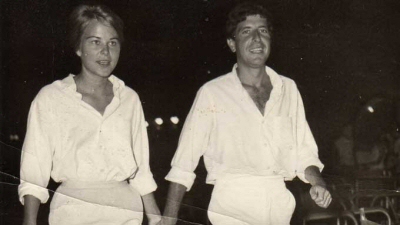
"Well Marianne, it's come to this time when we are really so old and our bodies are falling apart and I think I will follow you very soon. Know that I am so close behind you that if you stretch out your hand, I think you can reach mine.
And you know that I've always loved you for your beauty and for your wisdom, but I don't need to say anything more about that because you know all about that. But now, I just want to wish you a very good journey.
Goodbye old friend. Endless love, see you down the road."

She died in Norway on the 29th of July at the age of 81 of leukaemia.
Leonard Cohen was ordained a Zen Buddhist monk in 1996.
"Well Marianne, it's come to this time when we are really so old and our bodies are falling apart and I think I will follow you very soon. Know that I am so close behind you that if you stretch out your hand, I think you can reach mine.
And you know that I've always loved you for your beauty and for your wisdom, but I don't need to say anything more about that because you know all about that. But now, I just want to wish you a very good journey.
Goodbye old friend. Endless love, see you down the road."
She died in Norway on the 29th of July at the age of 81 of leukaemia.
Leonard Cohen was ordained a Zen Buddhist monk in 1996.
Wednesday, 27 July 2016
Another Zen Monk at the Olympics.
You may remember that back in 2012 we reported that a Japanese Buddhist monk was competing in the Equestrian Individual Eventing at the London Olympics. Kenki Sato was from the Myoshoji temple in the mountains near Nagano, where his father, Shodo, is the 25th master of the 460-year-old temple and adjacent horse-riding club.
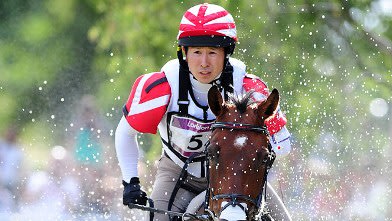
He says his religious discipline helps him when he's riding: "Before the competition starts I concentrate. I'm behaving more like a monk." Kenki followed his younger brother Eiken, who also trained as a priest and rode at the Beijing Games.
Now another Japanese Zen monk, Kazuki Yazawa, is entering the Rio Olympic games. Kazuki is a Buddhist priest at the ancient Zenkoji Daikanjin Temple in Nagano prefecture. He is a slalom canoer who has competed since the mid-2000s. At the 2008 Summer Olympics in Beijing, he was eliminated in the qualifying round of the K-1 event finishing in 18th place. Four years later at the London games he was able to qualify for the final of the K-1 event where he finished in 9th place.

He became a monk in 2013 but in Zen that does not preclude one from secular activities and interests, (even including marriage and having a family).
He says his religious discipline helps him when he's riding: "Before the competition starts I concentrate. I'm behaving more like a monk." Kenki followed his younger brother Eiken, who also trained as a priest and rode at the Beijing Games.
Now another Japanese Zen monk, Kazuki Yazawa, is entering the Rio Olympic games. Kazuki is a Buddhist priest at the ancient Zenkoji Daikanjin Temple in Nagano prefecture. He is a slalom canoer who has competed since the mid-2000s. At the 2008 Summer Olympics in Beijing, he was eliminated in the qualifying round of the K-1 event finishing in 18th place. Four years later at the London games he was able to qualify for the final of the K-1 event where he finished in 9th place.
He became a monk in 2013 but in Zen that does not preclude one from secular activities and interests, (even including marriage and having a family).
Thursday, 21 April 2016
Dennis Sibley 1950 - 2016
Sadly I heard yesterday of the death on Tuesday of Dennis Sibley who was one of the original pioneers involved with bringing Buddhism to the island. He had been involved with Buddhism for almost 40 years and in 1986 co-founded "The Buddhist Hospice Trust" with his friend, the late Ray Wills to care for people with advanced dementia.
I only met Dennis the once when he visited me in Totland to find out about the West Wight Sangha as part of a project to write a book on the development and growth of the various Buddhist groups on the isle of Wight. Regretfully, as far as I know, this never came to fruition but I know he would have been delighted to hear of the new group in Ryde. You can however read "The Laughing Buddha, Humour and the Spiritual Life", one of his pieces which gives you an insight into what made Dennis tick.

"For me, humour is essential in our lives and invaluable in the face of old age, illness and death".
Dennis Sibley
I only met Dennis the once when he visited me in Totland to find out about the West Wight Sangha as part of a project to write a book on the development and growth of the various Buddhist groups on the isle of Wight. Regretfully, as far as I know, this never came to fruition but I know he would have been delighted to hear of the new group in Ryde. You can however read "The Laughing Buddha, Humour and the Spiritual Life", one of his pieces which gives you an insight into what made Dennis tick.
"For me, humour is essential in our lives and invaluable in the face of old age, illness and death".
Dennis Sibley
Thursday, 28 January 2016
A Poem that I Like
"Hearing the Gibbons Call in Pa Gorge" by Wen Chao translated by Paul Hansen
 As I lean
On my oar, gazing
At the cloud-line, purity
Emerges, deep and lonely,
From the Gorge.
When the mind
Doesn't have anything
On it, there's no sorrow
Inherent in repeated calls. They bear
The dew where every peak is distant,
Dangle in space where a slice
Of Moon shines
Bright.
Whoever
Hears it like this
Can finish a poem
By dawn.
As I leanOn my oar, gazing
At the cloud-line, purity
Emerges, deep and lonely,
From the Gorge.
When the mind
Doesn't have anything
On it, there's no sorrow
Inherent in repeated calls. They bear
The dew where every peak is distant,
Dangle in space where a slice
Of Moon shines
Bright.
Whoever
Hears it like this
Can finish a poem
By dawn.
Wednesday, 20 January 2016
More from The Travelling Buddhists
The travelling Buddhists are off again; John and Nicole from the Newport Zen group have taken their trusty tandem off to Thailand and are beaming back lots of pictures..........


A Buddha shrine flanked by two guarding bright cockerels. Apparently when King Nasueran was taken hostage by the Burmese, his invincible cockerels (he loved cock fighting as a little boy) secured his reputation (?)..

The view from their guesthouse.
A Buddha shrine flanked by two guarding bright cockerels. Apparently when King Nasueran was taken hostage by the Burmese, his invincible cockerels (he loved cock fighting as a little boy) secured his reputation (?)..
War Phra Ram
If you would like to see some more of John and Nicole's photos visit their website at http://wilhelminacrew.blogspot.co.uk/
Thursday, 4 December 2014
Zen "In Our Time"
Some of you may have heard Melvyn Bragg's Radio 4 program, "In Our Time" this morning in which the subject discussed was Zen Buddhism. If you did you will have learnt precious little about Zen or indeed Buddhism!
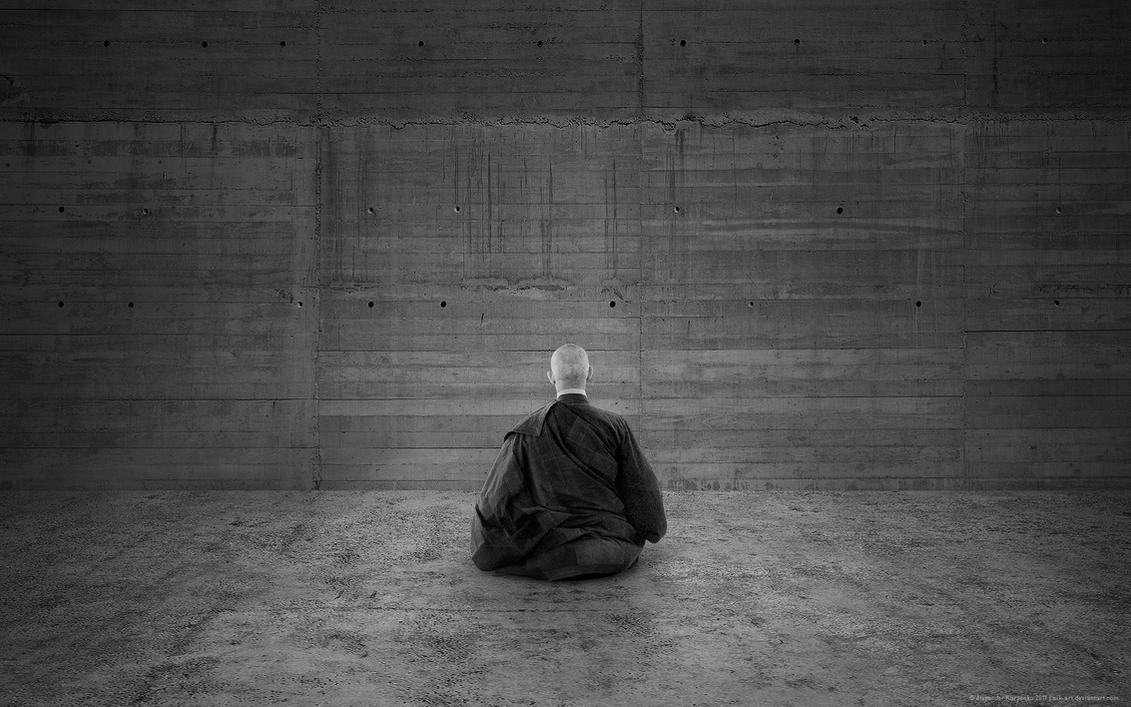
The whole program was a bit of a mishmash not helped by the fact that Bragg was obviously suffering from a ferocious cold. The guests, Tim Barrett, Emeritus Professor in the Department of the Study of Religions at SOAS, University of London, Lucia Dolce, Numata Reader in Japanese Buddhism at SOAS, University of London and Eric Greene, Lecturer in East Asian Religions at the University of Bristol failed to get over some key points. The most central one being the nature of Zen meditation, Zazen. Constantly reiterating that it meant "just" sitting was singularly uninformative so I'm quoting from the "Rules for Meditation" from the Soto Zen tradition...........
"You should meditate in a quiet room, eat and drink moderately, cut all ties, give up everything, think of neither good nor evil, consider neither right nor wrong. Control mind function, will, consciousness, memory, perception and understanding; you must not strive thus to become Buddha. Cling to neither sitting nor lying down. When meditating, do not wear tight clothing. Rest the left hand in the palm of the right hand with the thumbs touching lightly; sit upright, leaning neither to left nor right, backwards nor forwards. The ears must be in line with the shoulders and the nose in line with the navel; the tongue must be held lightly against the back of the top teeth with the lips and teeth closed. Keep the eyes open, breathe in quickly, settle the body comfortably and breathe out sharply. Sway the body left and right then sit steadily, neither trying to think nor trying not to think; just sitting, with no deliberate thought, is the important aspect of serene reflection meditation."
As you can see there is a little more to it than "just sitting" but as always I'll let you listen and decide for yourselves.................
I have also placed this on the Miscellaneous page of our Audio section where you can download it.
The whole program was a bit of a mishmash not helped by the fact that Bragg was obviously suffering from a ferocious cold. The guests, Tim Barrett, Emeritus Professor in the Department of the Study of Religions at SOAS, University of London, Lucia Dolce, Numata Reader in Japanese Buddhism at SOAS, University of London and Eric Greene, Lecturer in East Asian Religions at the University of Bristol failed to get over some key points. The most central one being the nature of Zen meditation, Zazen. Constantly reiterating that it meant "just" sitting was singularly uninformative so I'm quoting from the "Rules for Meditation" from the Soto Zen tradition...........
"You should meditate in a quiet room, eat and drink moderately, cut all ties, give up everything, think of neither good nor evil, consider neither right nor wrong. Control mind function, will, consciousness, memory, perception and understanding; you must not strive thus to become Buddha. Cling to neither sitting nor lying down. When meditating, do not wear tight clothing. Rest the left hand in the palm of the right hand with the thumbs touching lightly; sit upright, leaning neither to left nor right, backwards nor forwards. The ears must be in line with the shoulders and the nose in line with the navel; the tongue must be held lightly against the back of the top teeth with the lips and teeth closed. Keep the eyes open, breathe in quickly, settle the body comfortably and breathe out sharply. Sway the body left and right then sit steadily, neither trying to think nor trying not to think; just sitting, with no deliberate thought, is the important aspect of serene reflection meditation."
As you can see there is a little more to it than "just sitting" but as always I'll let you listen and decide for yourselves.................
I have also placed this on the Miscellaneous page of our Audio section where you can download it.
Saturday, 29 March 2014
Newport Meditation Retreat
Yesterday a couple of us from the West Wight Sangha traveled into Newport to join the Soto Zen group for a days meditation retreat.
The talk that I took along was "What You Think is Not a Help for Realization" by Ed Brown.

The talk that I took along was "What You Think is Not a Help for Realization" by Ed Brown.
Friday, 19 July 2013
Tassajara Zen Mountain Centre Escapes Fire
A fire burning on both sides of
Tassajara Creek in a remote part of the Los Padres National Forest had
consumed about 169 acres late Wednesday, and about 10 p.m. firefighters
said its advance appeared to have been stopped.
The fire, which began about 1 p.m., is burning in the vicinity of the Tassajara Zen Mountain Centre, a Buddhist monastery-retreat with popular hot springs and swimming holes in the Ventana Wilderness.
.jpg)
Jamesburg resident Carol Dougherty, who helped answer the Zen centre telephone Wednesday night, said some guests had voluntarily evacuated but there were no orders to do so. Staff were calling people with reservations to advise them not to come Wednesday or Thursday because the Forest Service would not let them in, she said. One couple arriving Wednesday was turned away by fire officials, she said.
Dougherty said that after an air tanker dropped water on the blaze around 3:30 p.m., she saw "a lot less smoke. ... Hopefully they got the worst of it."
When Shunryu Suzuki, the Japanese Buddhist priest who founded the San Francisco Zen Centre, was first shown Tassajara in the Spring of 1966, he knew immediately that this was the place for his small but growing group of Western students to study Zen in a monastic setting. Fund raising efforts began immediately, and by July of the following year, the first Zen monastery outside of Asia was established.
Since then, life has changed very little at Zenshinji (Zen Heart-Mind Temple), as Tassajara is known formally. And now, from late September until early April, 50-60 students rise before dawn and begin a full day of zazen (meditation), study, and work, following a traditional Buddhist monastic schedule which dates back over thirteen hundred years to the early Tang Dynasty in China.
The fire, which began about 1 p.m., is burning in the vicinity of the Tassajara Zen Mountain Centre, a Buddhist monastery-retreat with popular hot springs and swimming holes in the Ventana Wilderness.
Jamesburg resident Carol Dougherty, who helped answer the Zen centre telephone Wednesday night, said some guests had voluntarily evacuated but there were no orders to do so. Staff were calling people with reservations to advise them not to come Wednesday or Thursday because the Forest Service would not let them in, she said. One couple arriving Wednesday was turned away by fire officials, she said.
Dougherty said that after an air tanker dropped water on the blaze around 3:30 p.m., she saw "a lot less smoke. ... Hopefully they got the worst of it."
When Shunryu Suzuki, the Japanese Buddhist priest who founded the San Francisco Zen Centre, was first shown Tassajara in the Spring of 1966, he knew immediately that this was the place for his small but growing group of Western students to study Zen in a monastic setting. Fund raising efforts began immediately, and by July of the following year, the first Zen monastery outside of Asia was established.
Since then, life has changed very little at Zenshinji (Zen Heart-Mind Temple), as Tassajara is known formally. And now, from late September until early April, 50-60 students rise before dawn and begin a full day of zazen (meditation), study, and work, following a traditional Buddhist monastic schedule which dates back over thirteen hundred years to the early Tang Dynasty in China.
Saturday, 1 June 2013
Retreat Day in Newport
Yesterday two of us from the West Wight Sangha travelled to Newport and joined with the Soto Zen group there for a day retreat.
The Zen group is affiliated to the Reading Buddhist Priory. The Priory was founded in 1990 as a temple of the Serene Reflection (Soto Zen) tradition of Buddhism and is part of the Order of Buddhist Contemplatives which has temples around the UK and in Germany, the Netherlands, Canada and North America.

At present, Rev. Alina Burgess is Prior. She is a senior monk and disciple of Rev. Master Daishin Morgan, who is the Abbot of Throssel Hole Buddhist Abbey and the Priory's patron.
 The Order was founded in 1978 by Reverend Master P.T.N.H Jiyu-Kennett
(1924-1996). Born Peggy Kennett in England in 1924, she studied music in
London and Durham before travelling to the East in 1961 to be ordained
by the Venerable Seck Kim Seng as a member of the Chinese Buddhist
church in Malaysia. She then continued her training as a disciple of the
Very Reverend Keido Chisan Koho Zenji, the Abbot of Dai Hon Zan Sojiji
monastery in Yokohama, Japan.
The Order was founded in 1978 by Reverend Master P.T.N.H Jiyu-Kennett
(1924-1996). Born Peggy Kennett in England in 1924, she studied music in
London and Durham before travelling to the East in 1961 to be ordained
by the Venerable Seck Kim Seng as a member of the Chinese Buddhist
church in Malaysia. She then continued her training as a disciple of the
Very Reverend Keido Chisan Koho Zenji, the Abbot of Dai Hon Zan Sojiji
monastery in Yokohama, Japan.
Certified by him as a Master in 1963, Reverend Master Jiyu-Kennett eventually returned to the West in 1969 and founded Shasta Abbey in California and Throssel Hole Buddhist Abbey in Northumberland. Both are retreat centres as well as training monasteries of the Order of Buddhist Contemplatives.

We were very lucky in that; Rev. Alina was able to travel down and join us for the day. She gave an excellent Dharma talk before lunch and I regret not having had the foresight to have brought any recording equipment so that the talk could have been shared on our Audio section.
As always, a huge vote of thanks to Dave for arranging the day and giving us the use of his superb Zendo and beautiful garden.
The Zen group is affiliated to the Reading Buddhist Priory. The Priory was founded in 1990 as a temple of the Serene Reflection (Soto Zen) tradition of Buddhism and is part of the Order of Buddhist Contemplatives which has temples around the UK and in Germany, the Netherlands, Canada and North America.

At present, Rev. Alina Burgess is Prior. She is a senior monk and disciple of Rev. Master Daishin Morgan, who is the Abbot of Throssel Hole Buddhist Abbey and the Priory's patron.
 The Order was founded in 1978 by Reverend Master P.T.N.H Jiyu-Kennett
(1924-1996). Born Peggy Kennett in England in 1924, she studied music in
London and Durham before travelling to the East in 1961 to be ordained
by the Venerable Seck Kim Seng as a member of the Chinese Buddhist
church in Malaysia. She then continued her training as a disciple of the
Very Reverend Keido Chisan Koho Zenji, the Abbot of Dai Hon Zan Sojiji
monastery in Yokohama, Japan.
The Order was founded in 1978 by Reverend Master P.T.N.H Jiyu-Kennett
(1924-1996). Born Peggy Kennett in England in 1924, she studied music in
London and Durham before travelling to the East in 1961 to be ordained
by the Venerable Seck Kim Seng as a member of the Chinese Buddhist
church in Malaysia. She then continued her training as a disciple of the
Very Reverend Keido Chisan Koho Zenji, the Abbot of Dai Hon Zan Sojiji
monastery in Yokohama, Japan.Certified by him as a Master in 1963, Reverend Master Jiyu-Kennett eventually returned to the West in 1969 and founded Shasta Abbey in California and Throssel Hole Buddhist Abbey in Northumberland. Both are retreat centres as well as training monasteries of the Order of Buddhist Contemplatives.

We were very lucky in that; Rev. Alina was able to travel down and join us for the day. She gave an excellent Dharma talk before lunch and I regret not having had the foresight to have brought any recording equipment so that the talk could have been shared on our Audio section.
As always, a huge vote of thanks to Dave for arranging the day and giving us the use of his superb Zendo and beautiful garden.
Thursday, 7 March 2013
Holding Opinions
Recently we'd been discussing the danger of holding "opinions". One of our Sangha members sent me this piece by Adyashanti ..................
 In order to seek, you must first have an idea, ideal, or an image, what it is you are seeking. That idea may not even be very conscious or clear but it must be there in order for you to seek. Being an idea it cannot be real. That’s why Seng-ts’an says “only cease to cherish opinions.” By opinions he means ideas, ideals, beliefs, and images, as well as personal opinions. This sounds easy but it is rarely as easy as it seems. Seng-ts’an is not saying you should never have a thought in your head, he is saying not to cherish the thoughts in your head. To cherish implies an emotional attachment and holding on to. When you cherish something, you place value on it because you think that it is real or because it defines who you think you are. This cherishing of thoughts and opinions is what the false self thrives on. It is what the false self is made of. When you realise that none of your ideas about truth are real, it is quite a shock to your system. It is an unexpected blow to the seeker and the seeking.
The task of any useful spiritual practice is therefore to dismantle cherishing the thoughts, opinions, and ideas that make up the false self, the self that is seeking. This is the true task of both meditation and inquiry. Through meditation we can come to see that the only thing that makes us suffer is our own mind. Sitting quietly reveals the mind to be nothing but conditioned thinking spontaneously arising within awareness. Through cherishing this thinking, through taking it to be real and relevant, we create internal images of self and others and the world. Then we live in these images as if they were real. To be caught within these images is to live in an illusory virtual reality.
Through observing the illusory nature of thought without resisting it, we can begin to question and inquire into the underlying belief structures that support it. These belief structures are what form our emotional attachments to the false self and the world our minds create.
This is why I sometimes ask people, “Are you ready to lose your world?” Because true awakening will not fit into the world as you imagine it or the self you imagine yourself to be. Reality is not something that you integrate into your personal view of things. Reality is life without your distorting stories, ideas, and beliefs. It is perfect unity free of all reference points, with nowhere to stand and nothing to grab hold of. It has never been spoken, never been written, never been imagined. It is not hidden, but in plain view. Cease to cherish opinions and it stands before your very eyes.
The task of any useful spiritual practice is therefore to dismantle cherishing the thoughts, opinions, and ideas that make up the false self, the self that is seeking. This is the true task of both meditation and inquiry. Through meditation we can come to see that the only thing that makes us suffer is our own mind. Sitting quietly reveals the mind to be nothing but conditioned thinking spontaneously arising within awareness. Through cherishing this thinking, through taking it to be real and relevant, we create internal images of self and others and the world. Then we live in these images as if they were real. To be caught within these images is to live in an illusory virtual reality.
Through observing the illusory nature of thought without resisting it, we can begin to question and inquire into the underlying belief structures that support it. These belief structures are what form our emotional attachments to the false self and the world our minds create.
This is why I sometimes ask people, “Are you ready to lose your world?” Because true awakening will not fit into the world as you imagine it or the self you imagine yourself to be. Reality is not something that you integrate into your personal view of things. Reality is life without your distorting stories, ideas, and beliefs. It is perfect unity free of all reference points, with nowhere to stand and nothing to grab hold of. It has never been spoken, never been written, never been imagined. It is not hidden, but in plain view. Cease to cherish opinions and it stands before your very eyes.
Friday, 4 January 2013
Zen Priest Marries Her Same Sex Partner
Following on from the news that the Church of England and Church in Wales has managed to get itself exempted from offering same-sex marriages, the government has announced that all other religious organisations will be able to “opt in” to offering ceremonies.
As to Buddhism and gay marriage, Soto Zen priest and Abbot of the Village Zendo, Enkyo O’Hara Roshi recently married her partner, Barbara, at City Hall in New York.

Enkyo Pat O’Hara is a dharma successor of Tetsugen Bernard Glassman Roshi and is a member of the White Plum Asanga, an organization of affiliated teachers in the lineage of the late Taizan Maezumi Roshi.
As to Buddhism and gay marriage, Soto Zen priest and Abbot of the Village Zendo, Enkyo O’Hara Roshi recently married her partner, Barbara, at City Hall in New York.
Enkyo Pat O’Hara is a dharma successor of Tetsugen Bernard Glassman Roshi and is a member of the White Plum Asanga, an organization of affiliated teachers in the lineage of the late Taizan Maezumi Roshi.
Subscribe to:
Posts (Atom)