When I was looking for a suitable "Buddhist Poem" to post for today's World Poetry Day Google reminded me of the sad death last October of Sangharakshita, the founder of the FWBO now known as Triratna. A Triratna member, Munisha, posted this poem, "In deep gratitude to my teacher who has given me so much, my favourite of his poems".
INVOCATION
Field-freshening rain,
White night-rain lingering on in drizzles till the dawn,
Pools of bright silver making, birthing streams
In dry clay river-beds, pour down,
O rain,
All day, all night, pour down pour down, O rain,
Pour down…
World-welfaring Compassion,
Void-born Compassion diamond-hard and petal-tender,
Peace to wild heartwaves bringing, birthing love
On the low couch of self, pour down, Compassion,
All day, all night, pour down pour down, Compassion,
Pour down –
Pour down like rain on this compassionless
Lost world…
Pour down, pour down, pour down…
From Sangharakshita’s Complete Poems
Showing posts with label FWBO. Show all posts
Thursday, 21 March 2019
Thursday, 1 November 2018
Sangharakshita Has Died
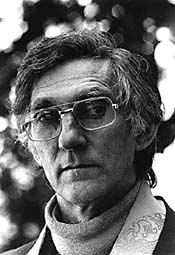
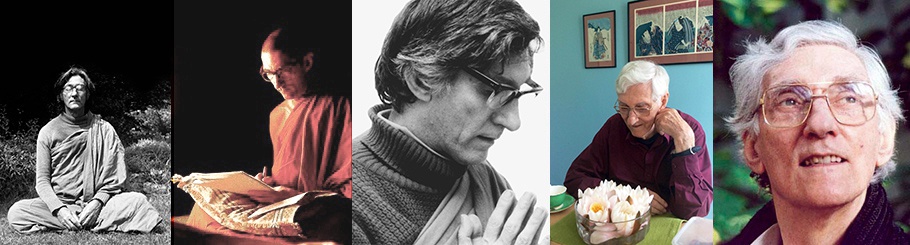
Sangharakshita, the founder of Triratna Buddhism, died this Tuesday morning. He was 93 years old.
Born Dennis Philip Edward Lingwood in Britain in 1925, Sangharakshita was one of the first Western practitioners to be ordained as a Theravada monk in the period following the Second World War. Sangharakshita was the author of more than 60 books and has been described as “one of the most prolific and influential Buddhists of our era,” (Smith and Novak 2004) and as “the founding father of Western Buddhism.” (Berkwitz 2006)
He spent more than 20 years in Asia, where he had a number of Tibetan Buddhist teachers and was actively involved in the Dalit Buddhist conversion movement founded by Dr. B. R. Ambedkar in India in 1956.
A sometimes controversial teacher, Sangharakshita founded the Friends of the Western Buddhist Order in England in April 1967. In 2010, the FWBO became known as Triratna Buddhist Order. Sangharakshita formally retired in 1995 and stepped back from the movement’s leadership in 2000.
The Triratna Buddhist Order published a statement to share the news of Sangharakshita’s passing:
With great sadness we inform you of the passing away of Urgyen Sangharakshita, today, 30th October 2018, at approximately 10 am in Hereford Hospital. He had been diagnosed with pneumonia and this morning the consultant said that he also had sepsis, from which recovery was not possible.
Please join with us as we direct our Metta towards Bhante, recollecting his wonderful qualities and remembering with gratitude all that he has given to so many of us. Local Centres around the world may be holding daily meditations and pujas and you may wish to arrange additional activities in your communities and homes.
Bhante asked that the following mantras be chanted at the time of his death: Shakyamuni, Green Tara, Manjushri, Amitabha and Padmasambhava.
After a few days, Bhante’s body will be laid out at Adhisthana where the funeral and burial will also take place.
Born Dennis Philip Edward Lingwood in Britain in 1925, Sangharakshita was one of the first Western practitioners to be ordained as a Theravada monk in the period following the Second World War. Sangharakshita was the author of more than 60 books and has been described as “one of the most prolific and influential Buddhists of our era,” (Smith and Novak 2004) and as “the founding father of Western Buddhism.” (Berkwitz 2006)
He spent more than 20 years in Asia, where he had a number of Tibetan Buddhist teachers and was actively involved in the Dalit Buddhist conversion movement founded by Dr. B. R. Ambedkar in India in 1956.
A sometimes controversial teacher, Sangharakshita founded the Friends of the Western Buddhist Order in England in April 1967. In 2010, the FWBO became known as Triratna Buddhist Order. Sangharakshita formally retired in 1995 and stepped back from the movement’s leadership in 2000.
The Triratna Buddhist Order published a statement to share the news of Sangharakshita’s passing:
With great sadness we inform you of the passing away of Urgyen Sangharakshita, today, 30th October 2018, at approximately 10 am in Hereford Hospital. He had been diagnosed with pneumonia and this morning the consultant said that he also had sepsis, from which recovery was not possible.
Please join with us as we direct our Metta towards Bhante, recollecting his wonderful qualities and remembering with gratitude all that he has given to so many of us. Local Centres around the world may be holding daily meditations and pujas and you may wish to arrange additional activities in your communities and homes.
Bhante asked that the following mantras be chanted at the time of his death: Shakyamuni, Green Tara, Manjushri, Amitabha and Padmasambhava.
After a few days, Bhante’s body will be laid out at Adhisthana where the funeral and burial will also take place.
Wednesday, 3 October 2018
Something Understood
Last Sunday one of our Sangha members recommended this week's offering on the BBC Radio 4
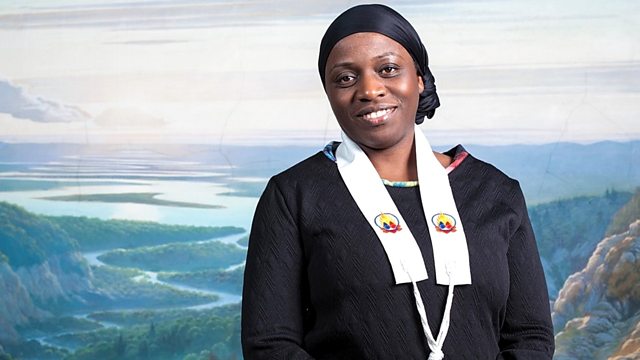
program, "Something Understood". The piece is "Cultivating Kindness", by Suryagupta Dharmacharini, Chair of the London Buddhist Centre. In this episode, Suryagupta explores the Metta Bhavana meditation practice - the technique for the cultivation of kindness created by the Buddha.
Unfortunately, this program is not available as a podcast so here is the link to it on the iPlayer, but hurry, it is only available until the end of the month.
https://www.bbc.co.uk/radio/play/b0blgj7k
There are some great tracks featured; Hurt by Johnny Cash, No Love Dying by Gregory Porter, Stand By Me by Tracy Chapman, A Love Supreme, Pt. I – Acknowledgement by John Coltrane and also readings from works by Achaan Chah, Dostoyevsky, Ryokan, Rumi, The Buddha and others.
program, "Something Understood". The piece is "Cultivating Kindness", by Suryagupta Dharmacharini, Chair of the London Buddhist Centre. In this episode, Suryagupta explores the Metta Bhavana meditation practice - the technique for the cultivation of kindness created by the Buddha.
Unfortunately, this program is not available as a podcast so here is the link to it on the iPlayer, but hurry, it is only available until the end of the month.
https://www.bbc.co.uk/radio/play/b0blgj7k
There are some great tracks featured; Hurt by Johnny Cash, No Love Dying by Gregory Porter, Stand By Me by Tracy Chapman, A Love Supreme, Pt. I – Acknowledgement by John Coltrane and also readings from works by Achaan Chah, Dostoyevsky, Ryokan, Rumi, The Buddha and others.
Thursday, 26 April 2018
National Memorial to Dr. Ambedkar Inaugurated in New Delhi
On April the 13th, on the eve of the 127th anniversary of the birth of Dr. B. R. Ambedkar, Indian prime minister Narendra Modi inaugurated the Dr. Ambedkar National Memorial in New Delhi—at the place where Dr. Ambedkar died on the 6th of December 1956.
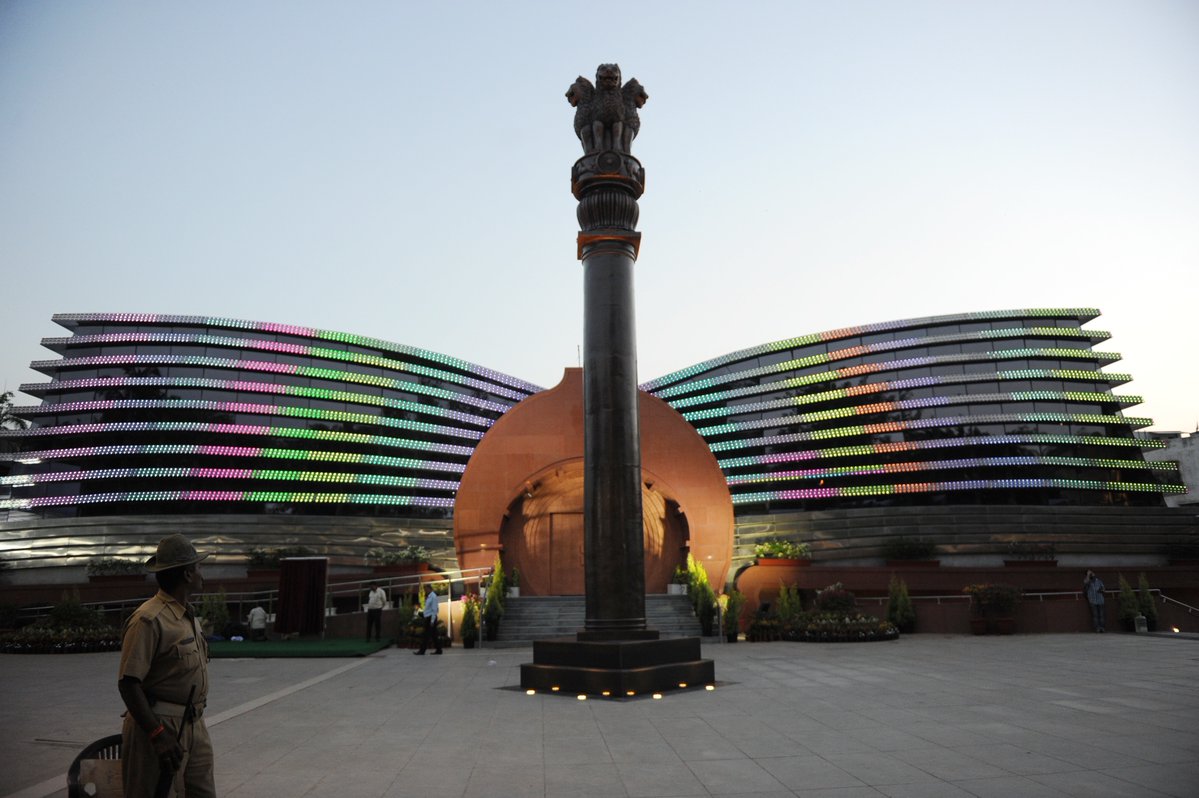
The Memorial has been designed to resemble the shape of an open book in reference to the Constitution of India, of which Dr. Ambedkar was the principal architect. The building is completely green, combining modern architecture with Buddhist elements. Modi previously laid the first stone for the memorial’s construction on 21 March 2016.
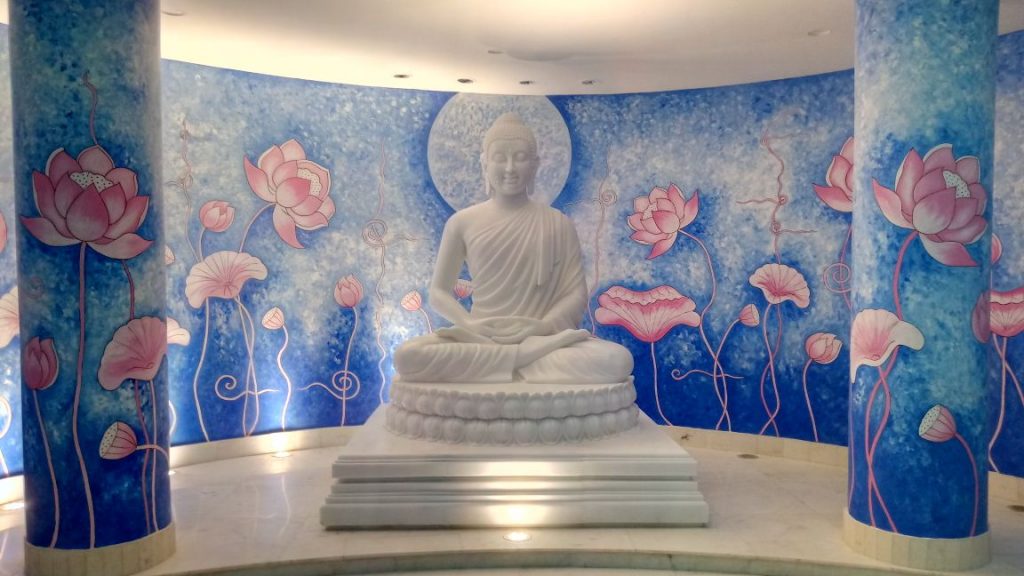
The new memorial houses a marble statue of the Buddha, a meditation hall, a Bodhi tree, a replica of the Ashoka pillar at Sarnath in Varanasi, musical fountains, façade lighting, and a 3.7-meter bronze statue of Dr. Ambedkar.

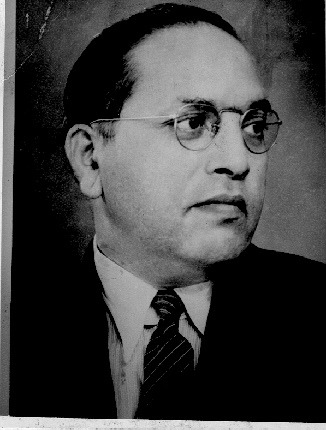
Bhim Rao Ambedkar, an 'untouchable', or Dalit, who converted to Buddhism was a prominent Indian freedom fighter, and the chief architect of the Indian Constitution, which outlawed discrimination based on caste.
Born into a poor family, Ambedkar spent his whole life fighting against social discrimination in the caste system during and after British colonial rule, which ended in 1947. He is also credited with having sparked the Dalit Buddhist movement.
The Dalit Buddhist movement (also known as the Neo-Buddhist movement) is a socio-political movement by Dalits in India started by Dr. Ambedkar. It radically re-interpreted Buddhism and created a new school of Buddhism called Navayana. The movement has sought to be a socially and politically engaged form of Buddhism.
Triratna Bauddha Mahāsaṅgha (formerly called TBMSG for Trailokya Bauddha Mahasangha Sahayaka Gana) is the Indian wing of the UK-based Triratna Buddhist Community founded by Sangharakshita. Its roots lie in the scattered contacts that Sangharakshita had in the 1950s with Ambedkar. Sangharakshita, then still a bhikshu, participated in the conversion movement from 1956 until his departure to the UK in 1963.
When his new ecumenical movement had gained enough ground in the West, Sangharakshita worked with Ambedkarites in India and the UK to develop Indian Buddhism further. After visits in the late 1970s by Dharmachari Lokamitra from the UK, supporters developed a two-pronged approach: social work through the Bahujan Hitaj trust, mainly sponsored from the general public by the British Buddhist-inspired Karuna Trust (UK), and direct Dharma work. Currently the movement has viharas and groups in at least 20 major areas, a couple of retreat centres, and hundreds of Indian Dharmacharis and Dharmacharinis.
A little-known fact is that Roma gypsies trace their origins to the Dalits of India and several have followed the lead of their Indian compatriots and converted to Buddhism, often as a response to discrimination. There is a sizeable Gypsy Buddhist community in Hungary, they take their inspiration from Dr. Ambedka and are officially affiliated to the Triratna Buddhist Community.
The Memorial has been designed to resemble the shape of an open book in reference to the Constitution of India, of which Dr. Ambedkar was the principal architect. The building is completely green, combining modern architecture with Buddhist elements. Modi previously laid the first stone for the memorial’s construction on 21 March 2016.
The new memorial houses a marble statue of the Buddha, a meditation hall, a Bodhi tree, a replica of the Ashoka pillar at Sarnath in Varanasi, musical fountains, façade lighting, and a 3.7-meter bronze statue of Dr. Ambedkar.

Bhim Rao Ambedkar, an 'untouchable', or Dalit, who converted to Buddhism was a prominent Indian freedom fighter, and the chief architect of the Indian Constitution, which outlawed discrimination based on caste.
Born into a poor family, Ambedkar spent his whole life fighting against social discrimination in the caste system during and after British colonial rule, which ended in 1947. He is also credited with having sparked the Dalit Buddhist movement.
The Dalit Buddhist movement (also known as the Neo-Buddhist movement) is a socio-political movement by Dalits in India started by Dr. Ambedkar. It radically re-interpreted Buddhism and created a new school of Buddhism called Navayana. The movement has sought to be a socially and politically engaged form of Buddhism.
Triratna Bauddha Mahāsaṅgha (formerly called TBMSG for Trailokya Bauddha Mahasangha Sahayaka Gana) is the Indian wing of the UK-based Triratna Buddhist Community founded by Sangharakshita. Its roots lie in the scattered contacts that Sangharakshita had in the 1950s with Ambedkar. Sangharakshita, then still a bhikshu, participated in the conversion movement from 1956 until his departure to the UK in 1963.
When his new ecumenical movement had gained enough ground in the West, Sangharakshita worked with Ambedkarites in India and the UK to develop Indian Buddhism further. After visits in the late 1970s by Dharmachari Lokamitra from the UK, supporters developed a two-pronged approach: social work through the Bahujan Hitaj trust, mainly sponsored from the general public by the British Buddhist-inspired Karuna Trust (UK), and direct Dharma work. Currently the movement has viharas and groups in at least 20 major areas, a couple of retreat centres, and hundreds of Indian Dharmacharis and Dharmacharinis.
A little-known fact is that Roma gypsies trace their origins to the Dalits of India and several have followed the lead of their Indian compatriots and converted to Buddhism, often as a response to discrimination. There is a sizeable Gypsy Buddhist community in Hungary, they take their inspiration from Dr. Ambedka and are officially affiliated to the Triratna Buddhist Community.
Saturday, 8 April 2017
Triratna's 50th Anniversary
This weekend the Triratna Buddhist Community will be celebrating its founding 50 years ago on the 6th of April 1967.
Formerly known as the Friends of the Western Buddhist Order (FWBO), Triratna is an international fellowship of Buddhists founded by Sangharakshita in the UK in 1967 describing itself as "an international network dedicated to communicating Buddhist truths in ways appropriate to the modern world". In keeping with Buddhist traditions, it also pays attention to contemporary ideas, particularly drawn from Western philosophy, psychotherapy, and art.
The group has more than 100 branches around the world affiliated with the community, including in North America, Australasia and Europe. In the UK, it is one of the largest Buddhist movements, with some 30 urban and retreat centres.
Its largest following, however, is in India, where it is known as Triratna Bauddha Mahāsaṅgha.
This Buddhist group has its roots in the scattered contacts that Sangharakshita had in the 1950s with Dr. B. R. Ambedkar.
Dr. Ambedkar was an Indian jurist, political leader, philosopher, anthropologist, historian, orator, economist, teacher, editor, prolific writer, revolutionary and a revivalist for Buddhism in India. He was also the chief architect of the Indian Constitution. Born an "untouchable", he converted to Buddhism and is credited with providing the inspiration for the conversion of hundreds of thousands of Dalits or untouchables to Theravada Buddhism. In August 1947, the new Congress-led government invited Ambedkar to serve as the nation's first law minister. The constitution that he drafted provided constitutional guarantees and protections for a wide range of civil liberties for individual citizens, including freedom of religion, the abolition of untouchability and the outlawing of all forms of discrimination.
Sangharakshita, then still a bhikshu, participated in the conversion movement from 1956 until his departure to the UK in 1963 where he founded the FWBO recently renamed Triratna.
A little known fact is that Roma gypsies trace their origins to the Dalits of India and several have followed the lead of their Indian compatriots and converted to Buddhism, often as a response to discrimination. There is a sizeable Gypsy Buddhist community in Hungary, they take their inspiration from Dr. Ambedka and are officially affiliated to the Triratna Buddhist Community.
Formerly known as the Friends of the Western Buddhist Order (FWBO), Triratna is an international fellowship of Buddhists founded by Sangharakshita in the UK in 1967 describing itself as "an international network dedicated to communicating Buddhist truths in ways appropriate to the modern world". In keeping with Buddhist traditions, it also pays attention to contemporary ideas, particularly drawn from Western philosophy, psychotherapy, and art.
The group has more than 100 branches around the world affiliated with the community, including in North America, Australasia and Europe. In the UK, it is one of the largest Buddhist movements, with some 30 urban and retreat centres.
Its largest following, however, is in India, where it is known as Triratna Bauddha Mahāsaṅgha.
This Buddhist group has its roots in the scattered contacts that Sangharakshita had in the 1950s with Dr. B. R. Ambedkar.Dr. Ambedkar was an Indian jurist, political leader, philosopher, anthropologist, historian, orator, economist, teacher, editor, prolific writer, revolutionary and a revivalist for Buddhism in India. He was also the chief architect of the Indian Constitution. Born an "untouchable", he converted to Buddhism and is credited with providing the inspiration for the conversion of hundreds of thousands of Dalits or untouchables to Theravada Buddhism. In August 1947, the new Congress-led government invited Ambedkar to serve as the nation's first law minister. The constitution that he drafted provided constitutional guarantees and protections for a wide range of civil liberties for individual citizens, including freedom of religion, the abolition of untouchability and the outlawing of all forms of discrimination.
Sangharakshita, then still a bhikshu, participated in the conversion movement from 1956 until his departure to the UK in 1963 where he founded the FWBO recently renamed Triratna.
A little known fact is that Roma gypsies trace their origins to the Dalits of India and several have followed the lead of their Indian compatriots and converted to Buddhism, often as a response to discrimination. There is a sizeable Gypsy Buddhist community in Hungary, they take their inspiration from Dr. Ambedka and are officially affiliated to the Triratna Buddhist Community.
Friday, 25 November 2016
Comment on "Watered down Buddhism"
Further to the previous post "Watered Down Buddhism" I received an email from a long time correspondent, A.W. (Jack) Kennedy who runs the Bowerchalke Buddhist Meditation Group over in Wiltshire on the Dorset, Hampshire border.
He had tried to post a comment on the article but it exceeded the permitted word count. It is an excellent take on the subject so I am posting the entire piece here..........
Stephen,
Thanks for this post. You point to an interesting article by Funie Hsu (accessible with a bit of searching on the ‘Lions Roar’ website). It is plucky of you to venture into the thorny arena of Buddhist hermeneutics: the way in which Buddhism has been, and is being, re-interpreted to suit contemporary western (American and European) social life, and precisely who claims authority to perform those acts of hermeneutics.
Your post is brief, so please allow me to make a few comments by way of expansion:
1. American and British Buddhism are not identical. Historical conditions have affected them in different ways they cannot be conflated. Certainly, there are two forms of Buddhism (indigenous immigrant and white convert) on both sides of the Atlantic, but in Britain there has generally been respect and interaction between the two. Hsu, and others, are concerned that the majority of white convert Buddhists should show respect and solidarity towards Japanese, Black, and LBGT minority Buddhists, in the face of neglect and oppression from the wider community, in the past and under Trump’s new world order. We should listen up, and make sure that neglect and oppression of marginalised communities doesn’t happen over here.
2. Yet, any person, whatever their origin, has the right to inform themselves about the vast gamut of Buddhist teaching and practice, and the right to decide for themselves what’s meaningful and what’s meaningless in the light of their own cultural circumstances, which these days are usually scientifically-informed and liberal about human rights. Authority can, of course, be claimed by Buddhist teachers, but in the final analysis authority is only provisionally granted by those that decide to accept a teacher. My point is that white convert Buddhists can’t be expected to rely on indigenous immigrant teachers, or on traditional texts, without any right to apply their own forms of interpretation.
3. You mention the ‘cultural appropriation’ and the ‘translation’ of Buddhism into western contexts. Whenever these terms are used, I think it only fair to reference my old PhD. supervisor, Philip Mellor, because he was the first person to use these terms and address these issues, and because subsequent commentators tend to forget his original contribution: Mellor, P.A. 1989, The Cultural Translation of Buddhism: problems of method in the study of Buddhism in England (University of Manchester, unpublished PhD thesis); Mellor, P.A. 1991, ‘Protestant Buddhism? The Cultural Translation of Buddhism in England’, in Religious Studies, 29, pp.111-127. Coming from an ‘outsider’ Catholic perspective, Mellor had a rather biased view of western Buddhism, but he made three interesting points: that Buddhism is being translated into Protestant forms of religious behaviour; that Buddhist practitioners are not particularly aware of this alteration, and that it is difficult for ‘the analyst’ (the academic observer) to disentangle western Buddhist discourse and practice from western psychotherapeutic discourse and practice. You note that the Robert Ellis’s ‘Middle Way Society’ is independent of Buddhism; could that also be said of the Mindfulness movement? Robert Ellis, as is his right, has made up his own mind on the basis of his own interpretation of Buddhism, and in the light of his sceptical philosophy. He has generated an impressive website but has few followers, therefore, not much effect on the progress of Buddhism in Britain. Might not the Mindfulness movement prove more damaging? Is today’s Mindfulness movement not an outcome of the entanglement of Buddhism with psychotherapeutic discourse, and is there not a risk that the Mindfulness movement might go on to largely replace Buddhism in Britain?
4. I want to defend the memory of the Secular Buddhist UK website. It was established by Anantacitta Tunnell, a thoroughly decent Birmingham social-worker who used to be a member of the FWBO/Triratna Community. He worked hard to create an open forum for the discussion of secular Buddhist ideas and practice, with Stephen Batchelor’s blessing but without the benefit of his involvement. Nobody was willing to take over the site when it became too much for Anantacitta. Since I was a contributor, I must share some of the blame for that misfortune. Regrettably, it went into abeyance, Wordpress closed it down, and the archives vanished into digital oblivion. But I remain dependent on Buddhism, as does the American Secular Buddhist website, as (I think) does Stephen Batchelor. Nobody can wholly escape the influence of their (white, western, contemporary, protestant, scientific) upbringing, but, of course, we can be Buddhists nonetheless, if Buddhist practice is truly applicable to all sentient beings.
Thank you Jack. As you note the original post was somewhat brief when touching on this subject but it was prompted by the demise of the UK secular Buddhist website and the rest sort of just followed as background context.
I feel that secular Buddhism is a genuinely Western response to the Dharma and although I have the greatest respect for the various Eastern schools into which the Buddha's teachings have evolved that evolution has taken place within the context of cultures other than my own. It can feel somewhat of an affectation when performing, for example, Japanese or Tibetan rites and rituals when one is not Japanese or Tibetan. Secular Buddhism addresses this by removing the cultural accoutrements but then also jettisons anything "mythological". The question then arises as to what is myth or just a good story loaded with parable, allegory and fable that teaches the Dharma in the succinctly skillful way the Buddha had of pitching his message.
That said, I cannot but agree with your comment about "there (being) a risk that the Mindfulness movement might go on to largely replace Buddhism in Britain."
I know that there is a counter argument that Mindfulness practise is in fact inculcating the Buddha's teachings "by the back door" but various mindfulness teachers that I know who are Buddhists say that apart from a brief comment that these practises are derived from ancient Buddhist ones Buddhism itself is never mentioned.
But, ultimately, despite all of the challenges that Buddhism faces in the West it will, in time, develop into a truly Western practise. A while back I ran a series of stories on the plight of Buddhist nuns in various traditions who are denied full ordination. Many have now achieved this, "illegally" according to their parent traditions. But they have done this by side stepping the established protocols of the purely Asian schools of Buddhism. They have separated and moved away and formed their own monastic settlements here in the West where they can enjoy the liberal, progressive freedoms denied them within the traditional, Asian context of Buddhism.
He had tried to post a comment on the article but it exceeded the permitted word count. It is an excellent take on the subject so I am posting the entire piece here..........
Stephen,
Thanks for this post. You point to an interesting article by Funie Hsu (accessible with a bit of searching on the ‘Lions Roar’ website). It is plucky of you to venture into the thorny arena of Buddhist hermeneutics: the way in which Buddhism has been, and is being, re-interpreted to suit contemporary western (American and European) social life, and precisely who claims authority to perform those acts of hermeneutics.
Your post is brief, so please allow me to make a few comments by way of expansion:
1. American and British Buddhism are not identical. Historical conditions have affected them in different ways they cannot be conflated. Certainly, there are two forms of Buddhism (indigenous immigrant and white convert) on both sides of the Atlantic, but in Britain there has generally been respect and interaction between the two. Hsu, and others, are concerned that the majority of white convert Buddhists should show respect and solidarity towards Japanese, Black, and LBGT minority Buddhists, in the face of neglect and oppression from the wider community, in the past and under Trump’s new world order. We should listen up, and make sure that neglect and oppression of marginalised communities doesn’t happen over here.
2. Yet, any person, whatever their origin, has the right to inform themselves about the vast gamut of Buddhist teaching and practice, and the right to decide for themselves what’s meaningful and what’s meaningless in the light of their own cultural circumstances, which these days are usually scientifically-informed and liberal about human rights. Authority can, of course, be claimed by Buddhist teachers, but in the final analysis authority is only provisionally granted by those that decide to accept a teacher. My point is that white convert Buddhists can’t be expected to rely on indigenous immigrant teachers, or on traditional texts, without any right to apply their own forms of interpretation.
3. You mention the ‘cultural appropriation’ and the ‘translation’ of Buddhism into western contexts. Whenever these terms are used, I think it only fair to reference my old PhD. supervisor, Philip Mellor, because he was the first person to use these terms and address these issues, and because subsequent commentators tend to forget his original contribution: Mellor, P.A. 1989, The Cultural Translation of Buddhism: problems of method in the study of Buddhism in England (University of Manchester, unpublished PhD thesis); Mellor, P.A. 1991, ‘Protestant Buddhism? The Cultural Translation of Buddhism in England’, in Religious Studies, 29, pp.111-127. Coming from an ‘outsider’ Catholic perspective, Mellor had a rather biased view of western Buddhism, but he made three interesting points: that Buddhism is being translated into Protestant forms of religious behaviour; that Buddhist practitioners are not particularly aware of this alteration, and that it is difficult for ‘the analyst’ (the academic observer) to disentangle western Buddhist discourse and practice from western psychotherapeutic discourse and practice. You note that the Robert Ellis’s ‘Middle Way Society’ is independent of Buddhism; could that also be said of the Mindfulness movement? Robert Ellis, as is his right, has made up his own mind on the basis of his own interpretation of Buddhism, and in the light of his sceptical philosophy. He has generated an impressive website but has few followers, therefore, not much effect on the progress of Buddhism in Britain. Might not the Mindfulness movement prove more damaging? Is today’s Mindfulness movement not an outcome of the entanglement of Buddhism with psychotherapeutic discourse, and is there not a risk that the Mindfulness movement might go on to largely replace Buddhism in Britain?
4. I want to defend the memory of the Secular Buddhist UK website. It was established by Anantacitta Tunnell, a thoroughly decent Birmingham social-worker who used to be a member of the FWBO/Triratna Community. He worked hard to create an open forum for the discussion of secular Buddhist ideas and practice, with Stephen Batchelor’s blessing but without the benefit of his involvement. Nobody was willing to take over the site when it became too much for Anantacitta. Since I was a contributor, I must share some of the blame for that misfortune. Regrettably, it went into abeyance, Wordpress closed it down, and the archives vanished into digital oblivion. But I remain dependent on Buddhism, as does the American Secular Buddhist website, as (I think) does Stephen Batchelor. Nobody can wholly escape the influence of their (white, western, contemporary, protestant, scientific) upbringing, but, of course, we can be Buddhists nonetheless, if Buddhist practice is truly applicable to all sentient beings.
Thank you Jack. As you note the original post was somewhat brief when touching on this subject but it was prompted by the demise of the UK secular Buddhist website and the rest sort of just followed as background context.
I feel that secular Buddhism is a genuinely Western response to the Dharma and although I have the greatest respect for the various Eastern schools into which the Buddha's teachings have evolved that evolution has taken place within the context of cultures other than my own. It can feel somewhat of an affectation when performing, for example, Japanese or Tibetan rites and rituals when one is not Japanese or Tibetan. Secular Buddhism addresses this by removing the cultural accoutrements but then also jettisons anything "mythological". The question then arises as to what is myth or just a good story loaded with parable, allegory and fable that teaches the Dharma in the succinctly skillful way the Buddha had of pitching his message.
That said, I cannot but agree with your comment about "there (being) a risk that the Mindfulness movement might go on to largely replace Buddhism in Britain."
I know that there is a counter argument that Mindfulness practise is in fact inculcating the Buddha's teachings "by the back door" but various mindfulness teachers that I know who are Buddhists say that apart from a brief comment that these practises are derived from ancient Buddhist ones Buddhism itself is never mentioned.
But, ultimately, despite all of the challenges that Buddhism faces in the West it will, in time, develop into a truly Western practise. A while back I ran a series of stories on the plight of Buddhist nuns in various traditions who are denied full ordination. Many have now achieved this, "illegally" according to their parent traditions. But they have done this by side stepping the established protocols of the purely Asian schools of Buddhism. They have separated and moved away and formed their own monastic settlements here in the West where they can enjoy the liberal, progressive freedoms denied them within the traditional, Asian context of Buddhism.
Thursday, 17 November 2016
Watered Down Buddhism
The subject of the “cultural appropriation” of Eastern forms of Buddhism by Western Buddhists crops up every now and then and in fact there is an excellent article by Funie Hsu in this quarter’s edition of Buddhadharma on this very subject.It’s a fact not lost on practitioners here in the UK either. When Sangharakshita (the Dharma name of Dennis Lingwood) founded the, Friends of the Western Buddhist Order, or FWBO (now known as the Triratna Buddhist Community) it was “an attempt to translate the ideas and practices of Buddhism into Western languages. The non-denominational nature of the Triratna Buddhist Community, its equal ordination for both men
and women, and its evolution of new forms of shared practice, such as what it calls team-based right livelihood projects, have been cited as examples of such "translation", and also as the creation of a "Buddhist society in miniature within the Western, industrialized world” (Brassard, Francis (2000), The Concept of Bodhicitta in Śāntideva's Bodhícaryāvatāra).
The FWBO and Triratna draw their teachings from all the major schools of Buddhism to produce a “Western version” of the Dharma.
Another approach has been to “strip” the Buddha’s teachings of any “mythological” content and even to remove any elements that are to be found in other schools of philosophy contemporaneous with the Buddha. This approach, promoted by Western Buddhists such as Stephen Batchelor and John Peacock, has become known as Secular Buddhism.
This has the appeal of providing the Western practitioner with a “culture free” Dharma which can be practised without feeling that one is pretending to be Asian. However, for many of us there is the feeling that we run the danger of throwing the baby out with the bath water and losing essential elements of the Buddha’s teaching just because they do not fit in with some politically correct secular filter.
This however leads to the question of where does it all stop; to what extent can the Dharma be watered down and still be the Dharma?
While carrying out a regular check on the functionality of the links on this site I found that the one for Secular Buddhism UK is now defunct. On their associated Facebook page I found the following –
“Secular Buddhism UK (and associated website) are no longer active. However, several former SBUK members have since formed The Middle Way Society www.middlewaysociety.org, which visitors to this page may also be interested in. The MWS shares some of the aims of SBUK, but is nonetheless, independent of Buddhism.”
So there you go, you can water down the Buddha’s teachings to the point where they are no longer Buddhism.
Wednesday, 23 October 2013
More Dalits Convert to Buddhism
The Indian caste system was formed 3000 years ago and divides society into four main groups. Each caste division represents a social status and a generalized profession or employment.
The four castes consist of the Brahmins, (priestly and scholarly caste, designed to provide for the intellectual and spiritual needs of a community), Kshatriyas, (rulers and warrior caste, designed to rule and protect others), Vaishyas, (merchants and landowners designed to look after commerce and agriculture), and Shudras, (manual labourers and service providers).
A fifth group was formed more recently for those carrying out very menial and polluting work to do with bodily decay and dirt. This group is outside of the caste system and its members are labelled as 'Outcasts' - cast out from the caste system so to speak. Dalits fall into this category and are excluded from mainstream society, they are considered worthless and spiritually unclean.
At Vishal Hadmatiya village in Bhesan taluka, 21 km from Junagadh, a statue of Dr B R Ambedkar greets visitors. It's been a week since all the 60 families in this Dalit neighbourhood 'converted' to Buddhism at an event in Junagadh. The organisers of the event have claimed that a total of 60,000 Dalits converted to Buddhism.
Caste, which was a matter of vital importance to the brahmins of India, was one of utter indifference to the Buddha, who strongly condemned the debasing caste system. The Buddha freely admitted into the Order people from all castes and classes when he knew that they were fit to live the holy life, and some of them later distinguished themselves in the Order. The Buddha was the only contemporary teacher who endeavoured to blend in mutual tolerance and concord those who hitherto had been rent asunder by differences of caste and class.
B. R. Ambedkar was an Indian jurist, politician, philosopher, anthropologist, historian and economist. A revivalist for Buddhism in India, he inspired the Modern Buddhist movement. As independent India's first law minister, he was principal architect of the Indian Constitution.
Born into a poor Mahar family, Ambedkar campaigned against social discrimination, the Hindu caste system. He converted to Buddhism and is also credited with providing a spark for the conversion of hundreds of thousands of lower caste Indians to Theravada Buddhism. The Triratna Buddhist Community - formerly known as the Friends of the Western Buddhist Order (FWBO) which was co-founded by Ambedkar and Sangharakshita continues to support and promote the Dalit Buddhist community in India.
Gujarat state officials have announced an investigation into the conversions, which took place in Junagadh district, as potential violations of the state’s Freedom of Religion rules passed in 2008 to restrict conversion.
Under the rules, prospective converts must obtain permission from district authorities before changing their religion. Any violation of the rules could invite legal action against the convert and anyone involved in the conversion. The right-wing Bharatiya Janata Party (BJP), which runs the Gujarat government, is investigating whether the Dalits petitioned for such permission.
District Collector Alok Pandey, Junagadh’s highest government official, told local media that the organizers of the conversion event – Baudh Diksha Mahotsava Samiti – had not obtained “proper permission”.
It is also interesting how the Indian press put the word convert in quotes when reporting this story................................
The four castes consist of the Brahmins, (priestly and scholarly caste, designed to provide for the intellectual and spiritual needs of a community), Kshatriyas, (rulers and warrior caste, designed to rule and protect others), Vaishyas, (merchants and landowners designed to look after commerce and agriculture), and Shudras, (manual labourers and service providers).
A fifth group was formed more recently for those carrying out very menial and polluting work to do with bodily decay and dirt. This group is outside of the caste system and its members are labelled as 'Outcasts' - cast out from the caste system so to speak. Dalits fall into this category and are excluded from mainstream society, they are considered worthless and spiritually unclean.
At Vishal Hadmatiya village in Bhesan taluka, 21 km from Junagadh, a statue of Dr B R Ambedkar greets visitors. It's been a week since all the 60 families in this Dalit neighbourhood 'converted' to Buddhism at an event in Junagadh. The organisers of the event have claimed that a total of 60,000 Dalits converted to Buddhism.
Caste, which was a matter of vital importance to the brahmins of India, was one of utter indifference to the Buddha, who strongly condemned the debasing caste system. The Buddha freely admitted into the Order people from all castes and classes when he knew that they were fit to live the holy life, and some of them later distinguished themselves in the Order. The Buddha was the only contemporary teacher who endeavoured to blend in mutual tolerance and concord those who hitherto had been rent asunder by differences of caste and class.
B. R. Ambedkar was an Indian jurist, politician, philosopher, anthropologist, historian and economist. A revivalist for Buddhism in India, he inspired the Modern Buddhist movement. As independent India's first law minister, he was principal architect of the Indian Constitution.
Born into a poor Mahar family, Ambedkar campaigned against social discrimination, the Hindu caste system. He converted to Buddhism and is also credited with providing a spark for the conversion of hundreds of thousands of lower caste Indians to Theravada Buddhism. The Triratna Buddhist Community - formerly known as the Friends of the Western Buddhist Order (FWBO) which was co-founded by Ambedkar and Sangharakshita continues to support and promote the Dalit Buddhist community in India.
Gujarat state officials have announced an investigation into the conversions, which took place in Junagadh district, as potential violations of the state’s Freedom of Religion rules passed in 2008 to restrict conversion.
Under the rules, prospective converts must obtain permission from district authorities before changing their religion. Any violation of the rules could invite legal action against the convert and anyone involved in the conversion. The right-wing Bharatiya Janata Party (BJP), which runs the Gujarat government, is investigating whether the Dalits petitioned for such permission.
District Collector Alok Pandey, Junagadh’s highest government official, told local media that the organizers of the conversion event – Baudh Diksha Mahotsava Samiti – had not obtained “proper permission”.
It is also interesting how the Indian press put the word convert in quotes when reporting this story................................
Tuesday, 16 April 2013
Parliament Voting on "Untouchables"
Today the House of Commons is set to vote on a controversial amendment as a part of the Equality Act 2010, which could offer lower-caste Hindus a legal safeguard against caste discrimination. Hindu groups here are divided on its impact on the diaspora, according to the 2011 census, there are 816,633 Hindus based in the UK.
While campaign group 'Caste Watch UK' plans to rally hundreds of its supporters in Parliament Square today to urge MPs to introduce legal protection for those from traditionally lower-caste backgrounds, other groups such as Alliance of Hindu Organisations UK (AHO) claims the legislation will label the entire Hindu community as being "institutionally discriminatory" and have called a boycott of the amendment.
So, what's the Buddhist connection? Dr. B. R. Ambedkar was an Indian jurist, political leader, philosopher, anthropologist, historian, orator, economist, teacher, editor, prolific writer, revolutionary and a revivalist for Buddhism in India. He was also the chief architect of the Indian Constitution. Born an "untouchable", he converted to Buddhism and is credited with providing the inspiration for the conversion of hundreds of thousands of Dalits or untouchables to Theravada Buddhism. In August 1947, the new Congress-led government invited Ambedkar to serve as the nation's first law minister. The constitution that he drafted provided constitutional guarantees and protections for a wide range of civil liberties for individual citizens, including freedom of religion, the abolition of untouchability and the outlawing of all forms of discrimination.
One of the Buddhist groups inspired by Dr. Ambedkar, was Triratna Bauddha Mahāsaṅgha. It is the Indian wing of the UK-based Triratna Buddhist Community founded by Sangharakshita. Its roots lie in the scattered contacts that Sangharakshita had in the 1950s with Dr. Ambedkar. Sangharakshita, then still a bhikshu, participated in the conversion movement from 1956 until his departure to the UK in 1963 where he founded the FWBO recently renamed Triratna.
A little known fact is that Roma gypsies trace their origins to the Dalits of India and several have followed the lead of their Indian compatriots and converted to Buddhism, often as a response to discrimination. There is a sizeable Gypsy Buddhist community in Hungary, they take their inspiration from Dr. Ambedka and are officially affiliated to the Triratna Buddhist Community.
While campaign group 'Caste Watch UK' plans to rally hundreds of its supporters in Parliament Square today to urge MPs to introduce legal protection for those from traditionally lower-caste backgrounds, other groups such as Alliance of Hindu Organisations UK (AHO) claims the legislation will label the entire Hindu community as being "institutionally discriminatory" and have called a boycott of the amendment.
So, what's the Buddhist connection? Dr. B. R. Ambedkar was an Indian jurist, political leader, philosopher, anthropologist, historian, orator, economist, teacher, editor, prolific writer, revolutionary and a revivalist for Buddhism in India. He was also the chief architect of the Indian Constitution. Born an "untouchable", he converted to Buddhism and is credited with providing the inspiration for the conversion of hundreds of thousands of Dalits or untouchables to Theravada Buddhism. In August 1947, the new Congress-led government invited Ambedkar to serve as the nation's first law minister. The constitution that he drafted provided constitutional guarantees and protections for a wide range of civil liberties for individual citizens, including freedom of religion, the abolition of untouchability and the outlawing of all forms of discrimination.A little known fact is that Roma gypsies trace their origins to the Dalits of India and several have followed the lead of their Indian compatriots and converted to Buddhism, often as a response to discrimination. There is a sizeable Gypsy Buddhist community in Hungary, they take their inspiration from Dr. Ambedka and are officially affiliated to the Triratna Buddhist Community.
Monday, 18 March 2013
Buddhist Business in Newport?
Here's an item that caught my eye, "Newport web business runs to Buddha’s rules", but it transpires that the Newport in question is not our own County town and "capital" of the Isle of Wight but the one in Gwent, South Wales.
The story is from the South Wales Argus..........................
A BUDDHIST company has put its values in to practice with daily meditation sessions.
MettaEngine a new web design and development company based on bridge Street, Newport, is run by a Buddhist team who carry out their daily work while following the Buddha’s five precepts.
The company, which was set up last year, was devised by the Triratna Buddhist organisation, an international fellowship of Buddhists, founded on the Right Livelihood five precepts of Buddhism - helping others, not lying, truthful speech, no intoxicants and no sexual misdemeanours.
Right Livelihood also includes helping others and generosity, while trying to prevent harmful effects on nature and natural resources.
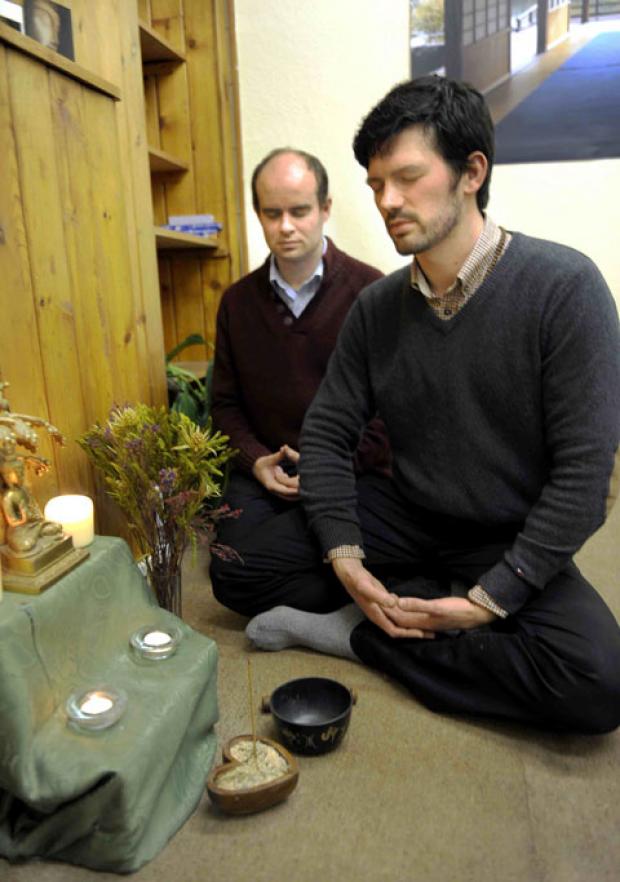
The office includes a dedicated meditation room where staff are expected to spend their mornings and lunchtimes meditating.
Managing director William Elworthy said: "Meditation is a great way to relieve stress and develop a calmer and more equanimous disposition.
The Buddhists meditate for 20-40 minutes depending on how busy they are and the mediation room includes a small statue of a buddha, called a Rupa, and has incense and candles.
The buddhists sit on cushions on the floor and chant in either a three
or seven fold puja, where respects are paid to the Buddha, Sanga and
Dharma. The Sevenfold Puja is a ritual in which Buddhists recite verse and
chant mantras with the to transform our intellectual understanding into
an emotional experience.
Graham Shimell, creative director, said: "The idea behind the business is that we want to run a business that is ethical and bring the spiritual life in to Buddhism."
Now, Mr Elworthy is keen for the Buddhists of Newport to see the business as a outreach post and will invites members of the community to take part in a six-week beginners course on Buddhism. The company also intended to give a percentage of its money to good causes.
For more information, or to take part in the meditation sessions, call 01633 530052.
So how about some Buddhist businesses for Newport, Isle of Wight?
The story is from the South Wales Argus..........................
A BUDDHIST company has put its values in to practice with daily meditation sessions.
MettaEngine a new web design and development company based on bridge Street, Newport, is run by a Buddhist team who carry out their daily work while following the Buddha’s five precepts.
The company, which was set up last year, was devised by the Triratna Buddhist organisation, an international fellowship of Buddhists, founded on the Right Livelihood five precepts of Buddhism - helping others, not lying, truthful speech, no intoxicants and no sexual misdemeanours.
Right Livelihood also includes helping others and generosity, while trying to prevent harmful effects on nature and natural resources.
The office includes a dedicated meditation room where staff are expected to spend their mornings and lunchtimes meditating.
Managing director William Elworthy said: "Meditation is a great way to relieve stress and develop a calmer and more equanimous disposition.
The Buddhists meditate for 20-40 minutes depending on how busy they are and the mediation room includes a small statue of a buddha, called a Rupa, and has incense and candles.
Graham Shimell, creative director, said: "The idea behind the business is that we want to run a business that is ethical and bring the spiritual life in to Buddhism."
Now, Mr Elworthy is keen for the Buddhists of Newport to see the business as a outreach post and will invites members of the community to take part in a six-week beginners course on Buddhism. The company also intended to give a percentage of its money to good causes.
So how about some Buddhist businesses for Newport, Isle of Wight?
Tuesday, 29 May 2012
New Buddhist Centre for Southampton?
Following on from our previous story about the biggest Buddhist Temple in Europe opening soon outside Paris comes news that a new Buddhist centre is planned, just over the Solent from us, in Southampton.
It's not quite on the same scale but the plan is to convert the Plume of Feathers Pub in the St Mary's area of the city, which has been boarded up for several months, into a meditation centre.
The Triratna Buddhist Order's Southampton group has submitted a planning application to develop the pub. (Triratna refers to the Triple Gem of Buddhism, the Buddha, the Dharma and Sangha. The group were previously known as the FWBO, Friends of the Western Buddhist Order.)
Leader Dharma Modna declined to comment on the proposal until the planning application had been heard.
Local councillor Sarah Bogle said: "I think it's a really novel idea. I was surprised, to be honest, when I saw the planning application but also I thought why not? It's at the heart of the city, it is a multi-cultural area, it's very easy to access if anyone is coming into the city.
I welcome this sort of development. It's an interesting use of a building - a complete change of use which I definitely support."
It's not quite on the same scale but the plan is to convert the Plume of Feathers Pub in the St Mary's area of the city, which has been boarded up for several months, into a meditation centre.
The Triratna Buddhist Order's Southampton group has submitted a planning application to develop the pub. (Triratna refers to the Triple Gem of Buddhism, the Buddha, the Dharma and Sangha. The group were previously known as the FWBO, Friends of the Western Buddhist Order.)
Leader Dharma Modna declined to comment on the proposal until the planning application had been heard.
Local councillor Sarah Bogle said: "I think it's a really novel idea. I was surprised, to be honest, when I saw the planning application but also I thought why not? It's at the heart of the city, it is a multi-cultural area, it's very easy to access if anyone is coming into the city.
I welcome this sort of development. It's an interesting use of a building - a complete change of use which I definitely support."
Friday, 30 September 2011
Note
I have just added a link to "THE BUDDHA AND HIS DHAMMA", by Dr. B. R. Ambedkar onto our "Study Tools" on our "Dharma Studies" page. This is taken from Columbia University's South Asia study resources compiled by Prof. Frances Pritchett.
Saturday, 23 April 2011
Safe in the Buddha's Hand
I just had to share this photo of a tiny bird resting in the hand of a Buddha statue. It was taken by Bodhipaksa, the founder of Wildmind.
Friday, 4 March 2011
The Census and Vishvapani
An illustration of the importance of the 2011 census for Buddhism in Britain was given from this morning's "Thought for the Day" slot on the Today program. The speaker was Vishvapani, a Buddhist. Now regular listeners to the Today program may have noticed that we don't get a Buddhist "thought for the day" very often.
The BBC allocates the number of slots roughly in line with the proportion of each affiliation acording to the latest census. So,in terms of faith background, 78% of presenters were Christians, 8% Jews, 4% Muslims, 4% Sikhs, 3% Hindus and 2% Buddhists. Relative to the 2001 census of population of the UK, and excluding those with no religious affiliation or none stated, Christians were under-represented as presenters (93% being their expected share, given Thought for the Day’s current brief).
By contrast, Jews, Sikhs, Hindus and Buddhists were over-represented in leading Thought for the Day, with the representation of Muslims nearly right in terms of the census (although their numbers have increased considerably since that time).
If you meditate, value compassion and live your life by the principals extolled by the Buddha and want to hear more excellent talks by Vishvapani "Tick the Box for Buddhism" in the census on March the 27th.
You can listen to Vishvapani's talk on an "ethical foreign policy" and the events in North Africa in our Audio Section under the Thought for the Day page.
The BBC allocates the number of slots roughly in line with the proportion of each affiliation acording to the latest census. So,in terms of faith background, 78% of presenters were Christians, 8% Jews, 4% Muslims, 4% Sikhs, 3% Hindus and 2% Buddhists. Relative to the 2001 census of population of the UK, and excluding those with no religious affiliation or none stated, Christians were under-represented as presenters (93% being their expected share, given Thought for the Day’s current brief).
By contrast, Jews, Sikhs, Hindus and Buddhists were over-represented in leading Thought for the Day, with the representation of Muslims nearly right in terms of the census (although their numbers have increased considerably since that time).
If you meditate, value compassion and live your life by the principals extolled by the Buddha and want to hear more excellent talks by Vishvapani "Tick the Box for Buddhism" in the census on March the 27th.
You can listen to Vishvapani's talk on an "ethical foreign policy" and the events in North Africa in our Audio Section under the Thought for the Day page.
Thursday, 17 February 2011
We're All in this Together? - a Buddhist Perspective
Keeping it topical, here's a talk on Buddhist economics by Kavyasiddhi. The banks have startedto announce their bonuses for the year, Barclay's stated that their total bonus pool has decreased - in consideration to Project Merlin, the bank said - by seven per cent to £3.4bn
However, because of the inclusion of bonuses which had been deferred from previous years, total performance-related pay increased by 25 per cent to £3.5bn. On top of this basic pay has increased for investment Bankers. Average pay per employee at Barclays Capital, the investment banking arm of Barclays, rose to £236000 even as the bank insisted it had cut its bonus pool in line with the Project Merlin deal.
So Kavyasiddhi's talk, "All in this together - is it time for a Buddhist economics?" is relevant and timely. (Kavyasiddhi is a member of the Manchester branch of Triratna formerly known as the FWBO , you may remember her singing the Heart Sutra on our Video Page)
DOWNLOAD
Take small account of might, wealth and fame, for they soon pass and are forgotten. Instead, nurture love within you and and strive to be a friend to all. Truly, compassion is a balm for many wounds.
Dhammavadaka Sutra
Thursday, 25 November 2010
Yet another Buddhist "Thought for the Day"
Vishvapani was featured again on the Today program's "Thought for the Day" this Saturday (20th November). This time he was reflecting on the tribulations effecting the Irish economy and went on to say......
I am very interested in the Buddha's reflections on how a crisis can be an opportunity for understanding.
Firstly, as our illusions deflate, we are brought back to a sobering sense of reality in which we see that we've put our faith in things that are fundamentally insecure. Then he suggested we look at the traits that led us to be taken in..................................
Listen to the whole broadcast (2:55 minutes) in our Audio Section.
I am very interested in the Buddha's reflections on how a crisis can be an opportunity for understanding.
Firstly, as our illusions deflate, we are brought back to a sobering sense of reality in which we see that we've put our faith in things that are fundamentally insecure. Then he suggested we look at the traits that led us to be taken in..................................
Listen to the whole broadcast (2:55 minutes) in our Audio Section.
Monday, 19 April 2010
Vishvapani on the Election & the Kalamas
On Saturday Vishvapani gave the "Thought for the Day" and took for his subject the election debate screened last Thursday, comparing this with the Buddha's famous talk to the Kalamas, often refered to as his "charter of free inquiry".
Wednesday, 14 April 2010
The Heart Sutra
I've just put a new video up on our video page...........
There are many renditions of the Heart Sutra in song and many of the Asian ones are beautiful; this one by Kavyasiddhi with Jnanadhara on guitar is fun! It was performed during the International Order Convention of the Western Buddhist Order in 2007.
Watch it HERE from our Video section.
There are many renditions of the Heart Sutra in song and many of the Asian ones are beautiful; this one by Kavyasiddhi with Jnanadhara on guitar is fun! It was performed during the International Order Convention of the Western Buddhist Order in 2007.
Watch it HERE from our Video section.
Wednesday, 7 April 2010
The Full Length Vishvapani has Finally Arrived!
Further to the post "Buddhist Thought for the Day Censored?" I can now report that the Beeb have got their act together and Vishvapani's talk for the 13th of March is now available in it's entirety.
For nine years Vishvapani, who is a member of the Western Buddhist Order edited Dharma Life, a highly-praised Buddhist magazine exploring the encounter of Buddhism and the modern world. He is a regular contributor to BBC R4’s Thought for the Day, The Guardian newspaper and Tricycle: the Buddhist Review. Challenging Times: Stories of Buddhist Practice When Things Get Tough, edited by Vishvapani was published in 2006. He is currently writing a biography of the Buddha which will be published by Quercus in 2011.
Wednesday, 24 March 2010
Buddhist "Thought for the Day" Censored?
Something strange has been happening at the Beeb in relation to the latest Buddhist "Thoughts for The Day". The podcast of Vishvapani's broadcast for Saturday the 13th of March cut off after just a few seconds. I've contacted the BBC about this but have, to date, not received a reply. The podcast for his talk on the 20th did, however, arrive safely in one piece, so here it is.......
And here's the text for the "missing" broadcast of the 13th.
Thought for the Day, 13 March 2010
Vishvapani
On your way through the town centre you catch the eye of a young man wearing a fluorescent top emblazoned with the name of a well-known charity. You try to avoid his gaze, but he steps right into your path, smiling broadly and holding out a brochure. A flurry of thoughts goes through your head. They want your money. You don't have time. In any case, whatever you give is eaten up by bureaucracy and corruption. Just look at the alleged scandals about Live Aid money.
Despite the fact that charities hotly contest the accusations that were made this week, such stories have an effect. On one hand, they check the naive belief that it's straightforward to get help to victims of a disaster; but they also reinforce our cynicism. They give us the relief of having a reason to say no.
Although I don't like being stopped by on-street fundraisers, I sympathise with them. Some years ago, I spent eight weeks going door-to-door asking for regular donations to a charity. It was one of the hardest things I've ever done because asking again and again meant getting rejection after rejection. But that was offset by the good-heartedness of the people I met, which I often sensed, whether or not they actually gave something. I saw the value of a generous attitude, and realised that a gift benefits the donor as well as the recipient.
According to Buddhism's Four Noble Truths, the origin of suffering is craving. Turning that around, happiness comes from contentment and generosity. That's why giving is the most fundamental Buddhist practice. It expresses a healthy attitude to life because it connects you to others. It recognizes that we depend on other people. And if you want to create a better society, Buddhism says, you should give, because a good society is a generous one in which people care for each other.
There are endless reasons not to give, and if you wait for a moment of spontaneous generosity, it may never come. An alternative is to think of giving as a practice you can undertake whether you feel like it or not. We tend to think that giving means donating money, but you can also give time and energy, or be like Walt Whitman who said: "Behold, I do not give lectures or a little charity, When I give I give myself." You can give kindness, or affection or, come to think of it, you can give a Mother's Day card.
And here's the text for the "missing" broadcast of the 13th.
Thought for the Day, 13 March 2010
Vishvapani
On your way through the town centre you catch the eye of a young man wearing a fluorescent top emblazoned with the name of a well-known charity. You try to avoid his gaze, but he steps right into your path, smiling broadly and holding out a brochure. A flurry of thoughts goes through your head. They want your money. You don't have time. In any case, whatever you give is eaten up by bureaucracy and corruption. Just look at the alleged scandals about Live Aid money.
Despite the fact that charities hotly contest the accusations that were made this week, such stories have an effect. On one hand, they check the naive belief that it's straightforward to get help to victims of a disaster; but they also reinforce our cynicism. They give us the relief of having a reason to say no.
Although I don't like being stopped by on-street fundraisers, I sympathise with them. Some years ago, I spent eight weeks going door-to-door asking for regular donations to a charity. It was one of the hardest things I've ever done because asking again and again meant getting rejection after rejection. But that was offset by the good-heartedness of the people I met, which I often sensed, whether or not they actually gave something. I saw the value of a generous attitude, and realised that a gift benefits the donor as well as the recipient.
According to Buddhism's Four Noble Truths, the origin of suffering is craving. Turning that around, happiness comes from contentment and generosity. That's why giving is the most fundamental Buddhist practice. It expresses a healthy attitude to life because it connects you to others. It recognizes that we depend on other people. And if you want to create a better society, Buddhism says, you should give, because a good society is a generous one in which people care for each other.
There are endless reasons not to give, and if you wait for a moment of spontaneous generosity, it may never come. An alternative is to think of giving as a practice you can undertake whether you feel like it or not. We tend to think that giving means donating money, but you can also give time and energy, or be like Walt Whitman who said: "Behold, I do not give lectures or a little charity, When I give I give myself." You can give kindness, or affection or, come to think of it, you can give a Mother's Day card.
Subscribe to:
Posts (Atom)