Friday, 22 August 2014

Buddhist Monks Join Protest in Ferguson, USA

Tensions continued to escalate in Ferguson, Missouri over the death of 18-year-old Michael Brown, an unarmed black teenager shot and killed by a white police officer, Darren Wilson, on August the 9th. His killing has lead to days of protests and an oppressive, militarised police response that has caused national outrage.

But Ferguson residents were pleasantly surprised by a visiting a group of Tibetan Buddhist monks.


The six monks, from Drepung Gomang Monastery in southwest India, arrived in St. Louis on Saturday as part of the Sacred Tibetan Arts tour, which their monastery puts on every year. They will be spending the next ten months traveling across Americato give lectures, create Tibetan sand paintings (mandalas) and perform traditional ceremonies.

“Ferguson was a very heated issue in our backyard,” explained Patty Maher, who is hosting the monks during their stay in St. Louis. “Sunday was their day off. . . . We didn't know what to expect, but they gladly went. And as you saw, their presence was profound.”

“In Tibet, you know, many times it happens like this. Everywhere, every month, they have the problem in Tibet, same, the police shooting like this,” said Geshe Tsewang Thinley, one of the monks, speaking of Chinese forces’ frequent use of live rounds against nonviolent protesters.

Sunday, 10 August 2014

FULL MOON – Sunday 10th August 2014

Heedlessness

As a trader with precious cargo avoids threat,
and those who love life avoid poison,
so you should avoid evil actions.

Dhammapada v. 123

We do have precious cargo; human consciousness. And we do love life; hence the effort we make to protect it. The Buddha is saying we should watch over this good fortune that we have inherited by avoiding all evil actions. Great benefit can be discovered in this life if we are careful and cultivate wisdom. Similarly great suffering can arise if we are heedless. Evil is a strong word and we might prefer to not use it. But we are naive to not contemplate it. When the heart is possessed by greed or hatred, evil actions can follow. Once performed, there will be painful consequences. Nobody else can save us from heedlessness, not even the Buddha. With kindness and wise reflection we contribute to the protection of all beings.

With Metta, Bhikkhu Munindo

Thursday, 7 August 2014

Ajahn Brahm on Gay Rights

Here's a short video from Ajahn Brahm in which he responds to a question asked by an audience member about the Buddhist position on LGBTs.

Monday, 4 August 2014

Friday, 1 August 2014

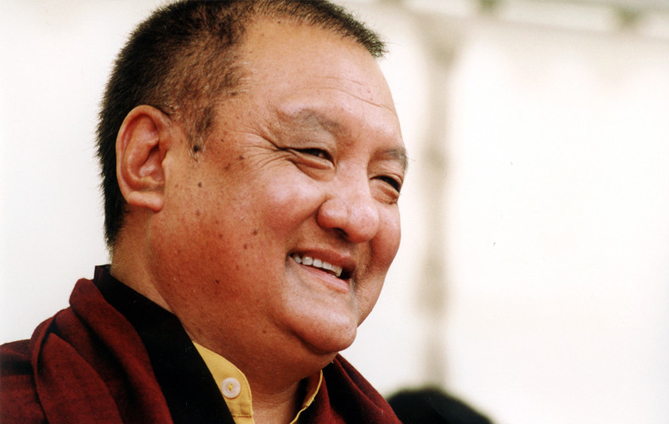
Shamar Rinpoche's Cremation Goes Ahead

Yesterday thousands of Tibetan exiles attended the funeral in Nepal of Shamar Rinpoche, one of Tibetan Buddhism's most senior monks who died last month in Germany of a heart attack aged 62.


Nepal’s government announced on Tuesday that it would allow the funeral and cremation of Shamar Rinpoche to take place in the country, reversing an earlier refusal seen by some as resulting from pressure from China.

The decision came after Prime Minister Sushil Koirala returned from the United States following treatment for lung cancer and held an emergency cabinet session to overrule his deputy prime minister, Bam Dev Gautam. Shamar Rinpoche's body was brought from Bhutan on Tuesday to Shar Minub, the monastery he ran near the capital Kathmandu.

“The cabinet meeting endorsed a policy to cremate a foreigner’s body in Nepal if they have cultural and religious ties to Nepal and wish to be cremated here,” said Minendra Rijal, a government spokesman.

Saturday, 26 July 2014

NEW MOON - Harmlessness

Harmlessness

To harm living beings
who, like us, seek contentment,
is to bring harm to ourselves.

Dhammapada 131

Self interest can be used in our pursuit of right action. When faced with danger we readily feel
threatened, our hearts become inflamed and wise discernment obscured. However, instead of losing ourselves in defensive reaction, right training can help us remember that we are all in this together. We all share the wish to be free from suffering. Probably the aggressor has forgotten this fact, hence their intent on harming us; but so long as we are intent on harming them, only increased mutual suffering ensues. Regular recollection on the universality of suffering can protect us from falling into this vortex. Spending a short period of time each day considering how we are all looking for contentment, can give rise to feelings of empathy and compassion. This is not an argument of which we will be convinced by speculation alone, but if we immerse ourselves in this contemplation we could find the benefit for ourselves.

With Metta, Bhikkhu Munindo

Friday, 11 July 2014

FULL MOON

As solid rock
is unshaken by the wind,
so are those with wisdom undisturbed
whether by praise or blame.

Dhammapada v. 81

Sometimes we feel liked and appreciated, at other times we feel disliked and dismissed. Is there a way of staying steady while being praised and blamed, accepted and rejected? It was on a full-moon in the month of July that the Buddha first delivered his teachings encouraging the cultivation of wisdom. A wise perspective on life, he said, is what offers inner security and steadiness. He had been looking a long time for a solution to the frustrations of life. Once he found the freedom from all frustration and suffering he formulated his teachings into what we now know as the Four Noble Truths: there is suffering; there is a cause; there is freedom; and there is a practice we can do in pursuit of that freedom. The image of a rock unshaken by the wind is to inspire us to cultivate this wisdom.

With Metta,
Bhikkhu Munindo          (The picture is of "The Long Stone", a Megalithic monument near Mottistone in The West Wight!)

Tuesday, 8 July 2014

Former Archbishop of Canterbury does Buddhist Meditation

Rowan Williams, the former Archbishop of Canterbury, has revealed that he spends up to 40 minutes a day meditating.

From the story in the Telegraph it would appear that Lord Williams uses a meditation stool and a combination of Mantra and Anapanasati breath awareness meditation.

Williams also practices walking meditation. It would appear that he is using the Zen Kinhin method of coordinating the pace at which one walks with the pace of one's breathing.