Showing posts with label Buddhist. Show all posts

Monday, 6 February 2023

Sangha Member Walks Around Island Coast

Isle of Wight Coastal Path - Hiking and Wild Camping Solo in Winter


But if Jonas was Circumambulating the island he was going anti clockwise - is he a secret Bon adherent?

Saturday, 28 May 2022

Some Thoughts on Getting Older

I was sent this piece by a Sangha member and it does say to share it................
So here it is..........................

Aging Wisely  By Sharon Salzberg


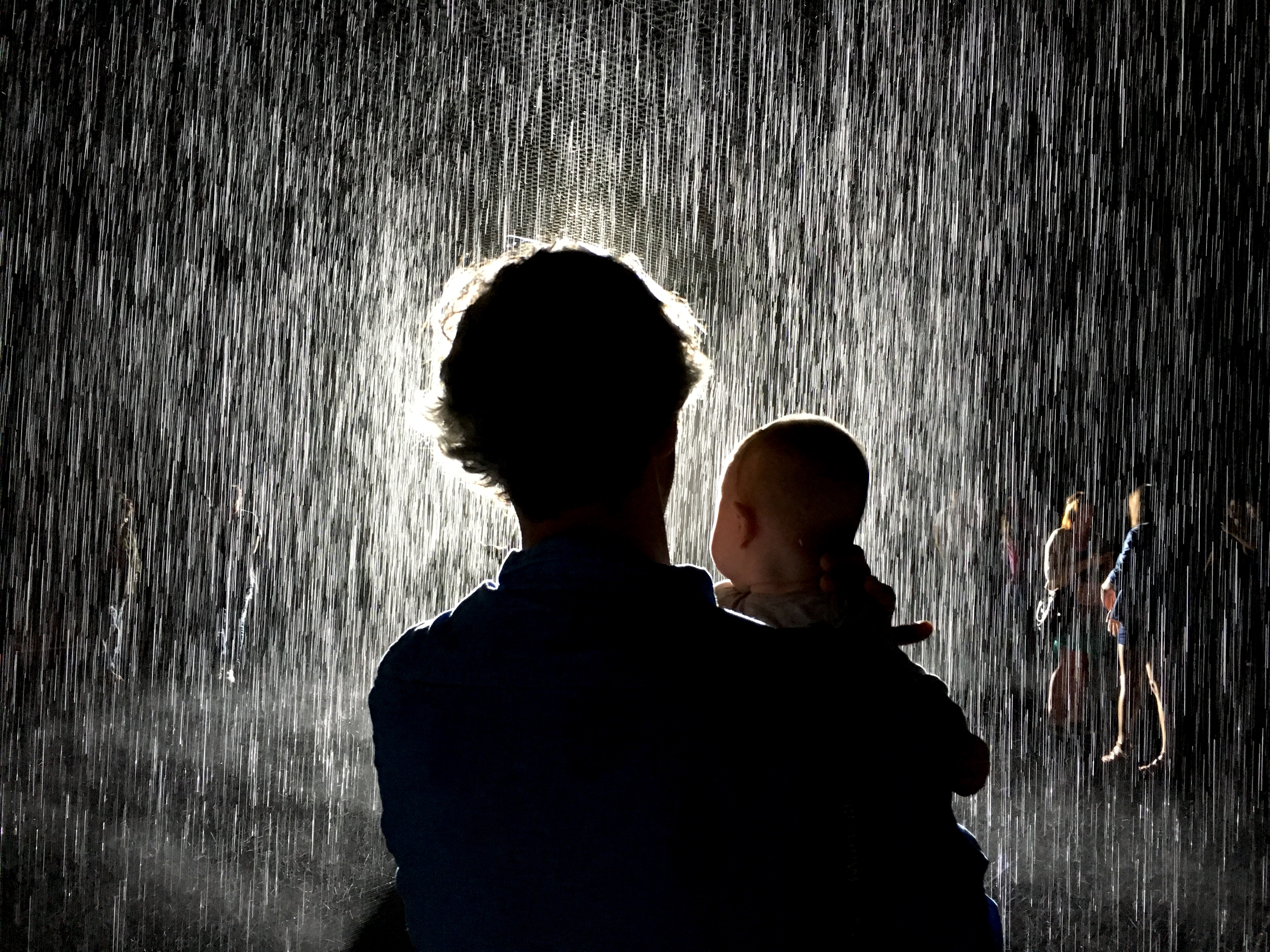
I’m mostly in denial that I’m about to turn 70 years old. I often find myself saying, “Let’s just not think about it. I’ll pretend it isn’t going to happen.” 

But of course, as I contemplate my upcoming birthday with disbelief, I remember that I’ve spent all these years in a Buddhist tradition that encourages reflecting on your own death every day. So maybe it’s not something I should put off anymore! 

When I do this reflection, I think about letting go. During the pandemic, I let go of many things: travel, seeing friends, and much more. And so I ponder what it would mean to let go of everything. 

Of course, aging is a mixed bag. Wisdom, perspective, gratitude—so many things grow stronger as we get older. But there are also distressing, growing incapacities from one’s body; the fear of what a moment of forgetfulness might mean; the sheer indignity of being treated as unimportant by some; even the frustration of having to scroll down for a long, long, long time on some websites to get to the year of your birth (my personal pet peeve). 

Dandilion Blowing Away And then there is the painful fact, so relevant recently, that one’s body tends not to mount as strong an immune response to illness. 

I do also feel the joy of aging. For example, I don’t feel ambitious. If someone asks me what I’d like my legacy to be, I think, “I’ve done it.” Hopefully I can still accomplish things and make things happen, but I don’t feel competitive. I don’t feel haunted by the folly of youth as I might have been at one time. 

I once attended a retreat focused on aging led by the Tibetan master Tsoknyi Rinpoche. Although he was still a fairly young man at that point, Rinpoche had noticed that many of his students were confronting the challenges of growing older. One afternoon, someone in the retreat was waxing on about the tremendous joys and delights of growing older. Exhilarating insights, followed by a litany of pleasures, followed by impressive triumphs, all spoken faster and faster (“What is she running from?” I thought darkly), until Rinpoche interrupted her. 

“Don’t just make a poem out of aging,” he said. “It can be really hard sometimes.” 

He wasn’t encouraging cynicism or despair—more an invitation to see and openly acknowledge all aspects of our experience. We don’t want to deny the difficult, of course, but we also don’t need to be completely defined by it. Being enveloped in and defined by what’s difficult is relatively easy to do, so it takes some intentionality to recognize all aspects of our experience and remember the positive forces in our lives. 

So how might that work in practice? 

First, while the difficult parts of aging are unavoidable, we can try not to add to them. For example, I have seen, throughout my life, the tendency to rehearse some catastrophe and thereby live it several times. So I think the first question is always, “What are we adding onto a situation which is already hard enough?” 

Not being able to do something I used to be able to do, or being in physical pain, or losing people we love—these are already very hard. But we often add more suffering onto them, like thinking it shouldn’t be this way, or feeling shame or fear. One possibility of mindfulness is to notice where we’re adding to the suffering that’s already there, and try not to fall so much into it. 

Second, I learned an interesting form of lovingkindness meditation from Ananda Matteya, then an energetic, 94-year-old Sri Lankan monk visiting the Insight Meditation Society in 1993. He taught us what he described as his favorite meditation: combining loving-kindness meditation and a body scan. He would go through the body, part by part, wishing each part well: may my head be happy, may my eyes be happy, and so on through the whole body. Even “may my liver be happy!” 

I’ve taught that meditation to people with injuries, scars, diseases, difficult diagnoses, and all kinds of things, and it makes a difference. It can help counteract our tendency to add bits of shame or resentment, even subconsciously, to whatever is already there. 

Finally, there’s the perspective of wisdom. 

I first met Joseph Goldstein at my first meditation retreat, in India, in January, 1971. Just before lunch, I was in a madly frustrated state, because I couldn’t keep my attention on the breath. I said to myself, “If your mind wanders one more time, you should just bang your head against the wall!” 

Fortunately, the lunch bell rang just then, saving me from that fate. This retreat was not silent, so waiting in line for lunch, there was a conversation going on between two people behind me. One asked, “How was your morning?” And the other replied, “I couldn’t concentrate at all, but maybe this afternoon will be better.” 

He was so casual about it that I was horrified. I thought “This guy doesn’t understand how extraordinary these teachings are—he’s being so glib!” 

Of course, ‘this guy’ was Joseph Goldstein. The difference, of course, was that I had been meditating for four days, while he had been meditating for four years and had a kind of perspective on change, on the inevitable ups and downs of meditation, that I was nowhere near having. 

Now I feel that way about life in general. Things change, there are ups and downs, and with practice, we can learn to let go, again and again.

Tuesday, 13 August 2019

Zen Group Stop York Minster Meetings After Christian Objections

Some of you may recall a story we ran in May 2016, "Christian Group Protests Meditation in York Minster" where Andrea Williams, chief executive of the pressure group Christian Concern, said: "Buddhism contrasts sharply with Christian teaching about God. The two are incompatible. To try to mix them is deceptive and dishonours Jesus Christ."

"It is remarkable that this is happening at one of the country's best known cathedrals. The Archbishop of York must take swift action. This type of confusion undermines the Church of England's current initiative to encourage Christian prayer."

"It is sobering that last year a Canon of this same cathedral blessed the city's 'Pride' march. The Church of England must take decisive action to deal with this radical agenda."

Well, guess what, the Zen meditation group is to cease meeting in the grounds of York Minster following controversy over “bilingual religion”.

The group has been told that its weekly 90-minute silent meditation sessions in the Old Palace must end in the autumn.

Senior clergy at York Minster had quietly introduced Zen Buddhist zazen meditation sessions. They became a regular fixture, listed among the Minster’s main “spiritual” activities, alongside its Sunday school and youth group, and were enthusiastically supported by the then Dean, the Very Rev Vivienne Faull.

The group was not a religious order and had never met within the cathedral, she said. “The chapter of York would not give permission for any such religious order to be set up at York Minster.”

But the new Dean of York Minster, the Right Rev Dr Jonathan Frost, who was installed in February, is believed to have decided to end the Minster’s association with the Zen group.
The sessions were initiated by Christopher Collingwood, the canon chancellor of the minster, who practises and teaches Zen meditation and has described himself as “religiously bilingual”. On his Twitter feed, Collingwood says he is “leader of York Zen Group (part of Wild Goose Zen Sangha in the White Plum Asanga)”.

Monday, 8 July 2019

Summer Meditation Retreat

Hi Everyone,

Just a quick reminder that it now just under two weeks until West Wight Sangha’s Summer Meditation Retreat! The retreat runs from 10 o’clock on the morning of Sunday the 21st of July to four o’clock in the afternoon. For anyone who hasn't been before, we are at Yew Tree Cottage, Weston Road, Totland and you can ring me on 756884.

Please let me know if you intend coming so that I have some idea of the numbers.

As is now our usual practice we’re looking to evenly balance the morning and afternoon sessions so we’ll be having lunch from 12:30 finishing at 1:30, so it would be nice if you’re only coming for the morning or afternoon to stay or come at half twelve and join everyone for lunch…… usual format of bringing vegetarian food to share. Also, feel free to bring any readings that you would like to share.

Be well, Steve

Friday, 26 October 2018

Gagging Orders and Compassion

I received a link to a video from Sylvia, a Buddhist friend, and have decided to post it here. Given the nature of the piece, it seems timely to reiterate our editorial policy.

"It is Not the purpose of this website to campaign on political issues, however as a Buddhist site we will continue to promote peace and the welfare of all beings by any appropriate non-violent means".

The story is particularly poignant given the current Lord Hain and Sir Philip Green controversy and the human misery being inflicted by the roll-out of Universal Credit.

The lady in the video below is Ellie Waugh, chief executive of the charity Humanity Torbay, which aims to help the vulnerable secure homes, jobs and training. At its heart, this is about compassion.

Part of that mission has involved working with the government – but this has come with strings attached, including a demand not to criticise Tory policies such as Universal Credit on pain of losing grant aid.


Passion mixed with great compassion........

Thursday, 26 April 2018

National Memorial to Dr. Ambedkar Inaugurated in New Delhi

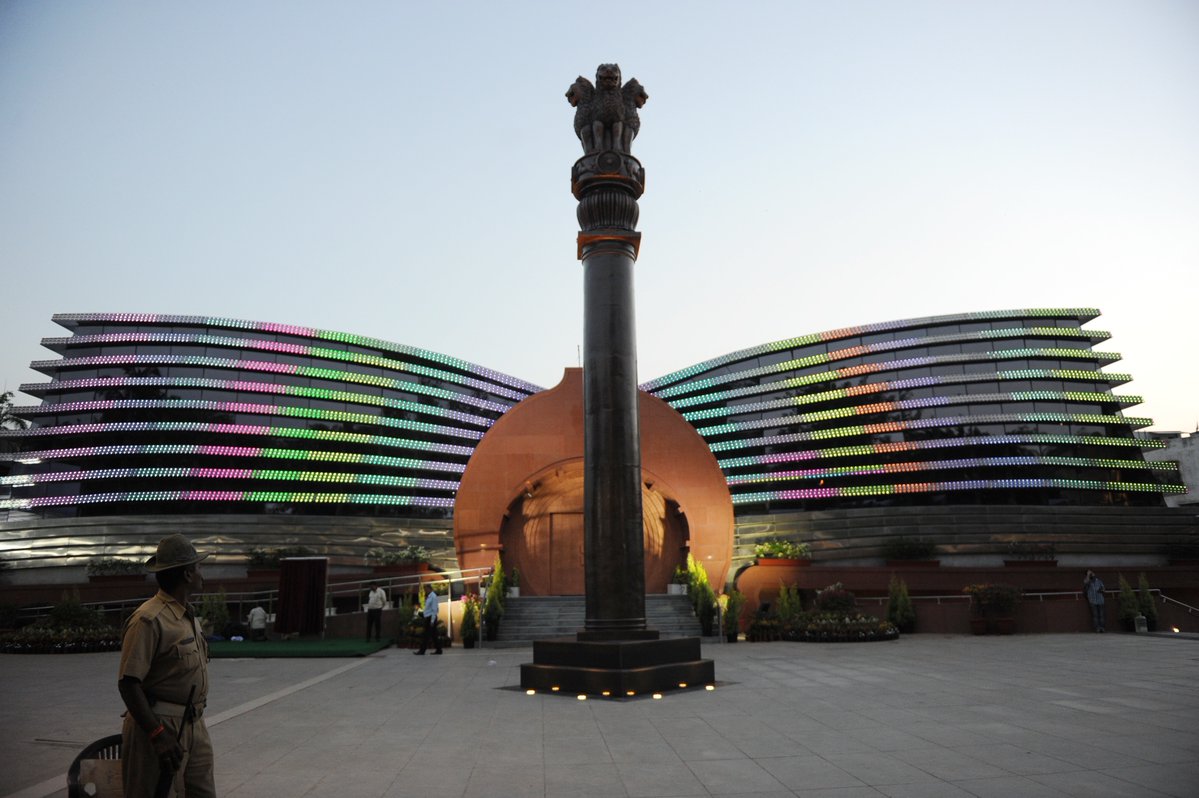
On April the 13th, on the eve of the 127th anniversary of the birth of Dr. B. R. Ambedkar, Indian prime minister Narendra Modi inaugurated the Dr. Ambedkar National Memorial in New Delhi—at the place where Dr. Ambedkar died on the 6th of December 1956.


The Memorial has been designed to resemble the shape of an open book in reference to the Constitution of India, of which Dr. Ambedkar was the principal architect. The building is completely green, combining modern architecture with Buddhist elements. Modi previously laid the first stone for the memorial’s construction on 21 March 2016.

The new memorial houses a marble statue of the Buddha, a meditation hall, a Bodhi tree, a replica of the Ashoka pillar at Sarnath in Varanasi, musical fountains, façade lighting, and a 3.7-meter bronze statue of Dr. Ambedkar.


Bhim Rao Ambedkar, an 'untouchable', or Dalit, who converted to Buddhism was a prominent Indian freedom fighter, and the chief architect of the Indian Constitution, which outlawed discrimination based on caste.

Born into a poor family, Ambedkar spent his whole life fighting against social discrimination in the caste system during and after British colonial rule, which ended in 1947. He is also credited with having sparked the Dalit Buddhist movement.

The Dalit Buddhist movement (also known as the Neo-Buddhist movement) is a socio-political movement by Dalits in India started by Dr. Ambedkar. It radically re-interpreted Buddhism and created a new school of Buddhism called Navayana. The movement has sought to be a socially and politically engaged form of Buddhism.

Triratna Bauddha Mahāsaṅgha (formerly called TBMSG for Trailokya Bauddha Mahasangha Sahayaka Gana) is the Indian wing of the UK-based Triratna Buddhist Community founded by Sangharakshita. Its roots lie in the scattered contacts that Sangharakshita had in the 1950s with Ambedkar. Sangharakshita, then still a bhikshu, participated in the conversion movement from 1956 until his departure to the UK in 1963.

When his new ecumenical movement had gained enough ground in the West, Sangharakshita worked with Ambedkarites in India and the UK to develop Indian Buddhism further. After visits in the late 1970s by Dharmachari Lokamitra from the UK, supporters developed a two-pronged approach: social work through the Bahujan Hitaj trust, mainly sponsored from the general public by the British Buddhist-inspired Karuna Trust (UK), and direct Dharma work. Currently the movement has viharas and groups in at least 20 major areas, a couple of retreat centres, and hundreds of Indian Dharmacharis and Dharmacharinis.

A little-known fact is that Roma gypsies trace their origins to the Dalits of India and several have followed the lead of their Indian compatriots and converted to Buddhism, often as a response to discrimination. There is a sizeable Gypsy Buddhist community in Hungary, they take their inspiration from Dr. Ambedka and are officially affiliated to the Triratna Buddhist Community.

Tuesday, 12 December 2017

Arson Attack Destroys Buddhist Centre in Savoie, France

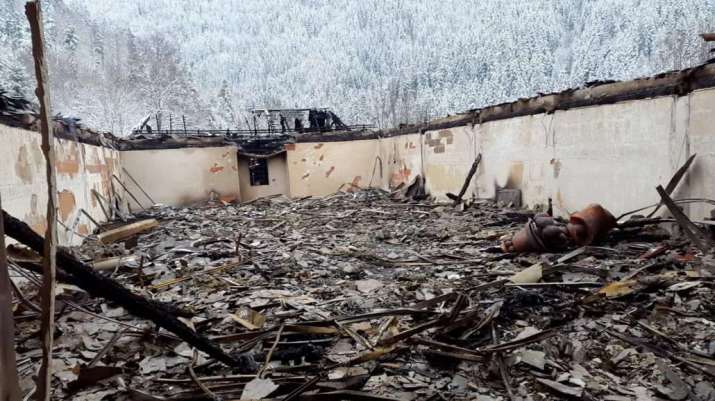
On the night of Thursday to Friday, December 1st, the old Chartreuse of St-Hugon at Karma Ling Buddhist centre in France was the victim of an arson attack. Fortunately, there were no casualties.

The fire broke out around 1 a.m. on the 1st of December at the south side of the grand temple. The flames spread quickly to the roof and engulfed the rest of the building.


A newsletter posted by Shangpa Karma Ling last weekend revealed that there had been several threats and previous arson attempts at the centre.

"Yesterday morning, exactly one week after the December 1 fire, we received what is likely a third threatening letter from the person who claims to be the perpetrator. This letter claims the burning of the Chartreuse and urges residents to evacuate, at the risk of suffering the consequences of a new attack."

The newsletter goes on to say............

"I would also like to encourage you to practice the mantra of the Buddha of Immense Goodness: “Om Mani Padme Hum” associated with a special benevolent dedication intent for the person claiming the fires and continuing to threaten. This person is in great pain and we want to help him or her as much as we can. I personally make prayers and wishes so that he or she become free from any torments.

In these circumstances, let us remember the stanza of the thirty-seven Bodhisattva practices:

“If someone I cherish and protect as my child Come to think of myself as his enemy, Just like a mother for her child with an illness To give him even more affection, such is the practice of a Bodhisattva. “

From heart to heart, May everything be auspicious."

Lama Denys Rinpoché


Monday, 30 October 2017

Are These Hobbit Holes?

Are these curious structures Hobbit-holes, otherwise called Smials?


They were holes dug into the hill side, usually having a minimum of one round window and front door and sometimes back door. On the other hand, the poor lived in basic burrows with perhaps only a single window. Are these then the burrows of poor Hobbits?

Well no, they are in fact meditation caves tucked into the hills just above Dochula pass in Bhutan. These tiny, open-faced caverns are built from stone and painted in colourful detail with Buddhist symbolism. The druk, or dragon—Bhutan’s long-time national symbol and spirit animal—stretches over the cave entrance, bringing good luck and good tidings (unlike the dragons in Middle Earth!).

For comparison, here is a Hobbit house...............


Wednesday, 13 September 2017

Myanmar and the Rohingyas

On yesterday's edition of BBC radio 4's program Today Vishvapani (a member of the Triratna Buddhist group) offered his thoughts on the situation in Myanmar and the plight of the Rohingyas..........

"When I hear about the horrific repression that's being inflicted on the Muslim Rohingyas, I share many of the outraged feelings that others are expressing. But I feel something extra as well: shame that these things are being done by my fellow Buddhists for the sake of a Buddhist state and with the support of many Buddhist monks.

How did we get here? I don't want to over-simplify the situation in Rohingya, or generalise the responses of all Burmese Buddhists; but the question remains. The Buddha said that 'hatred is never overcome by hatred, but only by love'; so how has the faith he founded become associated with such brutality?"

Listen to the full talk here................


DOWNLOAD       (Right click and "Save link as....")

Saturday, 26 August 2017

The Isle of Wight, The Buddha, NCIS and The Ham

Everything is interconnected.

Our last post concerned the changes to Japan's traditional Buddhist inspired vegetarian cuisine brought about by Japan's contact with the West.

I've just come across this story about the "World’s Oldest Edible Ham" which is stored in the Isle of Wight County Museum!

Before you all book a ferry to come over to the island to see it pause a moment for the penny to drop that this museum is in Isle of Wight County, Virginia USA which featured in a previous post about the Isle of Wight appearing in an episode of NCIS.


To further add to the confusion and connections the museum is in the town of Smithfield a name any Brit immediately associates with Smithfield market, the largest wholesale meat market in the UK.

You can keep track of what the ham is doing here, yes they've got a webcam on it.......

Wednesday, 29 March 2017

A Proposal for Peace - Buddhist Talk in Newport


(A better link is https://www.eventbrite.co.uk/e/a-proposal-for-peace-toward-a-more-humane-world-tickets-33147774887/amp).

A Proposal for Peace – toward a more humane world 

A talk by Robert Harrap 

This talk introduces the work of Buddhist Philosopher Daisaku Ikeda, who calls for greater efforts to protect human rights, safeguard the planet’s ecology, and the urgent need to ban all nuclear weapons. 

Humanistic scholar, author and peace-builder Daisaku Ikeda, president of the Soka Gakkai International (SGI), a worldwide lay Buddhist organisation, has written and published a Peace Proposal every year since 1983, submitting these to the United Nations as part of his lifelong commitment to dialogues supporting world peace and the realisation of human potential.

The Isle of Wight members of the socially engaged Buddhist movement SGI-UK* are hosting a talk, followed by question, answer and discussion about the ideas underpinning 2017 Peace Proposal: ‘The Global Solidarity of Youth: Ushering in a New Era of Hope’, by Daisaku Ikeda. Ikeda’s contribution has earned him profound respect and more than 200 honorary doctorates and awards from universities, educational institutions and peace groups around the world.

Each proposal focuses on key themes and global issues that concern politicians, policy makers and individuals alike. Through each he promotes the idea of a world in which ‘no one is left behind’, and suggests ways that individuals can contribute towards, and thereby participate in, shared action which will lead to greater solidarity and the elimination of suffering. This year he particularly highlights the ‘role of youth’; ‘laying foundations to overcome division and inequality’; ‘abolishing nuclear weapons’; ‘restoring hope in the hearts of refugees’ and ‘building a culture of human rights’.

The talk will be delivered by Robert Harrap, SGI-UK General Director since 2013, and a Barrister in the areas of employment, social housing and human rights. Robert also appears regularly on the BBC Radio 2’ Programme ‘Pause for Thought’.

When: Monday, 8 May 2017

Time: Talk 6.15 -7 pm, followed by Q&A 7 – 7.30pm (doors open 6pm)

Where: Island Innovation VI Form Campus Upper St. James Street, Newport, PO30 1LJ

This is a free event As places are limited please register your attendance in advance on https://www.eventbrite.co.uk/e/a-proposal-for-peace-toward-a-more-humane-world-tickets-33147774887/amp

For more information: contact: Harry Vernon 07854 005042
See www.daisakuikeda.org
Read a synopsis of the proposal
http://www.sgi-uk.org/global-solidarity-youth-ushering-new-era-hope
Read full text of proposal
http://www.sgi-uk.org/sites/default/files/peace-proposal/PeaceProposal_2017.pdf

Tuesday, 21 March 2017

A Buddhist Poem for World Poetry Day

Here's a poem by Kenji Miyazawa – "Strong In The Rain" (Ame ni mo Makezu) for World Poetry Day.


Strong in the rain
Strong in the wind
Strong against the summer heat and snow
He is healthy and robust
Unselfish
He never loses his temper
Nor the quiet smile on his lips
He eats four go of unpolished rice Miso and a few vegetables a day
He does not consider himself
In whatever occurs…his understanding
Comes from observation and experience
And he never loses sight of things
He lives in a little thatched-roof hut
In a field in the shadows of a pine tree grove
If there is a sick child in the east
He goes there to nurse the child
If there’s a tired mother in the west
He goes to her and carries her sheaves
If someone is near death in the south
He goes and says, “Don’t be afraid”
If there’s strife and lawsuits in the north
He demands that the people put an end to their pettiness
He weeps at the time of drought
He plods about at a loss during the cold summer
Everyone calls him “Blockhead”
No one sings his praises
Or takes him to heart…
That is the sort of person I want to be.


World Poetry Day is today, the 21 March, and was declared by UNESCO (the United Nations Educational, Scientific and Cultural Organisation) in 1999. The purpose of the day is to promote the reading, writing, publishing and teaching of poetry throughout the world and, as the UNESCO session declaring the day says, to "give fresh recognition and impetus to national, regional and international poetry movements".

Friday, 30 December 2016

A Buddhist Father Christmas

The Listening Project is a BBC Radio 4 initiative that offers a snapshot of contemporary Britain in which people across the UK volunteer to have a conversation with someone close to them about a subject they've never discussed intimately before.

Just before Christmas Fi Glover introduced a conversation between a Buddhist Father Christmas and a Baptist chaplain about how they spend Christmas morning in the hospice. Another in the series that proves it's surprising what you hear when you listen.


Thursday, 6 October 2016

National Poetry Day

Back in March we posted some Buddhist poems for World Poetry Day. Well, today is National Poetry Day so here are two poems by one of my favourite British Buddhist poets, Wendy Stern.................


Every day

Every day,
Every day it seems
A raindrop rests in the crook of a fragile willow branch
Outside my window.

Not all day,
But at a precise and special moment
As if by some strange and prearranged agreement.

It is a glow infused with light,
Effortlessly yet magnificently reflecting the early spring sunlight.

Does it cling,
Clutching ferociously with all its might,
Trembling, terrified
Of that which is to come,
That which is yet to face it
As the gentle breeze quivers the surrounding leaves,
Rouses and awakens the freshly formed blossom,
Lightly brushes against your cheek should you notice it?

Or does it rest,
Nestling in its willow branch home
Undisturbed, idle,
Complacent and unbothered even -
Just is?

Will we ever know?

Every day,
Every day it seems
A raindrop rests in the crook of a fragile willow branch 
Outside my window.


Trapped on the inside

Life came to me today,
Through my window,
All feathers and passion,
With more colour, intensity, swiftness and determination
Than perhaps I've ever known before.

It perched, finally,
Trapped on the inside for once,
And it looked at me.
I spoke to it, calming it,
And then I set it free.

Life came to me today,
Trapped on the inside for once.

(Wendy is a Buddhist and poet living in Bristol, in the west of England. For many years she has been completely bedridden, and her poetry therefore comes from this unusual perspective.)

Tuesday, 13 September 2016

From Wooden Temples to Skyscrapers

Another interesting article is this from the Economist.............

THE five-storey pagoda of the Temple of the Flourishing Law in the Nara prefecture of Japan is one of the world’s oldest wooden buildings. It has withstood wind, rain, fire and earthquakes for 1,400 years. Analysis of the rings in the central pillar supporting the 32-metre structure suggests the wood that it is made from was felled in 594, and construction is thought to have taken place soon after.


In an age of steel and concrete, the pagoda is a reminder of wood’s long history as a construction material. New techniques mean that wood can now be used for much taller buildings. A handful are already going up in cities around the world. The 14-storey Treet block of flats in Bergen, Norway, is currently the tallest. But Brock Commons, an 18-storey wooden dormitory at the University of British Columbia in Canada, is due to be completed in 2017.

And this is a proposed 1,000ft structure off the edge of the Barbican, in the City of London. If it goes ahead it will be London's second tallest building after The Shard - and the tallest wooden structure in the world.


Thursday, 25 August 2016

170 Buddhist Temples Damaged in Eathquake

Not only was Italy struck by an earthquake on Wednesday but central Myanmar was also shaken by a powerful quake which killed at least three people two of whom were children, and damaged scores of centuries-old Buddhist pagodas around the ancient capital of Bagan.


The 6.8 magnitude quake shook buildings across the country, with tremors felt as far away as Thailand, where witnesses reported high rise towers swaying in Bangkok, and also in Bangladesh and eastern India.


The earthquake caused landslides along riverbanks and damaged more than 170 Buddhist temples in Bagan. The area is at the heart of Central Myanmar’s growing tourism industry, which has taken off since the country began its democratic transition in 2011.

Monday, 8 August 2016

Leonard Cohen's Goodbye to Marianne

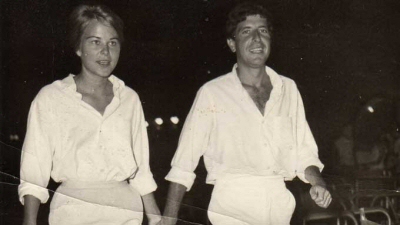
Leonard Cohen wrote this letter to Marianne Ihlen, his muse, his lover and the subject of his song So Long Marianne and the inspiration behind Bird on the Wire, on hearing of her impending death.


"Well Marianne, it's come to this time when we are really so old and our bodies are falling apart and I think I will follow you very soon. Know that I am so close behind you that if you stretch out your hand, I think you can reach mine.

And you know that I've always loved you for your beauty and for your wisdom, but I don't need to say anything more about that because you know all about that. But now, I just want to wish you a very good journey.

Goodbye old friend. Endless love, see you down the road."


She died in Norway on the 29th of July at the age of 81 of leukaemia.

Leonard Cohen was ordained a Zen Buddhist monk in 1996.

Thursday, 26 May 2016

Dana in Danger

At our latest Sangha meeting we discussed charitable giving. The subject came up in relation to the recent revelations that 32 UK charity bosses were paid over £200,000 last year.


A survey of boardroom pay among the top 150 charities found that 32 executives were paid over £200,000 last year, up from 30 in 2013.

The number of charity leaders paid over £300,000 also increased from nine to 12 in two years, according to research by Third Sector magazine. Overall, the median pay level for bosses across the top 100 charities in the UK was £165,000 a year.

The usual justification that such high salaries are needed to attract the best talent was wheeled out. Sir Stuart Etherington, chief executive of the National Council for Voluntary Organisations, which represents charities said: “There is a clear case for paying for expert staff to achieve the results donors rightly demand – although times are still tough for charities which is why average executive pay is falling.”

Presumably then, if we give more to the charities the CEOs will be paid more? Our generosity is intended to benefit those in need not to boost the pay of people who one would have hoped were motivated by the same spirit of wanting to contribute to the welfare of other beings less fortunate than ourselves.

The Buddhist practise of Dāna has been defined in traditional texts as any action of relinquishing the ownership of what one considered or identified as one's own, and investing the same in a recipient without expecting anything in return.


The danger is that if such giving is perceived as being diverted into the already well lined pockets of those in charge people will stop donating, thinking that they are just throwing their money into the trough.

Generosity doesn’t have to mean giving material things or money. In fact, often the most generous thing we can give in our busy world is our time. There are so many things that need doing that we can do voluntarily. We just look around us and see all the suffering there is in the world and then step in and help out where our help is needed.

Tuesday, 24 May 2016

Things To Do

This isn't really a poem and yet is sheer poetry. One of our members shared this at a recent meeting; it is taken from Marguerite Manteau-Rao's new year's resolutions. She is a mindfulness meditator, Mindfulness-based psychotherapist, memory care consultant and co-founder of the Presence Care Project.

"The old informs the not yet born, and the awareness of time passing brings a sense of urgency, to be wiser, kinder, and even more mindful . . . Here is what I wish for this New Year:

To make my sitting practice a daily priority.
To spend less time being social with strangers, online.
To think twice before acting on the heart's closings.
To not expect too much, and be grateful for what is.
To make room for the unavoidable unpleasantness.
To not cling to pleasant things, people, or moments.
To have compassion for my imperfections, and those of others.
To uproot the hindrances, especially fear and anger.
To view each social interaction as an opportunity to learn.
To play catch with thoughts and chase away the impure ones.
To move more slowly and more deliberately in the world.
To be more with nature, and people, and less in my head.
To rest in the breath often throughout the days.
To walk each step, thankful for the earth beneath.
To practice loving kindness often, and forgive myself when I forget . . ."

Wednesday, 18 May 2016

Christian Group Protests Meditation in York Minster

Senior clergy at York Minster have quietly introduced Zen Buddhist zazen meditation sessions. They are now a regular fixture, listed among the Minster’s main “spiritual” activities, alongside its Sunday school and youth group, and have been enthusiastically supported by the Dean, the Very Rev Vivienne Faull.

The York Zen Sangha meets on alternate Fridays at the Old Palace, in Dean’s Park, for formal sitting meditation, led by the Canon Chancellor, the Revd Canon Dr Chris Collingwood and supported by Fr. Patrick Kundo Eastman Roshi, a Roman Catholic priest and Zen master in the White Plum Asanga of the lineage of Hakuyu Taizen Maezumi Roshi. All are welcome to attend the sessions, which run from 6.30pm to 8pm.

As you might guess this has not gone down well with everyone. Andrea Williams, chief executive of the pressure group Christian Concern, said: "Buddhism contrasts sharply with Christian teaching about God. The two are incompatible. To try to mix them is deceptive and dishonours Jesus Christ."

"It is remarkable that this is happening at one of the country's best known cathedrals. The Archbishop of York must take swift action. This type of confusion undermines the Church of England's current initiative to encourage Christian prayer."

"It is sobering that last year a Canon of this same cathedral blessed the city's 'Pride' march. The Church of England must take decisive action to deal with this radical agenda."

As usual there seems to be a complete inability to separate technique from teachings. Just as many church halls ban Yoga classes because it will turn people into Hindus and Mindfulness teachers dare not mention it's Buddhist origins.

Zazen is the practice of stilling the mind through wholehearted attentiveness to the breath. This steady attention coupled with the stillness of the body frees the mind from normal activities. Yamada Roshi, a great Japanese Zen Master said to all his Christian Students, "I am not trying to make you a Buddhist, but to empty you in imitation of your Lord, Jesus Christ."