Showing posts with label Dalai Lama. Show all posts

Wednesday, 10 April 2019

Dalai Lama Ill

Talking about Tibet it was announced that the Dalai Lama was admitted to hospital in New Delhi yesterday with a chest infection. Given his holinesses age, 83, this is a serious condition but he is described as being stable.

Many of the up to 100,000 Tibetans living in India are worried that their fight for a genuinely autonomous homeland would end with the Dalai Lama.

He told Reuters last month that it was possible that once he dies his incarnation could be found in India and warned that any other successor named by China would not be respected.

China brands the Nobel peace laureate as a dangerous "splittist" and says the ruling Chinese Communist Party has the right to select the Dalai Lama’s successor, as a legacy inherited from China’s emperors.

Friday, 6 July 2018

Happy Birthday your Holiness

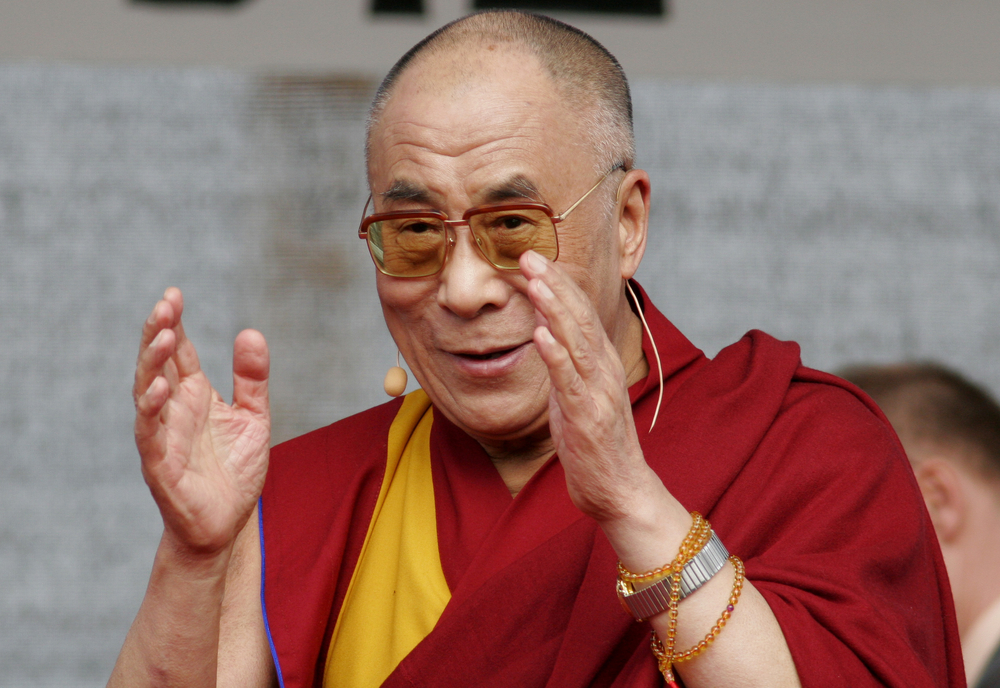
Today is the Dalai Lama's 83rd birthday.


Authorities in northwest China’s Qinghai province have clamped down on social media and deployed large numbers of armed police to Tibetan villages and towns in an effort to discourage celebrations of the July 6 birthday of the exiled spiritual leader.

Tightened restrictions include warnings recently issued to the managers of social media chat groups, urging them to restrict any sharing of “secret, internal” information by Tibetans and to keep an eye out for attempts to organise celebrations of the birthday of the Dalai Lama.

Friday, 29 December 2017

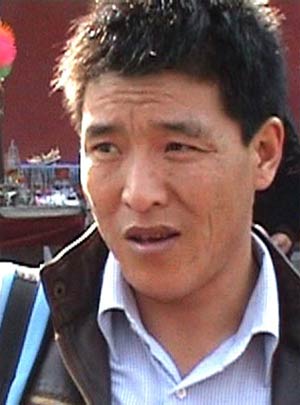
Dhondup Wangchen Escapes From China

Tibetan film-maker Dhondup Wangchen was jailed in China for six years in late 2009 in the western province of Qinghai after he made a documentary in which ordinary Tibetans praised the Dalai Lama and complained about how their culture had been trampled upon.

The film, “Leaving Fear Behind”, features a series of interviews with Tibetans who talk about how they still love their exiled spiritual leader and thought the 2008 Beijing Olympics would do little to improve their lives. The film was shown in secret to a small group of foreign reporters in Beijing during the Olympics.

In a statement issued in Beijing late on Wednesday evening, the group "Filming for Tibet" said Dhondup Wangchen had arrived in the United States that day.

“After many years, this is the first time I'm enjoying the feeling of safety and freedom,” he said.

“I would like to thank everyone who made it possible for me to hold my wife and children in my arms again. However, I also feel the pain of having left behind my country, Tibet.”

Dhondup Wangchen had been released from prison in June 2014 in the Qinghai provincial capital of Xining but remained under tight surveillance with his movements and communications monitored.

Qinghai, which borders the Tibet Autonomous Region, is home to a large ethnic Tibetan population and is considered by many Tibetans as part of greater Tibet. It is also the birthplace of exiled Tibetan spiritual leader, the Dalai Lama.

Watch the film here............

Wednesday, 28 December 2016

Good News but NOT the First

Now here's a good one to end the year on. His Holiness the Dalai Lama awarded 20 Tibetan Buddhist nuns with Geshema degrees yesterday at a ceremony at Drepung monastery in Mundgod, South India last Thursday, the 22nd of December. (Geshema is simply the feminine version of Geshe). 

According to the Tibetan government in exile the nuns are the first female monastics to complete the necessary training and examinations to earn the degree.


However, what about Venerable Kelsang Wangmo? In April 2011, His Holiness advised the renowned Institute for Buddhist Dialectical Studies (IBD) in Dharamsala, India, to confer the degree of “Geshe” to Venerable Kelsang Wangmo, a German nun (formerly Kerstin Brunnenbaum).


The Geshema degree is the highest level of training in the Gelugpa school of Tibetan Buddhism, and could previously only be earned by men. In July, the Department of Religion and Culture of the Central Tibetan Administration announced that all 20 candidates for the degree had passed the examination process. The exams take a total of four years to complete, with one 12-day exam period per year each May that tests the knowledge gained in a 17-year course of study.


Monday, 21 September 2015

It's World Peace Day, Honest

Now I seem to have almost missed this but today is World Peace Day. What with all the ceasefires being declared and peace treaties being signed, the universal dancing in the streets and all those swords being beaten into ploughshares it's amazing but I really didn't notice the significance of the date.


Each year the International Day of Peace is observed around the world on 21 September. The United Nations General Assembly has declared this as a day devoted to strengthening the ideals of peace, both within and among all nations and peoples. The theme of this year’s commemoration is “Partnerships for Peace – Dignity for All” which aims to highlight the importance of all segments of society to work together to strive for peace.

So it is opportune that the Dalai Lama has given his blessing to a new course of evening classes, available across the UK, promising to make participants happier… and the world a better place.

The eight-week course, designed by the Action for Happiness organisation, claims to be scientifically proven to increase life satisfaction, mental well being, compassion and social trust.

Entitled Exploring What Matters, the classes will be free - although organisers do ask for a donation to cover costs. Hundreds of people have already volunteered to host the course in locations across the UK.

Launching the course today, on World Peace Day, the Dalai Lama said he was delighted to see the "work being done to create a happier and more caring society".

"I wholeheartedly support the Exploring What Matters course and hope that many thousands of people will benefit from it and be inspired to take their own action to help create a happier world," he said. During the course, local groups explore a series of questions including "What really matters in life?", "What really makes us happy?" and "How can we create a happier world?".

Better get a move on as the world ends day after tomorrow.................................

Sunday, 5 July 2015

Emily Maitlis Interviews the Dalai Lama

Tonight on BBC4 TV Emily Maitlis will be interviewing the Dalai Lama about his spiritual "beliefs" and his views on politics and aging.


The program is entitled Dalai Lama at 80 and airs at 7:00 pm.

If you're reading this after the event you can catch it here on the BBC iPlayer

Monday, 29 June 2015

Aldershot Anti Dalai Lama Protest

I was literally just about to put finger to keyboard to write a short piece on the Dalai Lama's "gig" at Glastonbury when I watched BBC South Today at lunchtime and saw the footage of the protesters at his Holiness's visit to Aldershot.


The group protesting is in fact the International Shugden Community. This is where it gets complicated, and I do mean complicated which is possibly why the Beeb made absolutely NO attempt to explain what the protests were actually about.

In brief, the protesters are part of a fringe group that first emerged from the Gelug school of Tibetan Buddhism in the 17th century. Gelugpa is the school to which the Dalai Lama belongs.

The original group was part of a faction challenging the 5th Dalai Lama's legitimacy and authority. Among other things, they objected to the 5th Dalai Lama's adopting practices of another school, called Nyingmapa, and they wanted to establish Gelugpa as the only legitimate school of Tibetan Buddhism (there are at least five others).

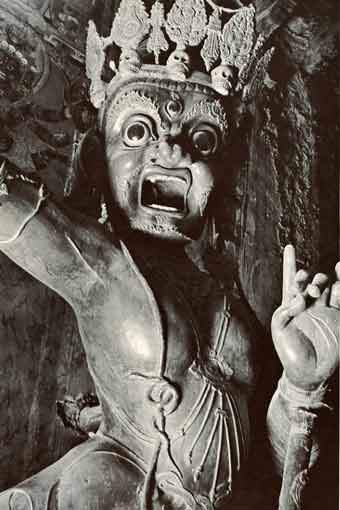
Today's protesters are distinguished by their devotion to Dorje Shugden, an iconic deity whom they call
enlightened, an emanation of Manjusri Bodhisattva, and even a buddha. However, Dorje Shugden originally was a low-level tantric deity associated with the Sakya school. Until relatively recently, even within the Gelug school he was considered a "worldly" or unenlightened figure charged with the protection of Gelugpa.

(I have quoted the above from an excellent  article by Barbara O'Brien, read the rest HERE.)

“The protesters are from an extremist religious group that is aligned with the political agenda of the Chinese government in Tibet to undermine the Dalai Lama and enforce allegiance to the Chinese Communist party,” said Kate Saunders, the communications director of the International Campaign for Tibet.

Incidently, I was watching the South Today program as it featured an item on the reinstatement of the coast footpath from Totland to Colwell here in the West Wight. The sea wall and its promenade were severely damaged during a landslip in December 2012 leading to a local campaign for repairs.

Friday, 3 October 2014

China Throws its Weight Around, Again

The World Summit of Nobel Peace Laureates, which was supposed to happen in Cape Town, has been cancelled after the South African government refused a visa to the Dalai Lama.

South Africa denied Tibet's exiled spiritual leader permission to attend the summit to avoid angering China, which regards the Buddhist monk as a "splitist" who wants Tibet to secede from China.

When the Dalai Lama announced he could not attend the meeting, six fellow laureates said they would boycott the summit in protest.

 “The venue of the summit has been shifted out of South Africa,” Nobel Peace Prize laureate Jody Williams, one of the boycotters, said to American reporters today. Williams was speaking from Dharamsala, India, where she was visiting the Dalai Lama to celebrate his Nobel silver jubilee anniversary celebrations yesterday.

Nobel peace laureate Desmond Tutu has lashed out at his government for "kowtowing" to China by barring the Dalai Lama from attending the global summit in Cape Town.

 Mr Tutu said the move sullies the memory of Nelson Mandela, who would not bend to the will of powerful states in his time as president. "When the Americans told him he couldn't continue his friendship with presidents Gaddafi and Castro, he told them to go and jump in the lake," Mr Tutu said.


Mr Mandela's heirs in the ruling African National Congress party under president Jacob Zuma had now "spat in Mandela's face", Mr Tutu said in a statement.

Friday, 18 April 2014

What Can Washington Learn From a Buddhist Monk?

I recently spotted this piece by Arthur C. Brooks in the New York Times..................

Capitalism and the Dalai Lama


In early 2013, I traveled with two colleagues to Dharamsala, India, to meet with the Dalai Lama. His Holiness has lived there since being driven from his Tibetan homeland by the Chinese government in 1959. From his outpost in the Himalayan foothills, he anchored the Tibetan government until 2011 and continues to serve as a spiritual shepherd for hundreds of millions of people, Buddhists and non-Buddhists alike.

Very early one morning during the visit, I was invited to meditate with the monks. About an hour had passed when hunger pangs began, but I worked hard to ignore them. It seemed to me that such earthly concerns had no place in the superconscious atmosphere of the monastery.

Incorrect. Not a minute later, a basket of freshly baked bread made its way down the silent line, followed by a jar of peanut butter with a single knife. We ate breakfast in silence, and resumed our meditation. This, I soon learned, is the Dalai Lama in a nutshell: transcendence and pragmatism together. Higher consciousness and utter practicality rolled into one.

That same duality was on display in February when the Dalai Lama joined a two-day summit at my institution, the American Enterprise Institute. At first, his visit caused confusion. Some people couldn’t imagine why he would visit us; as Vanity Fair asked in a headline, “Why Was the Dalai Lama Hanging Out with the Right-Wing American Enterprise Institute?”

There was no dissonance, though, because the Dalai Lama’s teaching defies freighted ideological labels. During our discussions, he returned over and over to two practical yet transcendent points. First, his secret to human flourishing is the development of every individual. In his own words: “Where does a happy world start? From government? No. From United Nations? No. From individual.”

But his second message made it abundantly clear that he did not advocate an every-man-for-himself economy. He insisted that while free enterprise could be a blessing, it was not guaranteed to be so. Markets are instrumental, not intrinsic, for human flourishing. As with any tool, wielding capitalism for good requires deep moral awareness. Only activities motivated by a concern for others’ well-being, he declared, could be truly “constructive.”

Tibetan Buddhists actually count wealth among the four factors in a happy life, along with worldly satisfaction, spirituality and enlightenment. Money per se is not evil. For the Dalai Lama, the key question is whether “we utilize our favorable circumstances, such as our good health or wealth, in positive ways, in helping others.” There is much for Americans to absorb here. Advocates of free enterprise must remember that the system’s moral core is neither profits nor efficiency. It is creating opportunity for individuals who need it the most.

Historically, free enterprise has done this to astonishing effect. In a remarkable paper, Maxim Pinkovskiy of M.I.T. and Xavier Sala-i-Martin of Columbia University calculate that the fraction of the world’s population living on a dollar a day — after adjusting for inflation — plummeted by 80 percent between 1970 and 2006. This is history’s greatest antipoverty achievement.

But while free enterprise keeps expanding globally, its success may be faltering in the United States. According to research from Pew’s Economic Mobility Project, men in their 30s in 2004 were earning 12 percent less in real terms than their fathers’ generation at the same point in their lives. That was before the financial crisis, the Great Recession, and years of federal policies that have done a great deal for the wealthy and well-connected but little to lift up the bottom half.

The solution does not lie in the dubious “fair share” class-baiting of politicians. We need to combine an effective, reliable safety net for the poor with a hard look at modern barriers to upward mobility. That means attacking cronyism that protects the well-connected. It means lifting poor children out of ineffective schools that leave them unable to compete. It entails pruning back outmoded licensing laws that restrain low-income entrepreneurs. And it means creating real solutions — not just proposing market distortions — for people who cannot find jobs that pay enough to support their families.

In other words, Washington needs to be more like the Dalai Lama. Without abandoning principles, we need practical policies based on moral empathy. Tackling these issues may offend entrenched interests, but this is immaterial. It must be done. And temporary political discomfort pales in comparison with the suffering that vulnerable people bear every day.

At one point in our summit, I deviated from the suffering of the poor and queried the Dalai Lama about discomfort in his own life. “Your Holiness,” I asked, “what gives you suffering?” I expected something quotably profound, perhaps about the loss of his homeland. Instead, he thought for a moment, loosened his maroon robe slightly, and once again married the practical with the rhapsodic.

“Right now,” he said, “I am a little hot.”

Friday, 17 January 2014

World's Largest Buddhist Institute Catches Fire

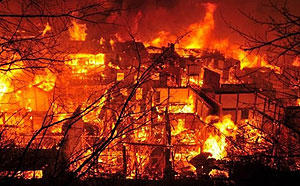
You may remember our story "A Buddhist Shanty Town?" about Serthar Institute, also known as Larung Gar Buddhist Academy in the Larung Valley, Serthar County of Garze Tibetan Autonomous Prefecture, in "China". Well it's in the news again as it is being reported that the remote Tibetan Buddhist institute, thought to be among the largest in the world, has been seriously damaged in a huge fire, reports said last Friday, the cause of the inferno remains a mystery.


The institute was founded in 1980 in an uninhabited valley and has since grown to become one of the world's most important centres of Tibetan Buddhism, with an estimated population of 10,000 monks, nuns and students living in small wooden homes on the hillsides surrounding the complex.

Its founder, Khenpo Jigme Phuntsok, who died in 2004, was known for keeping a strict focus on Buddhism rather than politics at the institute. He maintained a close relationship with both Chinese authorities and the Dalai Lama, the exiled spiritual leader and Nobel peace laureate who Beijing condemns as a separatist.

But the Buddhist academy's survival was threatened in 2001 when armed police forced hundreds of nuns and monks to leave the site, destroying more than 1,000 homes to prevent them returning. Police demanded that nuns sign documents denouncing the Dalai Lama and pledging not to return, according to overseas campaign groups, and Khenpo Jigme Phuntsok was detained for a year after the incident.

In early 2012, Serthar was rocked by violence when police fired tear gas and began shooting into a crowd of hundreds of peaceful Tibetan protesters, exile groups said. China's official Xinhua news agency said that the incident, in which one person was killed, was triggered when "rioters" attacked police with knives, bottles of petrol and guns.

Wednesday, 20 November 2013

Monk with a Camera - Amsterdam November 24-30

A film documentary, on the photography of American Buddhist monk Nicholas Vreeland is having its world premiere on November 24-30 at the International Documentary Film Festival in Amsterdam.

Last year the Dalai Lama named him as the first Western abbot of a Tibetan Buddhist monastery. Vreeland has been raising funds for the institution in question, Rato Monastery, through exhibitions and sales of his extraordinary black-and-white photos.

The film traces Vreeland’s single-minded dedication to restoring Rato Monastery and his historic appointment. In the larger context, Monk with a Camera’s producers describe it as being “about life in the monasteries, about the future of the Tibetan communities, about the impact of Buddhism on American society, and about pursuing art in a world of impermanence.” Here are some of his images..............................


Saturday, 12 October 2013

Western Science and Tibetan Buddhism

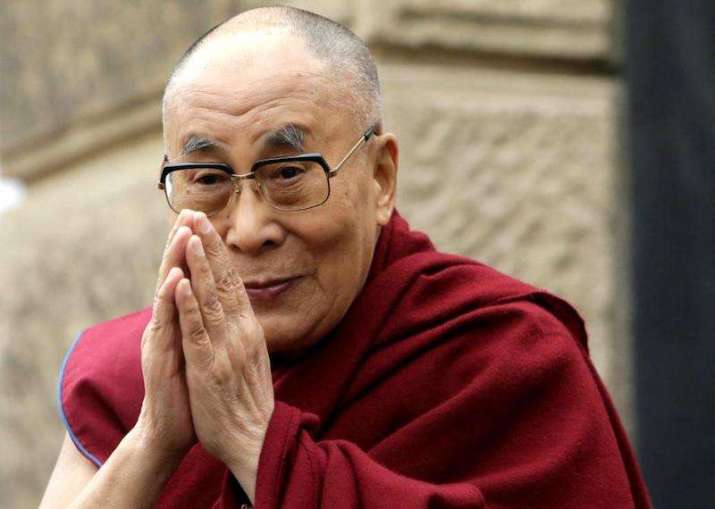
From the New York Times.......................

Quantum theory tells us that the world is a product of an infinite number of random events. Buddhism teaches us that nothing happens without a cause, trapping the universe in an unending karmic cycle.

Reconciling the two might seem as challenging as trying to explain the Higgs boson to a kindergarten class. But if someone has to do it, it might as well be the team of scholars, translators and six Tibetan monks clad in maroon robes who can be spied wandering among the magnolias at Emory University here.


They were joined this week by the Dalai Lama, the spiritual leader of the Tibetan people, who decided seven years ago that it was time to merge the hard science of the laboratory with the soft science of the meditative mind.

The leaders at Emory, who already had created formal relationships with Tibetan students there, agreed, and a unique partnership was formed.

For the monks, some of the challenges have been mundane, like learning to like pizza and trying to understand Lord Dooley, the university’s skeleton mascot.

For the team of professors involved in the project, the Emory-Tibet Science Initiative, there are the larger issues, like how to develop methods to quantify the power of meditation in a way the scientific world might actually accept.

But for the Dalai Lama, an energetic 78-year-old who rises at 3:30 every morning for four hours of meditation, his pet project is kind of a no-brainer.

Buddhist teaching offers education about the mind, he said in an interview after lunch Thursday at the home of James W. Wagner, the university president.

“It is quite rich material about what I call the inner world,” he said. “Modern science is very highly developed in matters concerning the material world. These two things separately are not complete. Together, the external and the internal worlds are complete.”

The first batch of six monks, who arrived on campus on 2010, have gone back to India, where much of the Tibetan exile community lives, and started teaching. Dozens of monks and nuns have taken lectures from Emory professors who traveled to Dharamsala, India, to instruct them, and 15 English-Tibetan science textbooks have been developed for monastic students.

The university pays about $700,000 a year for the program, which includes tuition for the monks, who then go back and teach science in the monasteries.

It has not been a smooth road. It took until last year for Buddhist leaders to accept science education as a mandatory part of monastic education. It was the first major change in 600 years.

But as anyone who has tried to carry out an idea from the boss knows, the real work is in the details.

Many of the toughest battles have come down to seemingly simple but vexing issues of lexicon. How does one create new words for concepts like photosynthesis and clones, which have no equivalent in the Tibetan language or culture? How does one begin to name thousands of molecules and chemical compounds? And what of words like process, which have several levels of meaning for Tibetans?

So far, 2,500 new scientific terms have been added to the Tibetan language.

“Much of our work is to make new phrases novel enough so students won’t take them with literal meaning,” said Tsondue Samphel, who leads the team of translators.

Still, some concepts are quite easy to translate.

“We understand impermanence of things as simply existing through our traditions,” said Jampa Khechok, 34, one of the new monks on campus. “We are now challenged to understand the nature of impermanence through the study of how fast particles decay.”

Learning has gone both ways. Professors here find themselves contemplating the science of the heart and mind in new ways. A student presenting a report on the cardiovascular system described the physiological reaction his own cardiovascular system might have if he were told the Tibetan people were free.

Debate is a constant, said Alexander Escobar of Emory, who has gone to India to teach biology. Monks have wanted to know, for example, how he could be so sure that seawater once covered the Himalayas. (The answer? Fossils.)

Western scholars have had to look at their work with a new lens, too, contemplating matters like the nature and origins of consciousness.

One result has been the development of something called cognitively based compassion training, a secular mediation program proven to improve empathy.

The partnership has had other, more practical applications.

Linda Hutton, a social worker, has a longstanding clinical practice treating sexually abused children and families in Greenville, S.C. She drove to Atlanta this week to attend a private luncheon with the Dalai Lama, who was making his sixth visit to Emory.

She teaches her young victims and their families to practice mindfulness and how to use meditation and breathing to cope with trauma.

“I draw from a lot of medical research,” she said, “but what I have found here transcends that.”
Monday, 9 September 2013

A Benefit to Suffering?

This from the New York Times...................

Hundreds of Syrians are apparently killed by chemical weapons, and the attempt to protect
others from that fate threatens to kill many more. A child perishes with her mother in a tornado in Oklahoma, the month after an 8-year-old is slain by a bomb in Boston. Runaway trains claim dozens of lives in otherwise placid Canada and Spain. At least 46 people are killed in a string of coordinated bombings aimed at an ice cream shop, bus station and famous restaurant in Baghdad. Does the torrent of suffering ever abate — and can one possibly find any point in suffering?

Wise men in every tradition tell us that suffering brings clarity, illumination; for the Buddha, suffering is the first rule of life, and insofar as some of it arises from our own wrongheadedness — our cherishing of self — we have the cure for it within. Thus in certain cases, suffering may be an effect, as well as a cause, of taking ourselves too seriously. I once met a Zen-trained painter in Japan, in his 90s, who told me that suffering is a privilege, it moves us toward thinking about essential things and shakes us out of shortsighted complacency; when he was a boy, he said, it was believed you should pay for suffering, it proves such a hidden blessing.

Yet none of that begins to apply to a child gassed to death (or born with AIDS or hit by a “limited strike”). Philosophy cannot cure a toothache, and the person who starts going on about its long-term benefits may induce a headache, too. Anyone who’s been close to a loved one suffering from depression knows that the vicious cycle behind her condition means that, by definition, she can’t hear the logic or reassurances we extend to her; if she could, she wouldn’t be suffering from depression.

Thursday, 13 June 2013

Nuns Studying for Geshe Exams

This from the Washington Post.....

Buddhist women are celebrating a landmark victory: For the first time in the history of Tibetan Buddhism, 27 nuns have gathered in North India at Jamyang Choling Nunnery near Dharamsala and have begun their exams for the Tibetan equivalent of a Ph.D., the so-called Geshe-title.

To understand the impact and range of this decision, take a moment to imagine what it would be like if until now only men had been allowed to pass their doctorate exams. As many American students are preparing for their final exams and graduation celebration during these weeks, picture what this would look like if girls were excluded. This was the situation for women in the Himalayas—and it is about to change!

So, why is this such a big deal and why did it take so long? After all, in the Western world the first professor degree was awarded to a woman at a European university almost 300 years ago, in 1732. (Scientist Laura Bassi taught physics at the University of Bologna.) And more than 2,500 years ago the Buddha himself allowed women into his order and ordained his own foster mother, Mahaprajapati.

She and 500 like-minded women had to shave their heads and walk 350 miles barefoot to show their unwavering determination, before Buddha Shakyamuni finally granted their request - a revolutionary decision in India at the time. The Buddha’s order was the first in Asia along with the Jains to formally allow women in its ranks.

Yet it may come as a surprise to many that despite its progressive image in the West, the Tibetan Buddhist tradition does not know full ordination for women, and thus women cannot study the entire curriculum.

For complex historical and patriarchal reasons, the ordination lineage did not migrate when Buddhism spread from India to Tibet, thus outclassing the Tibetan Buddhist nuns as inferior. Tibetan Buddhist nuns have to travel to countries where the Chinese ordination lineage is alive to receive full ordination in a Buddhist lineage that they are not entirely familiar with.

“Most Tibetan nuns don’t have the means to travel to Hong Kong or Korea,” says Jetsun Tenzin Palmo, the most senior Western born Tibetan Buddhist nun alive today, in the new book Dakini Power, “and even if they did, they want to be ordained in their own tradition, by their own lamas, in their own robes.” A side-effect of this issue is that the nuns don’t have equal access to the full curriculum – only fully ordained monastics can study ethics in their entirety.

The spiritual leader of the Tibetans, His Holiness the Dalai Lama, has long been an advocate for the empowerment of women and recently reaffirmed enthusiastically that his successor could be a woman. He also insisted that there should be a doctorate degree for Tibetan Buddhist nuns. “I`m a feminist”, he said at the Vancouver Peace Summit, “Isn`t that what you call someone who fights for women`s rights?”


In April 2011, he advised the renowned Institute for Buddhist Dialectical Studies (IBD) in Dharamsala, India, to confer the degree of “Geshe” to Venerable Kelsang Wangmo, a German nun (formerly Kerstin Brunnenbaum). This was a historic milestone: Traditionally, Geshe degrees are conferred on monks after 12 or more years of rigorous study in Buddhist philosophy.

For the first time in history, a nun received this degree, and even more surprising, a Western woman. In spring 2012, the Department of Religion and Culture of the Central Tibetan Administration convened a special meeting of abbots and scholars who decided unanimously that more nuns be allowed to be acknowledged for their academic achievements - a promise that is now becoming reality.

The 27 nuns who are currently taking the exams will finally be rewarded for mastering more than 20 years of studying advanced Buddhist philosophy and they will be the first generation of female professors in the Tibetan tradition.

The Dalai Lama has also publicly supported full ordination for nuns and equal access to education. “I think it’s very important for women to try to appropriate all their rights. Among the Tibetan refugee community in India, I have for many years been advocating for the female side, the nuns’ side,” the Dalai Lama said.

The Dalai Lama stresses that he cannot simply dictate change - the whole community of senior Tibetan masters needs to agree to change the traditional rules. Therefore a full-fledged discussion is in place about the position of Tibetan Buddhist nuns.

To this day the female nuns have to observe 98 more precepts than the monks, including the rules that they have to obey the monks, can’t give them advice, and even the most senior nun still has to take a lower seat than the greenest rookie monk.

Tenzin Palmo seriously doubts that these extra precepts were really taught by the Buddha and has
researched reasons to believe that they were added by later patriarchs to reflect the dominant views about females at that time.

Tenzin Palmo was born as Diane Perry in London and shares her own insight into the hardships of following the Buddhist path as a Western woman. What started out as the most revolutionary welcome to women at the Buddha’s time, has turned into a misogynistic adventure. “It’s just time they get their act together!” Tenzin Palmo said pointedly, “and give the nuns their full ordination!”

Monday, 11 February 2013

The Philosophy of the Mind, the Dalai Lama

In this special edition of BBC Radio 4's "Something Understood" program , Tibet's exiled Buddhist leader, the Dalai Lama, considers what we now know about the nature of the mind and how an understanding of the mind is important in everyday life.


He quotes from the teachings of Buddha and the work of the 11th century poet Milarepa, as well as the words of a Tibetan Prayer by Nagarjuna.

The quest for peace of mind is one of the great challenges of our day. Many of us find it easier to achieve than others, but what do the teachings of those cultures who try to embrace the mind's power have to say about our modern dilemma?

John McCarthy applies the Dalai Lama's thoughts to the western experience with additional readings from the American philosopher Daniel Dennett and the work of the ground-breaking neuroscientist V.S. Ramachandran.

The programme is only available for the next 7 days.

Friday, 1 February 2013

Robert Thurman on Tibetan Self-immolation

A statement by Robert Thurman on the Tibetan self-immolation protests.

Robert Thurman is the President of Tibet House US, and the Je Tsongkhapa Professor of Indo-Tibetan Buddhist Studies at Columbia University (he's also Uma's dad).


Also see Commentary: A Cry for Freedom

Wednesday, 30 January 2013

Indian Rapists, Death Penalty not the Answer

During a panel discussion last week at the DSC Jaipur Literature Festival in Jaipur, India, His Holiness the Dalai Lama touched on the controversial trial that began last Thursday in the bustling Indian city.


The five men on trial could be hanged if they are convicted, according to the Associated Press. The family of the 23-year-old victim, who died of her injuries two weeks after the attack, have called for the execution of all the accused. But the Dalai Lama, during his appearance at the Jaipur festival, demurred.

“I do not like the death sentence,” he said, adding that there are other ways to deal with the alleged perpetrators. The Dalai Lama said that "the 21 century belonged to dialogue and not to confrontation or violence."

The Tibetan leader has been a steadfast opponent of the death penalty, which contradicts the Buddhist philosophy of non-violence. In July 2011, the Dalai Lama travelled to Chicago, where he praised Illinois Governor Pat Quinn for abolishing the death penalty in his state.

The Delhi rape case has sparked debate over the Indian legal system, and public anger has been directed at officials in a city informally christened India's "rape capital," according to Reuters.

Tuesday, 6 November 2012

China bullies Japan Over Dalai Lama Visit

We've reported several times in the past on China's bully-boy tactics against other sovereign nations (and Leeds!) who dare to invite his Holiness the Dalai Lama to their countries. The latest victim of this intimidation is Japan. However, I don't suppose that it might also be an excuse to lean on Japan in relation to the "disputed" Senkaku Islands?


China strongly opposes all forms of support from any country or any individual for the Dalai Lama's separatist activities, a Foreign Ministry spokesman said at a regular press briefing on Monday.

"The Dalai Lama is merely a political exile who has long been engaged in activities to split China under the disguise of religion," Hong Lei said in response to a question regarding the Dalai Lama's 10-day trip to Japan, which started on Sunday.

The Dalai Lama's international activities aim at colluding with international anti-China separatist forces to undermine relations between China and other countries so as to split the nation, according to the spokesman.

This from the "infamous splitist" himself.................  “China needs Japan, Japan needs China,” said His Holiness as he faced a group of 20 or so reporters, both Japanese and international, in a conference room in a hotel in Yokohama. “East needs West, and West needs East.

Every country on this planet needs others. So a small disagreement or divergence of interests should not affect basic relations. That’s short-sighted, narrow-minded. We should think more broadly.”

For more on the Leeds story Click Here.

Saturday, 20 October 2012

Dalai Lama "Swears"

An audience of students at Brown University in Rhode Island, were surprised when at the end of a speech on world peace, the Dalai Lama appeared to utter the "F" word.

The Buddhist spiritual leader's thick Tibetan accent led to confusion at the end of his talk when he pronounced "forget" in his traditional manner, but the crowd burst into laughter— they thought he swore, saying "f--- it."


Caption screens in the auditorium were showing subtitles of the event, and a stenographer transcribing the speech also appeared to think His Holiness had uttered the words, 'F**k it'.

The exiled Tibetan leader was in fact urging listeners to share his thoughts with others if they found them interesting. If not, he said, they could “forget.”

'If you feel these points are not much relevant - not much interest - then forget.'

Friday, 15 June 2012

China Bullies Leeds over Dalai Lama

Following hot on the heels of yesterday's story "Tourists Banned from Tibet" comes news that China has been accused of bullying after it threatened to pull its Olympic athletes out of their training camp in Leeds because of a visit to the city by the Dalai Lama.

The Tibetan spiritual leader was due to address a business convention on Friday, but it has been claimed that Chinese officials have requested that the event be cancelled.

Fabian Hamilton, the Labour MP for Leeds North East and chairman of the all-party parliamentary group for Tibet, described the reported demand as "bully-boy tactics".

He told the BBC: "I find it distasteful, to say the least, that two representatives of a country whose human rights record is appalling, where freedom of speech is not allowed and where there is no real democracy, come to the city of Leeds and tell our elected officials … that they can't do what they think is best for the city under pain of economic sanction."

Asked whether the Dalai Lama's visit to Leeds would have any impact on China's participation in the Olympics, a foreign ministry spokesman in Beijing said: "We hope the British side stop making mistakes again and again, which undermine China's interests. China-UK relations have been affected by the recent meeting between the British leader and the Dalai Lama. The responsibility lies with the British side."

About 300 athletes, coaches and support staff representing China are due to be based in the West Yorkshire city to prepare for the Games.

Leeds council distanced itself from the convention but said it was aware of “sensitivities” around the event.

Tom Riordan, chief executive of the council, said: “The Yorkshire International Business Convention is a private event not organised by Leeds City Council.

“Whilst we are aware of some sensitivities around this year’s convention, as it is not a council event we do not feel it is appropriate for us to make any further comment.”