Showing posts with label Amaravati. Show all posts

Friday, 2 December 2016

Western Buddhism (Watered Down?) Cont.

Further to our recent run of posts relating to the establishment/evolution of a genuinely Western form/school of Buddhism the following article cropped up in Lion's Roar.

Recently we published an article by Funie Hsu titled “We’ve Been Here All Along,” which explores how Asian American Buddhists have historically been marginalized in American Buddhism. The author — an Asian American Buddhist scholar — bravely discusses what happens when white American Buddhists embrace teachings from Asia in a broader culture built on white privilege and racism. It’s a challenging but important article.

We don’t usually get much feedback from readers, but this one struck a nerve with several who took the time to write to us. The tone of these letters surprised me — some were quite angry at Hsu and lodged personal attacks (“She should be grateful for what she has”; “She ain’t no buddhist”). Others were more tempered but equally defensive (“I felt judged and unwelcomed”; “The article is implicitly racist toward white people”). 
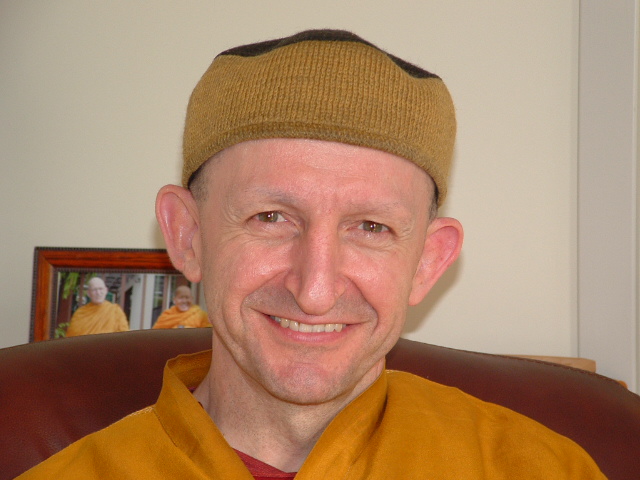
Last week, while we were taping a panel discussion on Buddhist ethics for our next issue, Ajahn Amaro, abbot of Amaravati, took a moment to let us know how much he appreciated Funie Hsu’s article. I thought it might be interesting for him to tell you why. —Tynette Deveaux, editor, Buddhadharma 

"I am not an Asian-American Buddhist but I have certainly witnessed and been a part of some of the situations described in the piece, and to which Ms. Hsu calls useful attention. I am European by birth and have been a monk in a Buddhist lineage hailing from North-East Thailand since 1979, practising under the guidance of Ajahn Chah and Ajahn Sumedho. I have lived mostly in the West as a monk since that date, in both the UK and the USA. 

As a monk in a somewhat conservative order, my community has maintained close ties with its Asian cultural and religious roots. Our monasteries in the West, of which there are about thirty (there are about 300 in Thailand as well), tend to straddle two worlds; on the one hand there are the Asian immigrant communities, mostly from Thailand, Sri Lanka, Laos, and Cambodia, and on the other there are the Western-born folks who have encountered Buddhism through reading, travelling or browsing the net. 

Over the years, particularly during my time in the USA, I have interacted a lot with both of these groups. It is sad to say, but in conversations with Western-born Buddhist teachers and practitioners, at formal meetings and conferences as much as in informal dialogues, I have regularly encountered the kind of white cultural conceit that speaks of practising “real Buddhism” rather than “folk Buddhism” weighed down with so-called “cultural baggage.” As one whose lifestyle is devotedly built around such “baggage” (preferably understood as “skillful means”) such comments and discussions come across bearing the ugliness and conceit of the unconscious racism of: “Some of my best friends are…” 

I found I could empathise with the spirit of Ms. Hsu’s article and felt many of her points were very apposite. We can all be blind to our conceits (I had no idea how English I was until I went to live in an international community) and her highlighting of these issues helps the reader to, in my humble opinion, turn the attention back on to their own heart to consider what they are assuming to be true and real. When we challenge such assumptions, often only spotting them when we feel particularly gratified (Yes!) or offended (How dare she!), we can then become aware of the stress-filled limitations these conceits bring. Once the heart is awake to the bondage it is creating, it can more easily let go and be free of it." 

All good wishes, Amaro Bhikkhu, Abbot, Amaravati Buddhist Monastery

Wednesday, 11 August 2010

Yet Another Nun to Disrobe

Sister Sumedha is to leave Amaravati and disrobe. In the following letter she explains her decision.

"Dear Venerable Sisters, Brothers and friends, having lived in the communities of Amaravati and Chithurst for 12 years, I am writing to let you know of my intention to leave the Siladhara training. I will go to Aloka Vihara in San Francisco until mid-November and disrobe after my return to the UK at the end of the year.

This decision comes with sadness. Many of you are aware that there is a spate of sisters either disrobing or stepping outside the Siladhara order (wishing to continue to live as nuns outside of our current structural framework). My own decision to leave is very much related to my sense of practice and that the the ethos of our community as it has been evolving is not one I can align myself with. What I have learnt as a Siladhara includes a lot about focus and discipline and I do very much appreciate having a container that encourages the reflective heart. Meditation and the teachings and

Saturday, 7 August 2010

Ajahn Brahm asks Fellow Monks to "Explain Themselves" on the Question of Bhikkhuni Ordination

Further to a previous posting "The Inequality of Women in Buddhism", I came across an item on Ajahn Sujato's blog where he features a comment by Ajahn Brahm. The comment is in response to a post by Ajahn Sujato on the article in BuddhaDharma, "The Time has Come". This article is the subject of our above mentioned post!

“What would it look like to relocate the ‘problem’ of bhikkhuni ordination and gender equity within Buddhism to where it really belongs? … with those who fear women’s full participation

Having read the comments in this thread with interest, as I am inextricably involved, I think they have drifted away from the main thrust of the Buddhadharma magazine article as expressed in the quote above. That is, for too long Ajahn Sujato, myself and the participating Bhikkhunis, have been asked to justify our actions in facilitating the Perth Bhikkhuni ordinations.

Now it is the time for those Western monks, and Thai monks who either live in the West or regularly travel there, to either show their support for Bhikkhuni ordination in the West,or justify their opposition to it.

Ajahn Sumedho is leaving Amaravati at the end of this year, so is the Thai monk Ven Pannyasaro who, I was told, drafted the notorious Five Points. Ajahn Amaro, currently at Abhayagiri Monastery in California, is to take over leadership of the Amaravati group. It seems appropriate that he makes his position on Bhikkhuni ordination clear, in plain English not in Amaravati-speak, to the supporters of his future monastery. Other influential monks such as Ajahn Vajiro of Amaravati, Ajahn Nyanadhammo in Thailand, Ajahn Pasanno of Abhayagiri, the Thai monk Ajahn Preecha in Italy, Ajahn Tiradhammo in New Zealand, the Thai monk Ajahn Anan who visits the West regularly, they should also be pressed by their lay supporters to publicly explain their position, not as a group but as individuals. If they have nothing to be ashamed of, they should have no fear in articulating their position in public clearly and independently. I ask this because I understand that straightforward honesty, not deafening silence, is necessary for moving forward on this painful issue.

Unfortunately, I do not have the power to compel these good monks to explain whatever position they hold on Bhikkhuni ordination, or to question them on why they refused my genuine offer of forgiveness and reconciliation. But you, the lay people who feed these monks and provide the funds that support their other needs, do have that power. Maybe it is the time to exercise that power.

It is now the time, as a result of The Buddhadharma magazine’s article, for them to personally explain themselves to the Buddhist world.

With Mega Metta, Ajahn Brahm.

Wednesday, 7 July 2010

Amaravati Monk Leaves in Protest Over the "Five Points"

I have just come across this from the Women and the Forest Sangha Facebook group. It's particularly poignant as we are preparing to join the Newport Soto Zen group for another visit to Chithurst Monastery, the affiliate of Amaravati Monastery.

Letter from Aloka Bhikkhu Thera

Respectful Greetings To You All, I would like to inform the fourfold Sangha that I have decided to leave the community. I will leave Amaravati Monastery on Friday, 16 July 2010. The main reason for leaving is the fact that I do not agree with the Five Points that were... drawn up as a condition for Siladhara ordination to resume again. I also do not agree with the way Ajahn Brahmavamso was treated as a result of the four bhikkhuni ordinations carried out in Perth. Consequently, as this is the way the Forest Sangha tradition is currently being held I have chosen to leave the Forest Sangha. My earnest wish is for all Buddhist traditions, indeed all religious traditions, to fully endorse Bhikkhuni ordination. In addition, over the past three years my interest in the Vajrayana practices have become central to my daily practice. I have therefore decided to pursue my monastic career in the Tibetan tradition. I am sure that for some people there may be mixed feelings regarding my decision to leave but I want to assure everyone that my intention was never to hurt or offend anyone. My decision comes from a sincere effort to live my truth as I see it at this stage of my life. It remains for me to express my sincere appreciation and gratitude for all the teaching and support that I have received from Luang Por Sumedho, all the monks and nuns, and many members of the lay community during the past five years at Amaravati. I am sure that for the rest of my life I will often be reminded, and realise anew, all the blessings that I have received whilst living at Amaravati. Most importantly I would like to express my deep gratitude to all my special Dhamma friends whose friendship and support I will always cherish in my heart. Your friendship will be one of the greatest treasures that I will take with me as I leave. Please do keep in touch. Please feel free to forward my letter to whoever you want. May you have a long and happy life, May you see the beauty in your life, May you have the energy to pursue your practice until you can accept your own Enlightenment. Blessings to you all, Aloka Bhikkhu. 

Aloka Bhikkhu (Petrus Willemse) was born in Masvingo, Zimbabwe on Sunday 9th December 1956. He went to primary school in Gadoma and secondary school in Harare.

Monday, 21 June 2010

Posting Deleted

Some of you may recall a recent posting regarding the infamous "Five Points", Tuesday 15th June. This has been deleted at the request of the author of the quoted letter. It was pointed out that it was a draft copy only that was released into the public domain as the result of a miscommunication. Other sites which featured this have also withdrawn the item. I have apologised to the author personally for the innocent use of this unauthorised material.

There is still a story waiting to happen in connection with this and we will bring it to you when appropriate and when everything is above board.

In the meantime The Cambridge Insight Meditation Centre has issued the following statement:

"We are in support of Women's Ordination

The Buddha taught that the path of awakening rested in the practice of the four fold sangha which includes monks (bhikkhus), nuns (bhikkhunis), laywomen, and laymen. As the dharma spread from India into the rest of Asia, both men and women were ordained and the sangha of lay practitioners thrived. In the west today, monks, laywomen, and laymen are all still thriving.

However, between the time of the Buddha and now, the bhikkhuni order died out in India for a variety of cultural and political reasons though it continued in Sri Lanka, China, Taiwan, and Japan. Today there is a deep interest on the part of many practitioners in re-establishing the bhikkhuni order in the Theravadin tradition.

In the dharma establishing its roots firmly in the west, in cultures that welcome and respect all practitioners regardless of gender, it is incumbent on us to encourage and support bhikkhuni ordination. The teaching of awakening and freedom would only be diminished by the marginalizing of any sincere aspirant."