Showing posts with label UK. Show all posts

Thursday, 26 April 2018

National Memorial to Dr. Ambedkar Inaugurated in New Delhi

On April the 13th, on the eve of the 127th anniversary of the birth of Dr. B. R. Ambedkar, Indian prime minister Narendra Modi inaugurated the Dr. Ambedkar National Memorial in New Delhi—at the place where Dr. Ambedkar died on the 6th of December 1956.


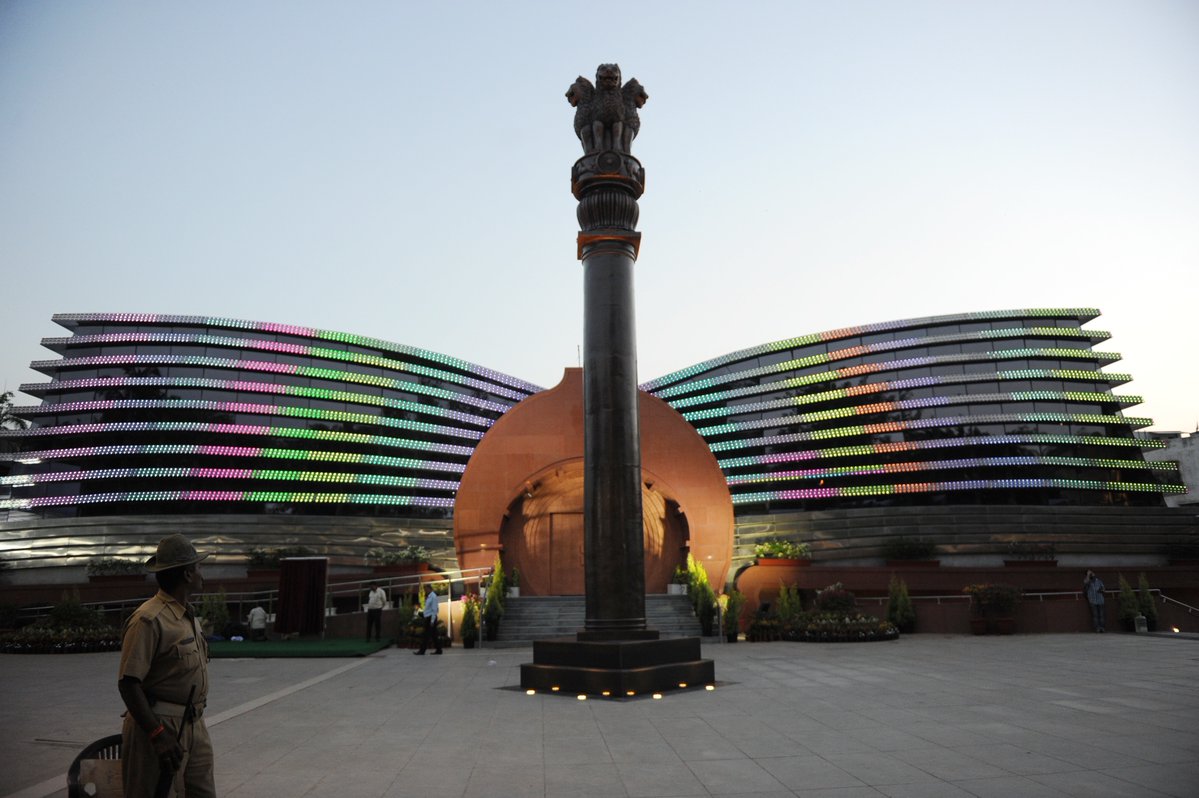
The Memorial has been designed to resemble the shape of an open book in reference to the Constitution of India, of which Dr. Ambedkar was the principal architect. The building is completely green, combining modern architecture with Buddhist elements. Modi previously laid the first stone for the memorial’s construction on 21 March 2016.

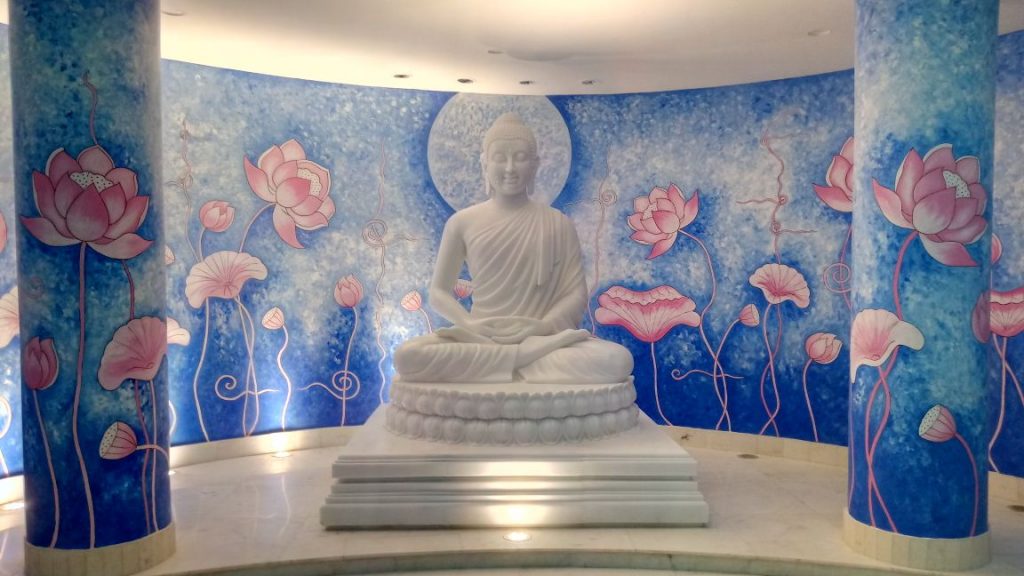
The new memorial houses a marble statue of the Buddha, a meditation hall, a Bodhi tree, a replica of the Ashoka pillar at Sarnath in Varanasi, musical fountains, façade lighting, and a 3.7-meter bronze statue of Dr. Ambedkar.

Bhim Rao Ambedkar, an 'untouchable', or Dalit, who converted to Buddhism was a prominent Indian freedom fighter, and the chief architect of the Indian Constitution, which outlawed discrimination based on caste.

Born into a poor family, Ambedkar spent his whole life fighting against social discrimination in the caste system during and after British colonial rule, which ended in 1947. He is also credited with having sparked the Dalit Buddhist movement.

The Dalit Buddhist movement (also known as the Neo-Buddhist movement) is a socio-political movement by Dalits in India started by Dr. Ambedkar. It radically re-interpreted Buddhism and created a new school of Buddhism called Navayana. The movement has sought to be a socially and politically engaged form of Buddhism.

Triratna Bauddha Mahāsaṅgha (formerly called TBMSG for Trailokya Bauddha Mahasangha Sahayaka Gana) is the Indian wing of the UK-based Triratna Buddhist Community founded by Sangharakshita. Its roots lie in the scattered contacts that Sangharakshita had in the 1950s with Ambedkar. Sangharakshita, then still a bhikshu, participated in the conversion movement from 1956 until his departure to the UK in 1963.

When his new ecumenical movement had gained enough ground in the West, Sangharakshita worked with Ambedkarites in India and the UK to develop Indian Buddhism further. After visits in the late 1970s by Dharmachari Lokamitra from the UK, supporters developed a two-pronged approach: social work through the Bahujan Hitaj trust, mainly sponsored from the general public by the British Buddhist-inspired Karuna Trust (UK), and direct Dharma work. Currently the movement has viharas and groups in at least 20 major areas, a couple of retreat centres, and hundreds of Indian Dharmacharis and Dharmacharinis.

A little-known fact is that Roma gypsies trace their origins to the Dalits of India and several have followed the lead of their Indian compatriots and converted to Buddhism, often as a response to discrimination. There is a sizeable Gypsy Buddhist community in Hungary, they take their inspiration from Dr. Ambedka and are officially affiliated to the Triratna Buddhist Community.

Saturday, 26 August 2017

The Isle of Wight, The Buddha, NCIS and The Ham

Everything is interconnected.

Our last post concerned the changes to Japan's traditional Buddhist inspired vegetarian cuisine brought about by Japan's contact with the West.

I've just come across this story about the "World’s Oldest Edible Ham" which is stored in the Isle of Wight County Museum!

Before you all book a ferry to come over to the island to see it pause a moment for the penny to drop that this museum is in Isle of Wight County, Virginia USA which featured in a previous post about the Isle of Wight appearing in an episode of NCIS.


To further add to the confusion and connections the museum is in the town of Smithfield a name any Brit immediately associates with Smithfield market, the largest wholesale meat market in the UK.

You can keep track of what the ham is doing here, yes they've got a webcam on it.......

Tuesday, 30 May 2017

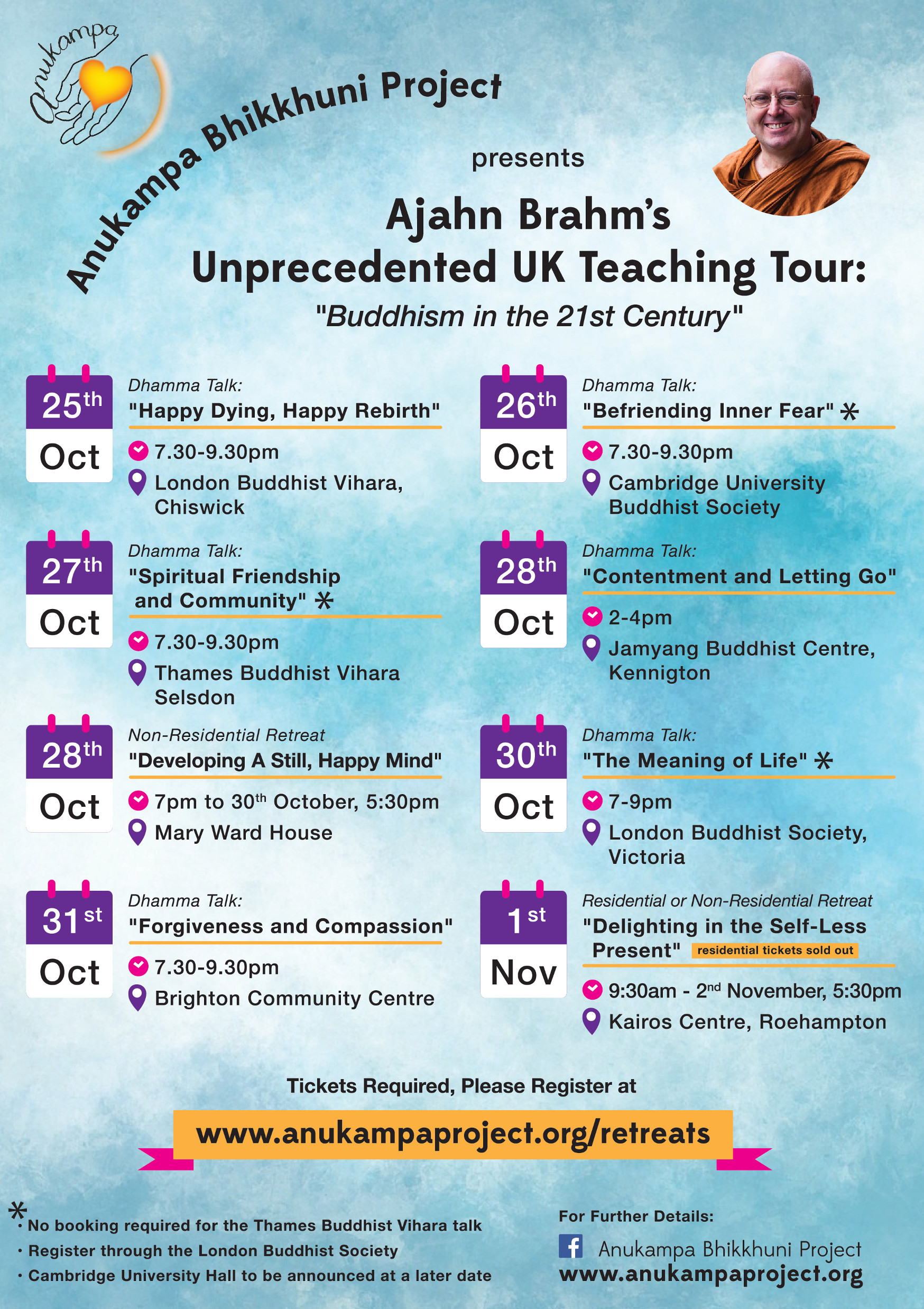
Ajahn Brahm's UK Dhamma Talks Tour

I've just had news of Ajahn Brahm's upcoming "Real Dhamma" UK Tour, starting in October this year. Details are as follows:-

TUE, 10 OCTOBER 7:00 PM -
9:00 PM
Dhamma Talk: “Cultivating Ethics in a Cybernetic Age"
Venue TBA, London, UK.

WED, 11 OCTOBER 3:00 PM - 5:00 PM
Dhamma talk: "A Path With a Laugh"
Cross Street Chapel, Manchester, UK.

WED, 11 OCTOBER 7:00 PM - 9:00PM
Dhamma Talk: “Courage and Authenticity at Work"
Friends Meeting House, Manchester, UK.

THUR, 12 OCTOBER 7:00 PM - 9:00 PM
Dhamma talk: "At Peace With Uncertainty"
Kagyu Samye Dzong, London, UK.

Starting: FRI, 13 OCTOBER 7:00 PM
Non-Residential Weekend Retreat: “Unconditional Mindfulness”
Mary Ward House, London, UK.

The tour is in support of the Anukampa Bhikkhuni Project which aims to promote the teachings and practices of Early Buddhism, through establishing a Bhikkhuni presence in the UK. Their long term aspiration is to develop a monastery for women who wish to train towards full ordination.


Here is an abstract from their latest newsletter........................

ENCOURAGING BEGINNINGS

Since the inspired conception of Anukampa Bhikkhuni Project in Perth, November 2015, joyful steps - often taken in leaps and bounds - are paving the way to make Britain's first bhikkhuni monastery a reality!

Bhikkhuni Canda and and her team are currently organising Ajahn Brahm's second teaching trip to England in consecutive years - a benefit event to build on the significant funds already raised and to further awareness of Anukampa's mission. The tour is entitled "Real Dhamma," because spreading the Dhamma as taught by the Buddha and preserved by the four-fold assembly of bhikkhunis, bhikkhus, laywomen and laymen, lies at the heart of our aspiration and manifests in the compassionate endeavour to increase training opportunities for female monastics.

One of the most uplifting benefits of the project so far has been to witness a dynamic new spiritual community taking shape! People of all nationalifies and from all walks of life have participated, helping us find firm footing. Thanks to them, here are some of our main accomplishments to date:

• February 2016: website (www.anukampaproject.org) gets up and running
• April 2016: ABP becomes a legal entity
• June 2016: ABP's highly active facebook page is born
• October 2016: Ajahn Brahm's unprecedented sell-out UK tour raises around £50,000
• November 2016: Anukampa receives a large, anonymous donation from an overseas supporter, which brings us up to around half the required funds for a modest property.

Fundraising enterprises such as book-selling in Thailand and sponsored head-shaving in Perth (any more takers?!) are ongoing and particularly welcome, as are the increasing number of teaching invitations being extended to Bhikkhuni Canda, by existing Buddhist groups. We are also establishing an "Anukampa Friend's" Dhamma group in London and recently held the second meeting.

On April 12th 2017, Anukampa reached a major milestone, becoming registered as both a religious and an educational charity, which attests to the dedication and commitment of our trustees and key volunteers.

Our immediate next steps focus on building up our team. We recently welcomed a new volunteer book-keeper to assist in our treasury department and are now looking for a webmaster. The services of a lawyer would undoubtedly be very helpful going forward too. We will continue to organise benefit events and also retreats with various monastic teachers. After Ajahn Brahm's 2017 teaching tour, will be looking for more people to help manage the online tour registration system and general administration, working closely with our outreach team.

In the coming year or two, we will experiment with having a temporary base in England for Bhikkhuni Canda and one or two lay guests who will look after her monastic needs. This will enable us to suss out the level of interest in a chosen area, as well as provide a much-needed space from where regular Dhamma talks and discussion groups can be held. When our core team (and accounts!) are mature enough, we will look for suitable properties for the monastery, in a beautiful natural setting. This should be secluded yet not isolated; private yet accessible by public transport. At present, intuition guides us south of and up to an hour and a half from London....but if the right place comes up elsewhere we are open!

(I wonder what they think of the Isle of Wight?)

Thursday, 5 January 2017

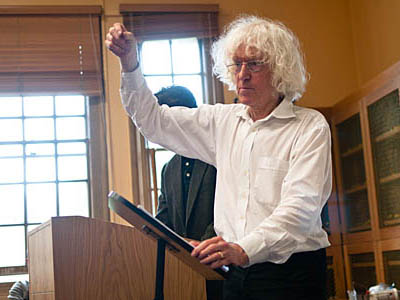
Derek Parfit, Philosopher (and accidental Buddhist) Dies

Derek Parfit, the British philosopher who specialised in problems of personal identity, rationality,
ethics, and the relations among them, died on Monday at his home in London. He was 74.

Parfit, who was associated with All Souls College at Oxford for his entire career, rose to pre-eminence with the publication of his first paper, “Personal Identity,” in 1971.

He developed a theory of identity that downgraded the notion, and the importance, of an irreducible self — the “deep further fact,” as he called it” — in terms not dissimilar to Buddhism.

Anattā (no-self, without soul, no essence) is the nature of living beings, and this is one of the three marks of existence in Buddhism, along with Anicca (impermanence, nothing lasts) and Dukkha (suffering, unsatisfactoriness is innate in birth, ageing, death, rebirth, redeath – the Saṃsāra cycle of existence).

Meditation helps one to view what is really going on within the construct which we call "me". It is ever changing, dependent for its identity upon "exterior" factors and can be seen as merely a vocalised response to sensory inputs and re-run memories and random thoughts. It is impermanent (Anicca) , it will die.

It's activities are constantly searching for fulfilment (Dukkha), the avoidance of the suffering we inflict upon ourselves when we can't escape contact with that which we dislike or get what we want.

Friday, 30 December 2016

A Buddhist Father Christmas

The Listening Project is a BBC Radio 4 initiative that offers a snapshot of contemporary Britain in which people across the UK volunteer to have a conversation with someone close to them about a subject they've never discussed intimately before.

Just before Christmas Fi Glover introduced a conversation between a Buddhist Father Christmas and a Baptist chaplain about how they spend Christmas morning in the hospice. Another in the series that proves it's surprising what you hear when you listen.


Friday, 2 December 2016

Western Buddhism (Watered Down?) Cont.

Further to our recent run of posts relating to the establishment/evolution of a genuinely Western form/school of Buddhism the following article cropped up in Lion's Roar.

Recently we published an article by Funie Hsu titled “We’ve Been Here All Along,” which explores how Asian American Buddhists have historically been marginalized in American Buddhism. The author — an Asian American Buddhist scholar — bravely discusses what happens when white American Buddhists embrace teachings from Asia in a broader culture built on white privilege and racism. It’s a challenging but important article.

We don’t usually get much feedback from readers, but this one struck a nerve with several who took the time to write to us. The tone of these letters surprised me — some were quite angry at Hsu and lodged personal attacks (“She should be grateful for what she has”; “She ain’t no buddhist”). Others were more tempered but equally defensive (“I felt judged and unwelcomed”; “The article is implicitly racist toward white people”). 

Last week, while we were taping a panel discussion on Buddhist ethics for our next issue, Ajahn Amaro, abbot of Amaravati, took a moment to let us know how much he appreciated Funie Hsu’s article. I thought it might be interesting for him to tell you why. —Tynette Deveaux, editor, Buddhadharma 

"I am not an Asian-American Buddhist but I have certainly witnessed and been a part of some of the situations described in the piece, and to which Ms. Hsu calls useful attention. I am European by birth and have been a monk in a Buddhist lineage hailing from North-East Thailand since 1979, practising under the guidance of Ajahn Chah and Ajahn Sumedho. I have lived mostly in the West as a monk since that date, in both the UK and the USA. 

As a monk in a somewhat conservative order, my community has maintained close ties with its Asian cultural and religious roots. Our monasteries in the West, of which there are about thirty (there are about 300 in Thailand as well), tend to straddle two worlds; on the one hand there are the Asian immigrant communities, mostly from Thailand, Sri Lanka, Laos, and Cambodia, and on the other there are the Western-born folks who have encountered Buddhism through reading, travelling or browsing the net. 

Over the years, particularly during my time in the USA, I have interacted a lot with both of these groups. It is sad to say, but in conversations with Western-born Buddhist teachers and practitioners, at formal meetings and conferences as much as in informal dialogues, I have regularly encountered the kind of white cultural conceit that speaks of practising “real Buddhism” rather than “folk Buddhism” weighed down with so-called “cultural baggage.” As one whose lifestyle is devotedly built around such “baggage” (preferably understood as “skillful means”) such comments and discussions come across bearing the ugliness and conceit of the unconscious racism of: “Some of my best friends are…” 

I found I could empathise with the spirit of Ms. Hsu’s article and felt many of her points were very apposite. We can all be blind to our conceits (I had no idea how English I was until I went to live in an international community) and her highlighting of these issues helps the reader to, in my humble opinion, turn the attention back on to their own heart to consider what they are assuming to be true and real. When we challenge such assumptions, often only spotting them when we feel particularly gratified (Yes!) or offended (How dare she!), we can then become aware of the stress-filled limitations these conceits bring. Once the heart is awake to the bondage it is creating, it can more easily let go and be free of it." 

All good wishes, Amaro Bhikkhu, Abbot, Amaravati Buddhist Monastery

Monday, 28 November 2016

Response from the Middle Way Society

Jack said in the previous post that it was "plucky of me to venture into the thorny arena of Buddhist hermeneutics: the way in which Buddhism has been, and is being, re-interpreted to suit contemporary western (American and European) social life, and precisely who claims authority to perform those acts of hermeneutics". How right he was, following quickly on from his comment came one from the chair of the Middle Way Society, Robert M. Ellis.

As I had to post Jack's contribution (it exceeded the character limit on comments) I think it only right to afford the same prominence to Mr Ellis' input to this debate.

If you seek to learn anything from the Buddha's teachings, presumably quite early on there will be anatta - the recognition that our ideas about 'essences' are our own construction. One's construction of 'Buddhism' is just as subject to this as anything else. If you want to follow the Buddha's experimental example in his early life as he discovered the Middle Way you will be similarly inclined to learn from but move beyond absolutised teachings that are no longer practically helpful, as the Buddha moved on from Alara Kalama and Udaka Ramaputta, the the 5 ascetics. Thus I find it very ironic when Buddhists try to essentialise Buddhism and write in dismissive terms about those who want to follow the spirit of the Middle Way wherever it leads.

The Middle Way Society is indeed independent of Buddhism, as I would have thought anyone who wants to make use of the Buddha's insights would want to be. That doesn't mean that one can't make use of what one can learn from the Buddhist or any other tradition, but that one is not subjected to the authority of a tradition. For a Buddhist to give absolute authority to that tradition and also to want to follow the Buddha's example seems contradictory. But you have made huge and inaccurate assumptions about our motives which presumably stem from a failure to investigate what we actually do. It has nothing to do with political correctness or secularism, nor is it 'watering down' the Buddha's insights, but rather seeking a universal practical method that the Buddha's insights share with those of other individuals and traditions to varying degrees. We can hardly be losing essential elements of Buddha's teaching' when Buddha's teaching involves there being no such essential elements to anything. Only critical investigation in the light of experience can help us to understand and apply what we learn from sources like the Buddha, and the uncritical adoption of tradition is antipathetic to that process of human investigation.


Friday, 25 November 2016

Comment on "Watered down Buddhism"

Further to the previous post "Watered Down Buddhism" I received an email from a long time correspondent, A.W. (Jack) Kennedy who runs the Bowerchalke Buddhist Meditation Group over in Wiltshire on the Dorset, Hampshire border.


He had tried to post a comment on the article but it exceeded the permitted word count. It is an excellent take on the subject so I am posting the entire piece here..........

Stephen, 
Thanks for this post. You point to an interesting article by Funie Hsu (accessible with a bit of searching on the ‘Lions Roar’ website). It is plucky of you to venture into the thorny arena of Buddhist hermeneutics: the way in which Buddhism has been, and is being, re-interpreted to suit contemporary western (American and European) social life, and precisely who claims authority to perform those acts of hermeneutics. 

Your post is brief, so please allow me to make a few comments by way of expansion: 

1. American and British Buddhism are not identical. Historical conditions have affected them in different ways they cannot be conflated. Certainly, there are two forms of Buddhism (indigenous immigrant and white convert) on both sides of the Atlantic, but in Britain there has generally been respect and interaction between the two. Hsu, and others, are concerned that the majority of white convert Buddhists should show respect and solidarity towards Japanese, Black, and LBGT minority Buddhists, in the face of neglect and oppression from the wider community, in the past and under Trump’s new world order. We should listen up, and make sure that neglect and oppression of marginalised communities doesn’t happen over here. 

2. Yet, any person, whatever their origin, has the right to inform themselves about the vast gamut of Buddhist teaching and practice, and the right to decide for themselves what’s meaningful and what’s meaningless in the light of their own cultural circumstances, which these days are usually scientifically-informed and liberal about human rights. Authority can, of course, be claimed by Buddhist teachers, but in the final analysis authority is only provisionally granted by those that decide to accept a teacher. My point is that white convert Buddhists can’t be expected to rely on indigenous immigrant teachers, or on traditional texts, without any right to apply their own forms of interpretation. 

3. You mention the ‘cultural appropriation’ and the ‘translation’ of Buddhism into western contexts. Whenever these terms are used, I think it only fair to reference my old PhD. supervisor, Philip Mellor, because he was the first person to use these terms and address these issues, and because subsequent commentators tend to forget his original contribution: Mellor, P.A. 1989, The Cultural Translation of Buddhism: problems of method in the study of Buddhism in England (University of Manchester, unpublished PhD thesis); Mellor, P.A. 1991, ‘Protestant Buddhism? The Cultural Translation of Buddhism in England’, in Religious Studies, 29, pp.111-127. Coming from an ‘outsider’ Catholic perspective, Mellor had a rather biased view of western Buddhism, but he made three interesting points: that Buddhism is being translated into Protestant forms of religious behaviour; that Buddhist practitioners are not particularly aware of this alteration, and that it is difficult for ‘the analyst’ (the academic observer) to disentangle western Buddhist discourse and practice from western psychotherapeutic discourse and practice. You note that the Robert Ellis’s ‘Middle Way Society’ is independent of Buddhism; could that also be said of the Mindfulness movement? Robert Ellis, as is his right, has made up his own mind on the basis of his own interpretation of Buddhism, and in the light of his sceptical philosophy. He has generated an impressive website but has few followers, therefore, not much effect on the progress of Buddhism in Britain. Might not the Mindfulness movement prove more damaging? Is today’s Mindfulness movement not an outcome of the entanglement of Buddhism with psychotherapeutic discourse, and is there not a risk that the Mindfulness movement might go on to largely replace Buddhism in Britain? 

4. I want to defend the memory of the Secular Buddhist UK website. It was established by Anantacitta Tunnell, a thoroughly decent Birmingham social-worker who used to be a member of the FWBO/Triratna Community. He worked hard to create an open forum for the discussion of secular Buddhist ideas and practice, with Stephen Batchelor’s blessing but without the benefit of his involvement. Nobody was willing to take over the site when it became too much for Anantacitta. Since I was a contributor, I must share some of the blame for that misfortune. Regrettably, it went into abeyance, Wordpress closed it down, and the archives vanished into digital oblivion. But I remain dependent on Buddhism, as does the American Secular Buddhist website, as (I think) does Stephen Batchelor. Nobody can wholly escape the influence of their (white, western, contemporary, protestant, scientific) upbringing, but, of course, we can be Buddhists nonetheless, if Buddhist practice is truly applicable to all sentient beings.

Thank you Jack. As you note the original post was somewhat brief when touching on this subject but it was prompted by the demise of the UK secular Buddhist website and the rest sort of just followed as background context.

I feel that secular Buddhism is a genuinely Western response to the Dharma and although I have the greatest respect for the various Eastern schools into which the Buddha's teachings have evolved that evolution has taken place within the context of cultures other than my own. It can feel somewhat of an affectation when performing, for example, Japanese or Tibetan rites and rituals when one is not Japanese or Tibetan. Secular Buddhism addresses this by removing the cultural accoutrements but then also jettisons anything "mythological". The question then arises as to what is myth or just a good story loaded with parable, allegory and fable that teaches the Dharma in the succinctly skillful way the Buddha had of pitching his message.

That said, I cannot but agree with your comment about "there (being) a risk that the Mindfulness movement might go on to largely replace Buddhism in Britain." 

I know that there is a counter argument that Mindfulness practise is in fact inculcating the Buddha's teachings "by the back door" but various mindfulness teachers that I know who are Buddhists say that apart from a brief comment that these practises are derived from ancient Buddhist ones Buddhism itself is never mentioned.

But, ultimately, despite all of the challenges that Buddhism faces in the West it will, in time, develop into a truly Western practise. A while back I ran a series of stories on the plight of Buddhist nuns in various traditions who are denied full ordination. Many have now achieved this, "illegally" according to their parent traditions. But they have done this by side stepping the established protocols of the purely Asian schools of Buddhism. They have separated and moved away and formed their own monastic settlements here in the West where they can enjoy the liberal, progressive freedoms denied them within the traditional, Asian context of Buddhism.


Thursday, 17 November 2016

Watered Down Buddhism

The subject of the “cultural appropriation” of Eastern forms of Buddhism by Western Buddhists crops up every now and then and in fact there is an excellent article by Funie Hsu in this quarter’s edition of Buddhadharma on this very subject.

It’s a fact not lost on practitioners here in the UK either. When Sangharakshita (the Dharma name of Dennis Lingwood) founded the, Friends of the Western Buddhist Order, or FWBO (now known as the Triratna Buddhist Community) it was “an attempt to translate the ideas and practices of Buddhism into Western languages. The non-denominational nature of the Triratna Buddhist Community, its equal ordination for both men
and women, and its evolution of new forms of shared practice, such as what it calls team-based right livelihood projects, have been cited as examples of such "translation", and also as the creation of a "Buddhist society in miniature within the Western, industrialized world” (Brassard, Francis (2000), The Concept of Bodhicitta in Śāntideva's Bodhícaryāvatāra).

The FWBO and Triratna draw their teachings from all the major schools of Buddhism to produce a “Western version” of the Dharma.

Another approach has been to “strip” the Buddha’s teachings of any “mythological” content and even to remove any elements that are to be found in other schools of philosophy contemporaneous with the Buddha. This approach, promoted by Western Buddhists such as Stephen Batchelor and John Peacock, has become known as Secular Buddhism.

This has the appeal of providing the Western practitioner with a “culture free” Dharma which can be practised without feeling that one is pretending to be Asian. However, for many of us there is the feeling that we run the danger of throwing the baby out with the bath water and losing essential elements of the Buddha’s teaching just because they do not fit in with some politically correct secular filter.

This however leads to the question of where does it all stop; to what extent can the Dharma be watered down and still be the Dharma?

While carrying out a regular check on the functionality of the links on this site I found that the one for Secular Buddhism UK is now defunct. On their associated Facebook page I found the following –
“Secular Buddhism UK (and associated website) are no longer active. However, several former SBUK members have since formed The Middle Way Society www.middlewaysociety.org, which visitors to this page may also be interested in. The MWS shares some of the aims of SBUK, but is nonetheless, independent of Buddhism.”

So there you go, you can water down the Buddha’s teachings to the point where they are no longer Buddhism.

Thursday, 6 October 2016

National Poetry Day

Back in March we posted some Buddhist poems for World Poetry Day. Well, today is National Poetry Day so here are two poems by one of my favourite British Buddhist poets, Wendy Stern.................


Every day

Every day,
Every day it seems
A raindrop rests in the crook of a fragile willow branch
Outside my window.

Not all day,
But at a precise and special moment
As if by some strange and prearranged agreement.

It is a glow infused with light,
Effortlessly yet magnificently reflecting the early spring sunlight.

Does it cling,
Clutching ferociously with all its might,
Trembling, terrified
Of that which is to come,
That which is yet to face it
As the gentle breeze quivers the surrounding leaves,
Rouses and awakens the freshly formed blossom,
Lightly brushes against your cheek should you notice it?

Or does it rest,
Nestling in its willow branch home
Undisturbed, idle,
Complacent and unbothered even -
Just is?

Will we ever know?

Every day,
Every day it seems
A raindrop rests in the crook of a fragile willow branch 
Outside my window.


Trapped on the inside

Life came to me today,
Through my window,
All feathers and passion,
With more colour, intensity, swiftness and determination
Than perhaps I've ever known before.

It perched, finally,
Trapped on the inside for once,
And it looked at me.
I spoke to it, calming it,
And then I set it free.

Life came to me today,
Trapped on the inside for once.

(Wendy is a Buddhist and poet living in Bristol, in the west of England. For many years she has been completely bedridden, and her poetry therefore comes from this unusual perspective.)

Tuesday, 13 September 2016

From Wooden Temples to Skyscrapers

Another interesting article is this from the Economist.............

THE five-storey pagoda of the Temple of the Flourishing Law in the Nara prefecture of Japan is one of the world’s oldest wooden buildings. It has withstood wind, rain, fire and earthquakes for 1,400 years. Analysis of the rings in the central pillar supporting the 32-metre structure suggests the wood that it is made from was felled in 594, and construction is thought to have taken place soon after.


In an age of steel and concrete, the pagoda is a reminder of wood’s long history as a construction material. New techniques mean that wood can now be used for much taller buildings. A handful are already going up in cities around the world. The 14-storey Treet block of flats in Bergen, Norway, is currently the tallest. But Brock Commons, an 18-storey wooden dormitory at the University of British Columbia in Canada, is due to be completed in 2017.

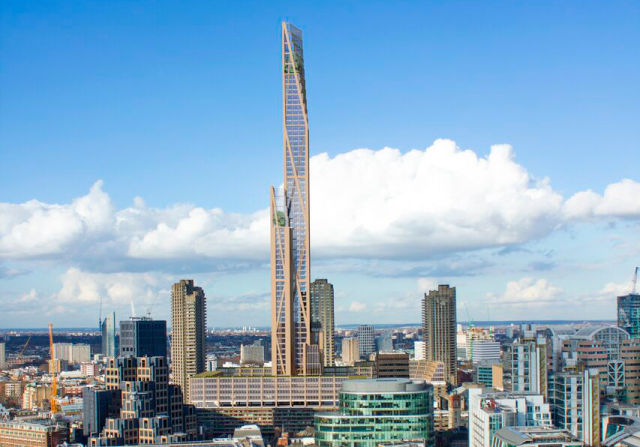
And this is a proposed 1,000ft structure off the edge of the Barbican, in the City of London. If it goes ahead it will be London's second tallest building after The Shard - and the tallest wooden structure in the world.


Friday, 12 August 2016

The First Buddhist Nunnery in the UK & Ajahn Brahm!

At the end of October and early November Ajahn Brahm is giving a series of Dhamma talks here in the U.K.

The teaching tour is entitled "Buddhism in the 21st Century" and is, appropriately, to support the setting up of the UK’s first ever monastery for fully ordained Buddhist nuns known as Bhikkhunis.

The aspiration behind the Anukampa Bhikkhuni Project, as it is called (anukampa means “empathic compassion”)  is to help people grow in the Dhamma and to nurture spiritual qualities such as contentment, compassion, wisdom, and peace. The project aims to build a community of like-minded people who wish to practice the teachings of the Buddha, establish a bhikkhuni presence in Britain by responding to teaching invitations and offers of support, and, primarily, to found and develop a harmonious training monastery for bhikkhunis dedicated to the goal of awakening.

The project’s coordinator is British born nun Venerable Canda.


The scheduled tour by Ajahn Brahm, who is also spiritual adviser to the Anukampa Bhikkhuni Project, is the first major fundraising project towards accomplishing these aims, offering a rare opportunity to receive the teachings of Ajahn Brahm in his homeland and to help establish a bhikkhuni presence in the UK.


Monday, 1 August 2016

Talking About Buddha Nature

Buddha nature, it really is all around us. Watch this amazing guy doing his bit........................


Monday, 9 May 2016

Want to Buy a Buddha?

If you are after a new Buddha statue for your shrine room and have piles of cash burning a hole in your pocket you might consider visiting Christie's King street auction house this Thursday for their sale of Chinese, Japanese and South-East Asian works of art.

For example this 17th century Gilt-Bronze figure of the Buddha from Thailand, AYUTTHAYA PERIOD, Cast, standing in samabhanga on a lotus base placed on a stepped circular pedestal, both hands in abhayamudra, wearing uttarasangha and samghati secured with a belt, his face with a serene expression and highly carved eyebrows, the eyes inlaid with mother-of-pearl, the curled hair rising to the ushnisha topped with a tall flame 53 ½ in. (136 cm.) high, mounted.

It is estimated at a mere six to ten thousand pounds........................

for a statue of a man who told his followers NOT to make any representations of him but to just earnestly follow his teachings.............

Saturday, 30 January 2016

Bowie's Buddhist Funeral

Following David Bowie’s wishes, he had no formal funeral. Instead, his close family scattered his ashes following a Buddhist ceremony on the Indonesian island of Bali.


The singer was secretly cremated without any of his family or friends present, he told them he wanted to "go without any fuss" and not have a funeral service or public memorial.

Saturday, 26 December 2015

The Buddha at Christmas

One of our Sangha members is a keen runner so even when visiting his daughter for Christmas still has to have his morning run. He snapped this when passing the London Peace Pagoda in Battersea Park.
 

Thursday, 3 December 2015

Syria, What is "Skilful"

Last night the British Parliament voted by 397 votes to 223 to bomb Daesh in Syria, one hour later RAF Tornados took off to bomb an oil refinery in Syria's Omar oil fields.

Those opposing the resolution argued passionately that civilians would inevitably be killed or injured in these raids and that we were entering a confused and multi-factional conflict with no clear long term aims or exit strategy.


Those arguing for airstrikes likewise argued fervently that the "evil" of Daesh must be confronted to protect both the peoples of Syria, Iraq and the citizens of this country.

Hilary Benn, the Labour Shadow Foreign Secretary, delivered a powerful speech in favour of taking action, “The question which confronts us in a very, very complex conflict is at its heart very simple. What should we do with others to confront this threat to our citizens, our nation, other nations and the people who suffer under the yoke, the cruel yoke, of Daesh? The carnage in Paris brought home to us the clear and present danger we face from them. It could have just as easily been London, or Glasgow, or Leeds or Birmingham and it could still be. And I believe that we have a moral and a practical duty to extend the action we are already taking in Iraq to Syria..................................

And we are here faced by fascists. Not just their calculated brutality, but their belief that they are superior to every single one of us in this chamber tonight, and all of the people that we represent. They hold us in contempt. They hold our values in contempt. They hold our belief in tolerance and decency in contempt. They hold our democracy, the means by which we will make our decision tonight, in contempt. And what we know about fascists is that they need to be defeated. And it is why, as we have heard tonight, socialists and trade unionists and others joined the International Brigade in the 1930s to fight against Franco. It’s why this entire House stood up against Hitler and Mussolini. It is why our party has always stood up against the denial of human rights and for justice. And my view, Mr Speaker, is that we must now confront this evil. It is now time for us to do our bit in Syria. And that is why I ask my colleagues to vote for the motion tonight.”

So, how do I as a Buddhist respond to this? I would like offer the story of Captain Jātaka from the Upāyakauśalya-sūtra..............

The Buddha, in a past life as a ship's captain named Jātaka, discovered a criminal on board who intended to kill the 500 passengers. If he told the passengers, they would panic and become killers themselves. With no other way out, he compassionately stabbed the criminal to death. Captain Jātaka saved the passengers not only from murder, but from becoming murderers themselves. Unlike him, they would have killed in rage and suffered hell. He saved the criminal from becoming a mass murderer and even worse suffering. He himself generated vast karmic merit by acting with compassion.

I am also grateful to Jack for his comment on our previous post on the Paris atrocities where he points out some of the complexity of the wider situation.

Wednesday, 28 October 2015

An End to the Purple Poppy

With Rememberance Day on Sunday the 8th and Armistice Day only a fortnight away you may have been considering also wearing a Purple Poppy this year to commemorate all of the animals killed in war. However Animal Aid, who produce the Purple Poppies, have decided NOT to continue producing them. Below is their explaination as to why they have reached this decision...................


When we launched our purple poppy initiative - to commemorate the animal victims of war - no other organisation seemed to be addressing the issue. Our aim was to make it clear that animals used in warfare are indeed victims, not heroes. They do not give their lives; their lives are taken from them.

But too often the narrative promoted by the media has been one of animals as the valiant servants of people in violent conflict. This is precisely the opposite message to that which we intended. An equivalent situation would be if animal victims of laboratory research were to be presented as brave heroes in the service of human beings - with Animal Aid's name attached to that idea. Having said that, many of our poppy sellers have worked extraordinarily hard and with great passion on this campaign.

Certainly, our message, via their work, has to a degree got through. But the dominant narrative (animal victims of war are heroes who died for us) is so deeply embedded that only a huge effort (costly in every way) can uproot it and lay down something that will benefit the animals. We considered the massive-effort option but decided that Animal Aid's finite resources are best used on other urgent, more productive campaigns. 

We are, therefore, replacing the purple poppy with a badge that will commemorate all animal victims of human exploitation. It can be worn all year round - at special events or day to day. Rest assured that we will continue to promote our victims-not-heroes message every year in the run-up to Remembrance Sunday (but without the purple poppy), and we will continue to produce our Animals: the hidden victims of war booklet and other resources.

Thursday, 8 October 2015

A Buddhist Poem for National Poetry Day

As it's National Poetry Day today I thought I'd post a Buddhist poem. This one is by Dharmavadana who is poetry editor of the Buddhist arts magazine Urthona.

His own poetry has appeared in the magazines Haiku Quarterly, Brittle Star, Ambit and in the anthology The Heart as Origami: Contemporary Buddhist Poets (Rising Fire Press 2005), as well as previously in the Buddhist Poetry Review. He lives in London.

I am not different from the unconscious stars,
the clouds that blot them out,
the grass, the trees in veils,
this hut, the steps in front of it, my pillow.

No different from the fire in the wood burner
or the candle flames swimming beside me
on the table. I can’t understand myself,
never will. I am not.

No childhood, no adulthood,
no future. No sorrows, no dreams.
There never were any. Look,
I’m already gone. I sleep the sleep
of one who knows he was not created, ever,
and is not here to die.


National Poetry Day is a British campaign to promote poetry, including public performances. National Poetry Day was founded in 1994 by William Sieghart. It takes place annually in the UK and Ireland on the first or second Thursday of October. Since its inception, it has engaged millions of people across the country with live events, classroom activities and broadcasts.

Monday, 21 September 2015

It's World Peace Day, Honest

Now I seem to have almost missed this but today is World Peace Day. What with all the ceasefires being declared and peace treaties being signed, the universal dancing in the streets and all those swords being beaten into ploughshares it's amazing but I really didn't notice the significance of the date.


Each year the International Day of Peace is observed around the world on 21 September. The United Nations General Assembly has declared this as a day devoted to strengthening the ideals of peace, both within and among all nations and peoples. The theme of this year’s commemoration is “Partnerships for Peace – Dignity for All” which aims to highlight the importance of all segments of society to work together to strive for peace.

So it is opportune that the Dalai Lama has given his blessing to a new course of evening classes, available across the UK, promising to make participants happier… and the world a better place.

The eight-week course, designed by the Action for Happiness organisation, claims to be scientifically proven to increase life satisfaction, mental well being, compassion and social trust.

Entitled Exploring What Matters, the classes will be free - although organisers do ask for a donation to cover costs. Hundreds of people have already volunteered to host the course in locations across the UK.

Launching the course today, on World Peace Day, the Dalai Lama said he was delighted to see the "work being done to create a happier and more caring society".

"I wholeheartedly support the Exploring What Matters course and hope that many thousands of people will benefit from it and be inspired to take their own action to help create a happier world," he said. During the course, local groups explore a series of questions including "What really matters in life?", "What really makes us happy?" and "How can we create a happier world?".

Better get a move on as the world ends day after tomorrow.................................