Wednesday, 23 November 2022
Tomorrows meeting Cancelled
Hi Everyone,
I've come down with a particularly vile seasonal lurgy (NOT Covid) and as such am having to cancel Thursday's meeting.
I'll let you know what the situation is for next week, hopefully I will be OK but can never be too sure with an impaired immune system.
Hope you are all well,
Steve
Tuesday, 8 November 2022
As a border city must be carefully protected
so guard yourself both within and without;
build your defences wisely and in time.
If these things are not attended to
at the right moment, great sadness will come.
Dhammapada v.315
We are probably sufficiently aware of how to guard ourselves outwardly; so how do we guard ourselves inwardly? First and foremost it is by protecting ourselves from negative mind states. When Venerable Anando asked the Buddha why it is so important to live a life of integrity, he replied that it meant the heart could be free from remorse. Secondly, we need a good degree of alertness, mindfulness. If our attention is dissipated then we are not in a position to tell that which is beneficial from that which is not. Thirdly, it is necessary that we build a capacity to exercise composure. From the outside composure might appear unimportant, but without it we will probably function in automatic mode; we don’t so much respond to situations as react out of habit. Fourth, and finally in this reflection, we need well-developed discernment. The intelligence we are gifted with as human beings has the potential to be refined to the point where it is ready to ask the right questions at the right time in the right way.
Tuesday, 11 October 2022
Dhammapada Reflections - Death
There is no place on earth
beyond the reach of death
-
not in a mountain cave,
the ocean nor in the sky.
Dhammapada v.128
All living beings are afraid of death. The way the Buddha wanted us to deal with this fear is to look at it directly; not to deny it by way of distraction. Hence such uncompromising teachings as this Dhammapada verse. Not much in life is guaranteed, though the evidence around us would indicate that one day we will indeed die. It is natural to try to avoid pain – and obviously fear is painful – however it is not wise to ignore clear evidence. So how should we prepare ourselves to be able to look directly at fear? We develop the spiritual faculties: faith, energy, mindfulness, collectedness, discernment. We also need to own up to how much of human society endorses an habitual avoidance of the inevitability of our own death. Acknowledging our own backlog of avoidance requires great patience. Honesty, patience and kindness help dissolve habits of denial and lead to contentment.
Saturday, 28 May 2022
Some Thoughts on Getting Older
I was sent this piece by a Sangha member and it does say to share it................
So here it is..........................
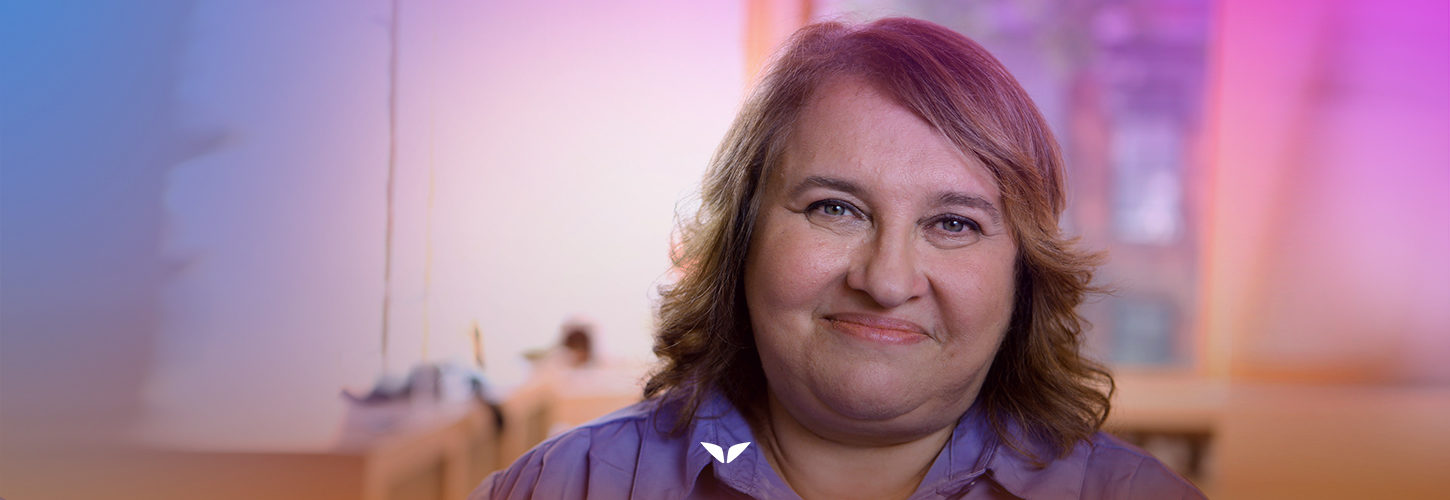
Aging Wisely By Sharon Salzberg
I’m mostly in denial that I’m about to turn 70 years old. I often find myself saying, “Let’s just not think about it. I’ll pretend it isn’t going to happen.”
But of course, as I contemplate my upcoming birthday with disbelief, I remember that I’ve spent all these years in a Buddhist tradition that encourages reflecting on your own death every day. So maybe it’s not something I should put off anymore!
When I do this reflection, I think about letting go. During the pandemic, I let go of many things: travel, seeing friends, and much more. And so I ponder what it would mean to let go of everything.
Of course, aging is a mixed bag. Wisdom, perspective, gratitude—so many things grow stronger as we get older. But there are also distressing, growing incapacities from one’s body; the fear of what a moment of forgetfulness might mean; the sheer indignity of being treated as unimportant by some; even the frustration of having to scroll down for a long, long, long time on some websites to get to the year of your birth (my personal pet peeve).
Dandilion Blowing Away
And then there is the painful fact, so relevant recently, that one’s body tends not to mount as strong an immune response to illness.
I do also feel the joy of aging. For example, I don’t feel ambitious. If someone asks me what I’d like my legacy to be, I think, “I’ve done it.” Hopefully I can still accomplish things and make things happen, but I don’t feel competitive. I don’t feel haunted by the folly of youth as I might have been at one time.
I once attended a retreat focused on aging led by the Tibetan master Tsoknyi Rinpoche. Although he was still a fairly young man at that point, Rinpoche had noticed that many of his students were confronting the challenges of growing older. One afternoon, someone in the retreat was waxing on about the tremendous joys and delights of growing older. Exhilarating insights, followed by a litany of pleasures, followed by impressive triumphs, all spoken faster and faster (“What is she running from?” I thought darkly), until Rinpoche interrupted her.
“Don’t just make a poem out of aging,” he said. “It can be really hard sometimes.”
He wasn’t encouraging cynicism or despair—more an invitation to see and openly acknowledge all aspects of our experience. We don’t want to deny the difficult, of course, but we also don’t need to be completely defined by it. Being enveloped in and defined by what’s difficult is relatively easy to do, so it takes some intentionality to recognize all aspects of our experience and remember the positive forces in our lives.
So how might that work in practice?
First, while the difficult parts of aging are unavoidable, we can try not to add to them. For example, I have seen, throughout my life, the tendency to rehearse some catastrophe and thereby live it several times. So I think the first question is always, “What are we adding onto a situation which is already hard enough?”
Not being able to do something I used to be able to do, or being in physical pain, or losing people we love—these are already very hard. But we often add more suffering onto them, like thinking it shouldn’t be this way, or feeling shame or fear. One possibility of mindfulness is to notice where we’re adding to the suffering that’s already there, and try not to fall so much into it.
Second, I learned an interesting form of lovingkindness meditation from Ananda Matteya, then an energetic, 94-year-old Sri Lankan monk visiting the Insight Meditation Society in 1993. He taught us what he described as his favorite meditation: combining loving-kindness meditation and a body scan. He would go through the body, part by part, wishing each part well: may my head be happy, may my eyes be happy, and so on through the whole body. Even “may my liver be happy!”
I’ve taught that meditation to people with injuries, scars, diseases, difficult diagnoses, and all kinds of things, and it makes a difference. It can help counteract our tendency to add bits of shame or resentment, even subconsciously, to whatever is already there.
Finally, there’s the perspective of wisdom.
I first met Joseph Goldstein at my first meditation retreat, in India, in January, 1971. Just before lunch, I was in a madly frustrated state, because I couldn’t keep my attention on the breath. I said to myself, “If your mind wanders one more time, you should just bang your head against the wall!”
Fortunately, the lunch bell rang just then, saving me from that fate. This retreat was not silent, so waiting in line for lunch, there was a conversation going on between two people behind me. One asked, “How was your morning?” And the other replied, “I couldn’t concentrate at all, but maybe this afternoon will be better.”
He was so casual about it that I was horrified. I thought “This guy doesn’t understand how extraordinary these teachings are—he’s being so glib!”
Of course, ‘this guy’ was Joseph Goldstein. The difference, of course, was that I had been meditating for four days, while he had been meditating for four years and had a kind of perspective on change, on the inevitable ups and downs of meditation, that I was nowhere near having.
Now I feel that way about life in general. Things change, there are ups and downs, and with practice, we can learn to let go, again and again.
Tuesday, 8 February 2022
We're Back! (again)
The Omicron wave
seems to be on the wane and we am going to reopen for group meetings
next Thursday, the 17th.
I look forward to seeing all of you who are comfortable with that then and the “door” is now open for those with reservations to return when they are ready.
Be well,
Steve
Monday, 3 January 2022
Restart Delayed...................
Hi Everybody,
Due to the current level of uncertainty as to
how the latest wave of Covid will progress and how virulent the Omicron strain
is for older age groups I have decided to delay restarting our Sangha meetings
until we can be confident that it’s safe to do so.
I’d welcome your feed back as to what you’d
like to happen and how you feel about “things”.
An especially poignant, Be well and look
after yourselves – and I’ll see you all soon(ish),
Friday, 19 November 2021
FULL MOON – Habits of Clinging
Fostering habits
such as craving and clinging
is like fertilizing noxious weeds.
Dhammapada v.335
When, for the first time, small children are dropped off at school, they often feel upset as their parents leave. They don’t understand that in a few hours time mum or dad will be back to pick them up again. Eventually those children learn that their parents have not disappeared forever and so are no longer upset. As adults, when we catch ourselves misperceiving a situation and becoming caught in clinging, it is wise to take note and register how clinging causes suffering. On one level it can feel suitable to cling to those things that we hold dear. It is a most natural thing for parents to feel caring towards their children. But what happens when the caring is combined with clinging? The child is over-protected and fails to learn. Or, what happens when we are praised by someone we respect and we cling to the agreeable feelings that arise? It can feel fine at the time, but what we fail to see is how, when we are spoken to rudely and painful feelings arise, we can’t help but cling to disagreeable feelings. The two go together.
Thursday, 21 October 2021
FULL MOON – Criticising
Those who always look for
the faults of others
-
their corruptions increase
and they are far from freedom.
Dhammapada v.253
Although we don’t realise it at the time, when we heedlessly dwell on finding fault with others, we create obstructions within our own field of awareness. Part of us might feel good as we compulsively criticise, but we fail to see that in so doing we distance ourselves from Dhamma. Of course there is a time and place for criticism offered out of concern for the benefit of others, but here we are talking about criticising with malice. If we are keen to develop clarity and understanding, we need to reflect on the consequences of fault-finding and inhibit the impulse. It can feel tempting to scratch an itchy wound that is healing, but we know that following that impulse makes things worse.
Subscribe to:
Posts (Atom)