Tuesday, 7 March 2023

FULL MOON – A Formula for Life

Refrain from doing that which is unsuitable, 
cultivate that which is wholesome; 
purify the heart. 
This is the teaching of the Awakened Ones.

Dhammapada v.183 

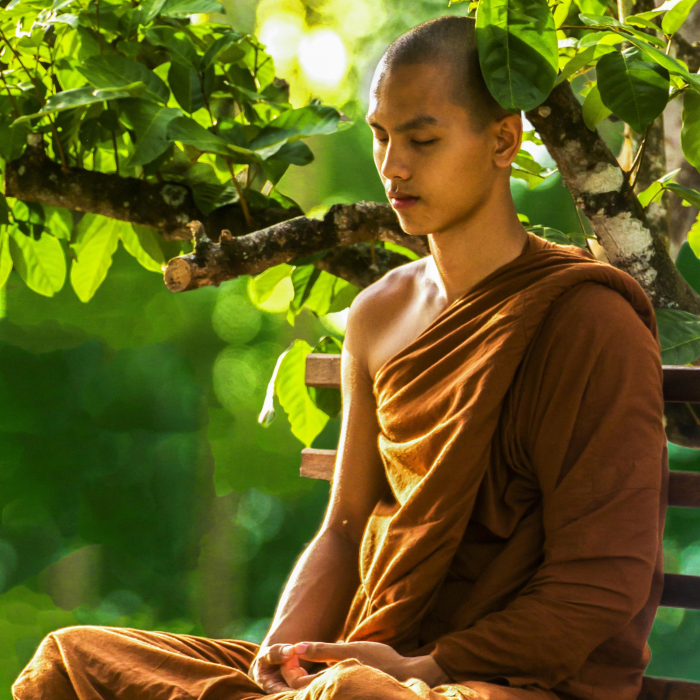
Although this verse might appear very simple, it can in fact be considered a formula for how to live our whole life. The first line addresses our habits of heedlessness. Just as cooking food in an unhygienic kitchen could cause sickness, so spiritual practice without the skill of restraint is dangerous. The second line points to the need for building up a storehouse of goodness. We wouldn’t aim to climb Mount Everest without the right provisions. Likewise, it is not sensible to aim for freedom from suffering without cultivating a reservoir of wholesomeness from which we can draw strength when needed. These first two lines are about preparing ourselves for the work that is described in the third line: purifying the heart, which involves great heat, great pressure, and a great deal of patience. The fourth line states that this same teaching is given by all the Buddhas.

Monday, 6 February 2023

Sangha Member Walks Around Island Coast

Isle of Wight Coastal Path - Hiking and Wild Camping Solo in Winter


But if Jonas was Circumambulating the island he was going anti clockwise - is he a secret Bon adherent?

Tuesday, 20 December 2022

Xmas & New Year Break


Hi, 


Just a quick note that we're having our Xmas - New Year break and we will be re-opening our doors on Thursday, January the 12th, 2023.

See you all next year,
Steve

Wednesday, 23 November 2022

Tomorrows meeting Cancelled

Hi Everyone, 


I've come down with a particularly vile seasonal lurgy (NOT Covid) and as such am having to cancel Thursday's meeting. I'll let you know what the situation is for next week, hopefully I will be OK but can never be too sure with an impaired immune system. 

Hope you are all well, 
Steve

Tuesday, 8 November 2022

As a border city must be carefully protected
so guard yourself both within and without;
build your defences wisely and in time. 
If these things are not attended to 
at the right moment, great sadness will come. 

Dhammapada v.315 

We are probably sufficiently aware of how to guard ourselves outwardly; so how do we guard ourselves inwardly? First and foremost it is by protecting ourselves from negative mind states. When Venerable Anando asked the Buddha why it is so important to live a life of integrity, he replied that it meant the heart could be free from remorse. Secondly, we need a good degree of alertness, mindfulness. If our attention is dissipated then we are not in a position to tell that which is beneficial from that which is not. Thirdly, it is necessary that we build a capacity to exercise composure. From the outside composure might appear unimportant, but without it we will probably function in automatic mode; we don’t so much respond to situations as react out of habit. Fourth, and finally in this reflection, we need well-developed discernment. The intelligence we are gifted with as human beings has the potential to be refined to the point where it is ready to ask the right questions at the right time in the right way.

Tuesday, 11 October 2022

Dhammapada Reflections - Death

There is no place on earth 
beyond the reach of death
 - not in a mountain cave, 
the ocean nor in the sky. 

Dhammapada v.128 

All living beings are afraid of death. The way the Buddha wanted us to deal with this fear is to look at it directly; not to deny it by way of distraction. Hence such uncompromising teachings as this Dhammapada verse. Not much in life is guaranteed, though the evidence around us would indicate that one day we will indeed die. It is natural to try to avoid pain – and obviously fear is painful – however it is not wise to ignore clear evidence. So how should we prepare ourselves to be able to look directly at fear? We develop the spiritual faculties: faith, energy, mindfulness, collectedness, discernment. We also need to own up to how much of human society endorses an habitual avoidance of the inevitability of our own death. Acknowledging our own backlog of avoidance requires great patience. Honesty, patience and kindness help dissolve habits of denial and lead to contentment.

Saturday, 28 May 2022

Some Thoughts on Getting Older

I was sent this piece by a Sangha member and it does say to share it................
So here it is..........................

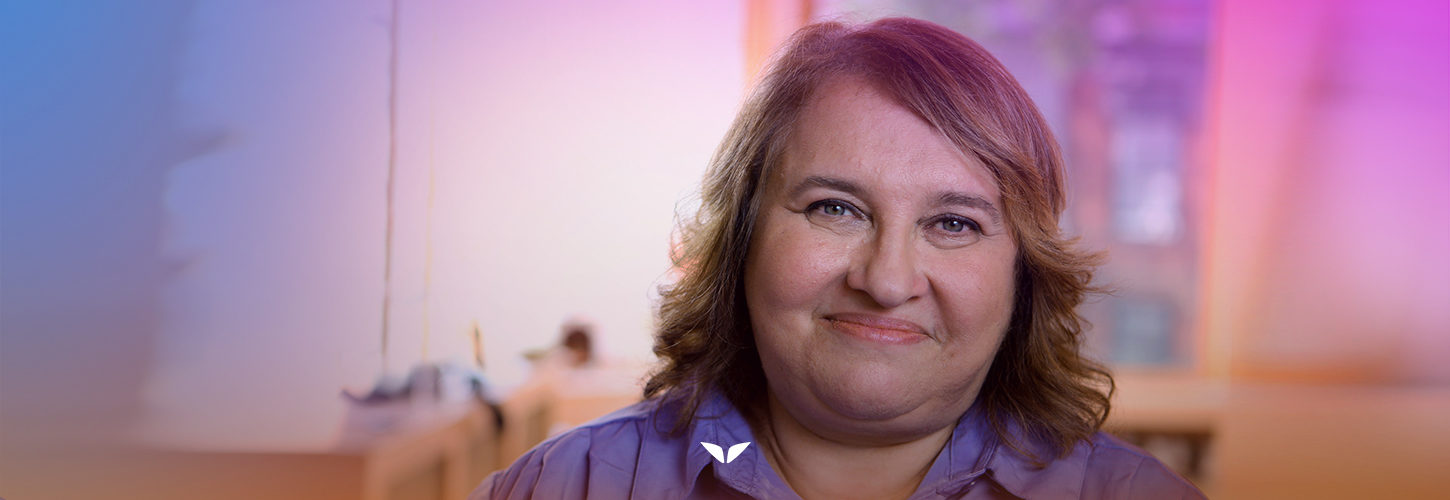
Aging Wisely  By Sharon Salzberg


I’m mostly in denial that I’m about to turn 70 years old. I often find myself saying, “Let’s just not think about it. I’ll pretend it isn’t going to happen.” 

But of course, as I contemplate my upcoming birthday with disbelief, I remember that I’ve spent all these years in a Buddhist tradition that encourages reflecting on your own death every day. So maybe it’s not something I should put off anymore! 

When I do this reflection, I think about letting go. During the pandemic, I let go of many things: travel, seeing friends, and much more. And so I ponder what it would mean to let go of everything. 

Of course, aging is a mixed bag. Wisdom, perspective, gratitude—so many things grow stronger as we get older. But there are also distressing, growing incapacities from one’s body; the fear of what a moment of forgetfulness might mean; the sheer indignity of being treated as unimportant by some; even the frustration of having to scroll down for a long, long, long time on some websites to get to the year of your birth (my personal pet peeve). 

Dandilion Blowing Away And then there is the painful fact, so relevant recently, that one’s body tends not to mount as strong an immune response to illness. 

I do also feel the joy of aging. For example, I don’t feel ambitious. If someone asks me what I’d like my legacy to be, I think, “I’ve done it.” Hopefully I can still accomplish things and make things happen, but I don’t feel competitive. I don’t feel haunted by the folly of youth as I might have been at one time. 

I once attended a retreat focused on aging led by the Tibetan master Tsoknyi Rinpoche. Although he was still a fairly young man at that point, Rinpoche had noticed that many of his students were confronting the challenges of growing older. One afternoon, someone in the retreat was waxing on about the tremendous joys and delights of growing older. Exhilarating insights, followed by a litany of pleasures, followed by impressive triumphs, all spoken faster and faster (“What is she running from?” I thought darkly), until Rinpoche interrupted her. 

“Don’t just make a poem out of aging,” he said. “It can be really hard sometimes.” 

He wasn’t encouraging cynicism or despair—more an invitation to see and openly acknowledge all aspects of our experience. We don’t want to deny the difficult, of course, but we also don’t need to be completely defined by it. Being enveloped in and defined by what’s difficult is relatively easy to do, so it takes some intentionality to recognize all aspects of our experience and remember the positive forces in our lives. 

So how might that work in practice? 

First, while the difficult parts of aging are unavoidable, we can try not to add to them. For example, I have seen, throughout my life, the tendency to rehearse some catastrophe and thereby live it several times. So I think the first question is always, “What are we adding onto a situation which is already hard enough?” 

Not being able to do something I used to be able to do, or being in physical pain, or losing people we love—these are already very hard. But we often add more suffering onto them, like thinking it shouldn’t be this way, or feeling shame or fear. One possibility of mindfulness is to notice where we’re adding to the suffering that’s already there, and try not to fall so much into it. 

Second, I learned an interesting form of lovingkindness meditation from Ananda Matteya, then an energetic, 94-year-old Sri Lankan monk visiting the Insight Meditation Society in 1993. He taught us what he described as his favorite meditation: combining loving-kindness meditation and a body scan. He would go through the body, part by part, wishing each part well: may my head be happy, may my eyes be happy, and so on through the whole body. Even “may my liver be happy!” 

I’ve taught that meditation to people with injuries, scars, diseases, difficult diagnoses, and all kinds of things, and it makes a difference. It can help counteract our tendency to add bits of shame or resentment, even subconsciously, to whatever is already there. 

Finally, there’s the perspective of wisdom. 

I first met Joseph Goldstein at my first meditation retreat, in India, in January, 1971. Just before lunch, I was in a madly frustrated state, because I couldn’t keep my attention on the breath. I said to myself, “If your mind wanders one more time, you should just bang your head against the wall!” 

Fortunately, the lunch bell rang just then, saving me from that fate. This retreat was not silent, so waiting in line for lunch, there was a conversation going on between two people behind me. One asked, “How was your morning?” And the other replied, “I couldn’t concentrate at all, but maybe this afternoon will be better.” 

He was so casual about it that I was horrified. I thought “This guy doesn’t understand how extraordinary these teachings are—he’s being so glib!” 

Of course, ‘this guy’ was Joseph Goldstein. The difference, of course, was that I had been meditating for four days, while he had been meditating for four years and had a kind of perspective on change, on the inevitable ups and downs of meditation, that I was nowhere near having. 

Now I feel that way about life in general. Things change, there are ups and downs, and with practice, we can learn to let go, again and again.

Tuesday, 8 February 2022

We're Back! (again)


The Omicron wave seems to be on the wane and we am going to reopen for group meetings next Thursday, the 17th.

I look forward to seeing all of you who are comfortable with that then and the “door” is now open for those with reservations to return when they are ready.

Be well,

Steve

Monday, 3 January 2022

Restart Delayed...................

Hi Everybody,

Due to the current level of uncertainty as to how the latest wave of Covid will progress and how virulent the Omicron strain is for older age groups I have decided to delay restarting our Sangha meetings until we can be confident that it’s safe to do so.

I’d welcome your feed back as to what you’d like to happen and how you feel about “things”.

An especially poignant, Be well and look after yourselves – and I’ll see you all soon(ish),

Steve

Friday, 19 November 2021

FULL MOON – Habits of Clinging

Fostering habits 
such as craving and clinging  
is like fertilizing noxious weeds. 

Dhammapada v.335 

When, for the first time, small children are dropped off at school, they often feel upset as their parents leave. They don’t understand that in a few hours time mum or dad will be back to pick them up again. Eventually those children learn that their parents have not disappeared forever and so are no longer upset. As adults, when we catch ourselves misperceiving a situation and becoming caught in clinging, it is wise to take note and register how clinging causes suffering. On one level it can feel suitable to cling to those things that we hold dear. It is a most natural thing for parents to feel caring towards their children. But what happens when the caring is combined with clinging? The child is over-protected and fails to learn. Or, what happens when we are praised by someone we respect and we cling to the agreeable feelings that arise? It can feel fine at the time, but what we fail to see is how, when we are spoken to rudely and painful feelings arise, we can’t help but cling to disagreeable feelings. The two go together.

Thursday, 21 October 2021

FULL MOON – Criticising

Those who always look for 
the faults of others
- their corruptions increase 
and they are far from freedom. 

Dhammapada v.253 

Although we don’t realise it at the time, when we heedlessly dwell on finding fault with others, we create obstructions within our own field of awareness. Part of us might feel good as we compulsively criticise, but we fail to see that in so doing we distance ourselves from Dhamma. Of course there is a time and place for criticism offered out of concern for the benefit of others, but here we are talking about criticising with malice. If we are keen to develop clarity and understanding, we need to reflect on the consequences of fault-finding and inhibit the impulse. It can feel tempting to scratch an itchy wound that is healing, but we know that following that impulse makes things worse.

Wednesday, 20 October 2021

A Poem

One of our Sangha members sent me this piece the other day and I thought it's a good one to share.......................


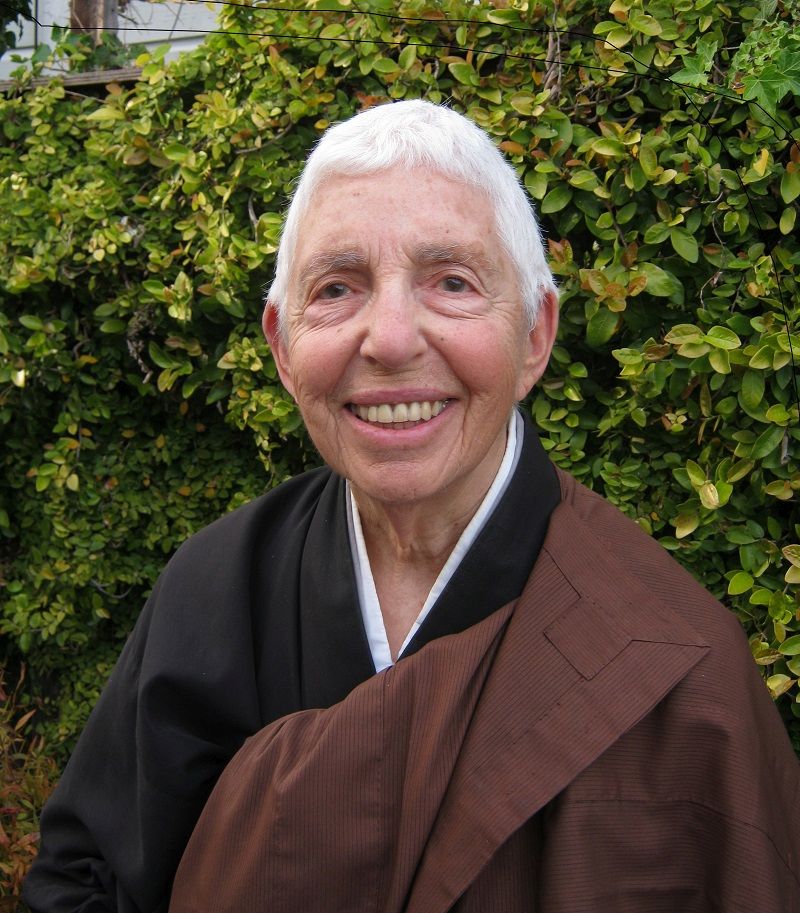
In Zen practice,” writes the Zen teacher Sobun Katherine Thanas, “we give attention to the details of our lives.” By paying close, sustained attention to the most ordinary details in our daily round, we train ourselves to abide in the present moment. Rather than sacrifice our present experience to a past that is already gone, a future that has not yet come, or abstract thoughts that may or may not reflect reality, we attend to the details of the matter at hand: the level of green tea in our measuring spoon, the temperature and volume of water to be added, the specific brewing time for that particular tea. By so doing, we fully engage in relative, historical time, even as we touch the timeless, absolute dimension of our experience.

No one understands this paradox more fully or articulates it with greater skill than the Midwestern poet Ted Kooser (b. 1939), who won the Pulitzer Prize for Poetry for his book Delights & Shadows in 2005 and served as US Poet Laureate from 2004-2006. Kooser is not a Zen practitioner, so far as I know, (he's a Unitarian Universalist) but by attending to the details of quotidian life, no matter how mundane, he returns the reader, time and again, to the immediacy of the present moment. And in their acute awareness of impermanence and interdependence, as revealed by such common or discarded objects as curtain rods, enameled pans, and Depression glass, his poems often embody the essence, if not the customary forms and rituals, of Zen practice.

A vivid example may be seen in the title poem of Kooser’s collection Splitting an Order (2014). In this gentle poem, set in a diner, the narrator observes an old man cutting his cold sandwich into two equal parts. It pleases the narrator to watch him

keeping his shaky hands steady

by placing his forearms firm on the edge of the table

and using both hands, the left to hold the sandwich in place,

and the right to cut it surely, corner to corner,

observing his progress through glasses that moments before

he wiped with his napkin, and then to see him lift half

onto the extra plate that he asked the server to bring,

and then to wait, offering the plate to his wife

while she slowly unrolls her napkin and places her spoon,

her knife, and her fork in their proper places,

then smooths the starched white napkin over her knees

and meets his eyes and holds out both old hands to him.

A more ordinary situation it would be difficult to imagine: an elderly married couple having lunch in a diner. Yet Kooser endows this everyday situation with the glow of heightened attention, both on the part of the husband and wife and on that of the observant narrator.

The couple are splitting a plain roast-beef sandwich, perhaps to economize or because neither needs to eat a whole one. To accomplish this division, the husband must steady his shaky hands, a challenge he readily overcomes. By dividing the sandwich “surely” and diagonally, he ensures that the resulting portions will be exactly equal. Meanwhile, his wife carefully unrolls the napkin enclosing her knife, fork, and spoon. These, too, become objects of meticulous attention.

Even as the husband and wife are taking their time and paying attention to the details of their humble repast, the narrator is doing the same. His unswerving observation, recorded in a single complex but graceful sentence, not only mirrors that of his subjects toward the actions they are performing. It also establishes a tone of caring, even for common, unexceptional things, and implicitly bestows moral and aesthetic value on a scene that might otherwise have been dismissed as banal. The true significance of the scene becomes apparent in the poem’s closing lines, where the husband’s offering his wife her half of their sandwich completes his act of fairness, solicitude, and kindness. She in turn exhibits an attitude of openness and gratitude.

Shizen ichimi, an old Zen saying reminds us: “Poetry and Zen are one.” Although the former depends on fresh language, the latter on silent contemplation, both rely on wholehearted attention to concrete, particular detail. By stopping and looking deeply, both reveal the hidden dimension of human experience, the currents of interdependence and impermanence that underlie the most commonplace of human interactions. And, though they do so in very different ways, both, in the words of the poet Patrick Kavanagh, “snatch out of time the passionate transitory.”

_____________

Sobun Katherine Thanas, The Truth of This Life: Essays on Learning to Love This World 

Tuesday, 17 August 2021

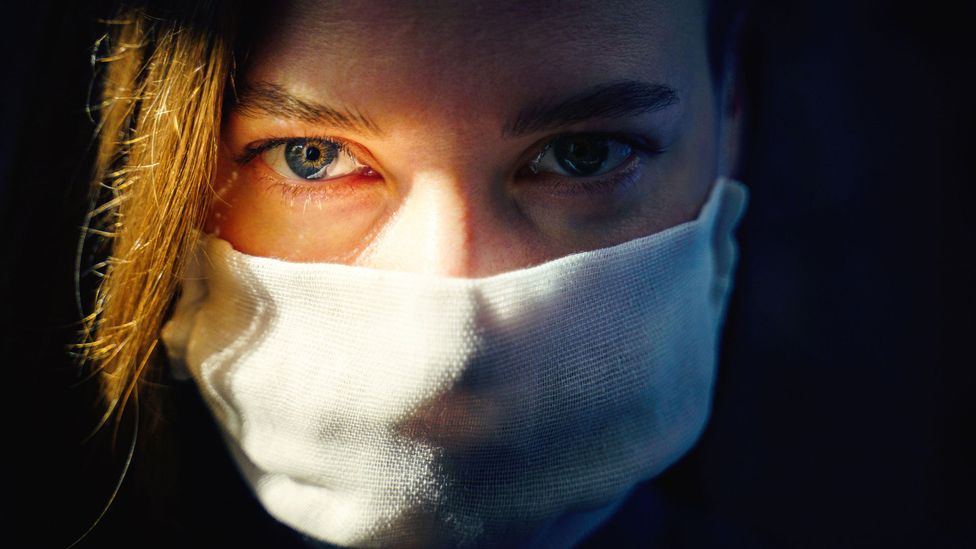
Wearing a Mask

I came across this piece on Quora, it speaks for itself - bless you Amanda..............


How do you feel, if vaccinated, about having to wear a mask to protect those who refuse to get vaccinated? 

Amanda Bankston, Hippie nursing student with a big heart and a fancy pen! 

I'm standing in the grocery store, safe behind my cart, politely minding my own business. The movement and energy around me is practically dizzying as I observe my fellow humans trudge along as though nothing is different. I have no idea how long I've been at the store - time moves differently lately - but I'm now in the refreshment aisle. 

For just a moment, my heavy heart is relieved of its burden by my brain. I think, “What shall we drink this week…?” as I stare down the row of various juices, sodas and Crystal Light wannabes. 

Just then, in the deli area behind me, a male voice becomes clear. He's not shouting but his voice is elevated. You can hear a demanding and questioning tone. He's agitated and aggressive, although I can't initially make out what he's saying. 

My fellow Americans around the area look up momentarily. You can see their questioning expressions, their perked up ears, their anxious feet. Some of us, myself included, pretend not to hear it while still mentally tensing. We're all ready to run or step in if we need to. We know this is how “things” sometimes start. 

It's finally clear that the aggravated gentlemen is merely the “Rights Warrior” of the day, as he starts to screechingly make his demands for all to hear: 

“NO, I WON'T go back and get my mask! I want my fucking turkey and ham! Is that too much to ask!? I should be allowed to buy food without having to give in to your conspiracy bullshit! Ya'll are living in fear of lies! I won't be one of the mindless LIKE YOU and follow this ridiculous mask shit, and if you don't check me out, you're discriminating!! I'M HUNGRY, DAMMIT, JUST LET ME BUY MY FOOD! I said, I'M HUNGRY!! … Even our Founding Fathers said, ‘Give me liberty, or give me death!’ Now just do your job and ring up the meat!” 

My gaze falls (unintentionally) on the Kool-aid as his last furious word is spat. Gazing at its cheerful label, I think to myself, “I wish we could have some, but it's no good for you…” 

So… 

How do I feel when I see others completely disregard science to protect their sense of intellectual superiority? 

How do I feel as I continuously am victimized by the “Rights Warrior” who feels the need to spew their diatribe at every given opportunity? 

How do I feel as others ignore the safety of the majority, for the sake of their immutable beliefs? 

How do I feel when I see someone without a mask, knowing that someone I love suffered greatly, likely due to similar selfishness, arrogance or ignorance? 

How do I feel when I realize people I used to respect and admire greatly, are failing their due diligence and mindlessly accepting false information regarding virology (a term they hadn't even heard until recently)? 

How do I feel when I see a fellow human being berating and bullying someone for wearing a mask? 

Or the opposite, berating someone for encouraging them to wear theirs? 

How do I feel when people choose to be selfish and unwilling to learn? 

How do I feel as I watch my country become further divided over something so simple, black/white, and easy? 

How do I feel when I see people refuse to cover their face with a little piece of cloth in public, because, they say, it violates their rights? 

I feel like I miss my fucking husband. 

Because he's not here anymore. 

If he were, I wouldn't be thinking about what beverages to buy. I'd know exactly what to get. He is… was… afterall, the only one that partook in these sugary liquids. 

Every unmasked face is a reminder of what could've saved him. 

Of what I lost. 

What my children lost. 

The hole in my heart. 

The destruction of all my hopes and dreams. 

And the implosion of my near-perfect life. 

So you wonder how I feel when I'm faced with that reminder and its noisy crowd every single day? 

I feel confused and heartbroken, even as I seek to protect those who actively contributed to the destruction of everything I hold dear. 

But mostly, I feel dead. 

And yet, despite the numbingly heavy loss, the emotional static, the disruption of purpose and heart, I will still wear my mask. 

I will wear it in the hope that I can save just one person from feeling like this. 

If only someone had done that for me.

Friday, 6 August 2021

We're Back!


West Wight Sangha reopened it's Shrine Room doors for it's first Post Lockdown meeting yesterday!

Join us every Thursday evening from 7:30 until 9:30

Sunday, 25 July 2021

FULL MOON – Shaping Life

Just as a fletcher shapes an arrow, 
so the wise develop the mind, 
so excitable, 
uncertain and difficult to control. 

Dhammapada v. 33 

If we wish to develop our minds, sooner or later we need to recognize that we are responsible for the views that we have on life – the views that we hold and how we hold them. It is our views and whether or not we are attached to them that determine our actions. Within us there is a potential to change our views and to change our relationship to them. Perhaps at an early stage of life we assimilated the view that we deserve all the safety and convenience of living in an affluent society, unaware of the many sacrifices others have made so we can enjoy these conditions. Then, if circumstances change and we no longer have all the freedoms that we had grown used to, that unacknowledged view causes us to feel deprived and we become indignant. Without careful, skilful investigation into the views we hold, our life is shaped mainly by external influences. In his teachings the Buddha highlighted the possibility for training our attention so we are not mere victims of external influences. He wanted us to truly take control of our lives by letting go of attachment to views. If we are not attached to views we are in a position to be able to assess whether or not they serve to increase well-being.

Friday, 25 June 2021

Dhammapada Reflections FULL MOON – The Way of Wisdom

To contemplate life leads to wisdom; without contemplation wisdom wanes. 
Recognise how wisdom is cultivated and destroyed, 
and walk the way of increase. 

Dhammapada v. 282 

It is understandable if we assume that the way to increase ease and contentment is to achieve our goals in life. And to some extent the Buddha wouldn’t disagree; however it does depend on the nature of our goals. To aim for fitness and good health is a relatively suitable goal, unless, that is, it means we view the inevitability of old age as something going wrong. The Buddha wanted us to recognize the relative importance of such matters as maintaining physical health. At the same time he wanted us to develop the faculty of wise reflection – or contemplation – to the point where we see that this body is not truly who and what we are. Of course the body is part of our identity and we are responsible for taking care of it. We are also responsible for the state of awareness out of which we live. The most suitable goal in life is the realization of the quality of wisdom that sees beyond the way things merely appear to be, to that which is actually true.

Sunday, 20 June 2021

Daily Mindfulness Exercise

I usually re-post this item from the previous year as an annual reminder to "keep the ball rolling. Last year with the Covid restrictions I gave it a miss but with the easing of the rules it's back again!

Talking of Covid there is no problem with litter picking, I checked with Keep Britain Tidy and the rules only apply to large group activities.

For some time now I have been emailing out regular weekly mindfulness/meditation exercises to the members of the West Wight Sangha and to other friends and associates. At the New Year I introduced an additional Daily Mindfulness Exercise and post a reminder of this with each weeks email.

Quite simply, the exercise is to pick up and dispose of one piece of litter every day.


Obviously this is an environmentally useful activity in its own right and has a number of merits, but how can it be considered a mindfulness exercise?

It is so easy to rush through life without stopping to notice much.

Paying more attention to the present moment – to our own thoughts and feelings, and to the world around us – can improve our mental wellbeing.

This awareness is what we call "mindfulness". Mindfulness can help us enjoy life more and understand ourselves better. We can take steps to develop it in our own lives but there is one vital element that underpins this kind of mental activity and that is the need to REMEMBER to be mindful.

This is where the use of regular exercises comes in, essentially we commit to carrying out a task, we have a job to do. For the purpose of developing our ability to be mindful these tasks should not be overly complicated and there should be a clear trigger, a predefined set of circumstances, to initiate our focused awareness of the task.

One of our weekly exercises, and one of my favourites, is to notice the colour blue. Sounds simple but you quickly become aware of how rare, especially in the countryside, this colour is. There are two elements here, you can be mindfully looking for the colour blue or your mindfulness is triggered by seeing the colour blue. Just swap litter for blue objects and you can see the benefit of the litter pick exercise.

It’s also a good idea to tell other people what you are doing, people do look and wonder..... so tell them. Here on the Isle of Wight we have a population of 139,000. Even halving this to allow for the too youngs, too olds, too infirmeds and, sadly, the don’t cares still leaves the potential for the best part of 70,000 pieces of litter to be removed from our beautiful island EVERY DAY and every day works out to a staggering TWO AND A HALF MILLION PIECES OF LITTER REMOVED EVERY YEAR. So the more people you can get interested the better.

You can also beef up the remembering element of the exercise by keeping a tally of days missed, it will happen, and making a personal promise to pick up the missed number of pieces of litter the next opportunity you have.

The environmental point of this task is to get us working at creating a cosy home for all of us in this world. After all, the world is our home. Trying to define home as only the space we live in every night only serves to segregate and not unite us. Recognise that our home extends beyond just those physical walls and every ground we walk on, every neighbourhood we walk in, every district we step into, etc. should be considered our home, too.

The problem with litter is that the more there is, the more it generates. If people see litter all over the place, they see no reason why they shouldn't add to it. Why should they bother to look for a bin when nobody else does? What difference to the general scene would one more sandwich wrapper make? 

But think what difference one less wrapper makes and then another one less and another and another........................

Tuesday, 27 April 2021

Dhammapada Reflections - FULL MOON – Honesty

One who transforms old and heedless ways 
into fresh and wholesome acts 
brings light into the world 
like the moon freed from clouds. 

Dhammapada v.173 

Sometimes we focus inwards, paying attention to the deep causes of discontent. At other times we pay attention outwards to the suffering of the world in which we live. Becoming lost either inwardly or outwardly brings greater imbalance. What we are aiming at is learning how to take full responsibility for our heedless habits. Both inner and outer work can be difficult. It is hard to be honest and admit that it is because our heart is closed that our capacity for caring and discernment is compromised. Living with an open heart is not about being weak or soft; it means simply allowing our native sensitivity to shine through. Certainly we will have to face the risk of feeling hurt; however we learned to close our hearts in the first place because we didn’t know how to accurately feel what we feel. Hopefully, by this stage of life we have acquired enough skill in mindfulness, restraint and wise reflection to be better able to allow the hurt and disappointment, to allow the hope and the delight, without losing balance too seriously. Our contribution to the sad and sorry world can be our honesty.

Sunday, 28 March 2021

Dhammapada Reflections - FULL MOON

The Buddha’s perfection is complete; 
there is no more work to be done. 
No measure is there for his wisdom; 
no limits are there to be found. 
In what way could he be distracted from truth? 

Dhammapada v.179 

What good fortune to have access to the teachings offered by the Buddha and the Awakened disciples. What a great blessing to find that we have faith in these teachings; a faith that encourages us to question, to enquire, and not to merely believe. When we merely believe, we abdicate responsibility for the consequences of our unawareness; and surely it is unawareness that is at the very core of all suffering – our own and that of the world. So let’s be careful that we are not becoming lost in feeling good just because we believe in the Buddha. Instead of asking, ‘Am I a good Buddhist?’, perhaps we ought to be asking, ‘Is my Buddhist practice helping me hear my heart’s deepest doubts and concerns?’ And, ‘Am I learning to rightly trust myself as I engage those true questions?’

Friday, 26 February 2021

Dhammapada Reflections - FULL MOON – Purification

Refrain from wrongdoing, 
cultivate that which is good; 
purify the heart. 
This is the Way of the Awakened Ones. 

Dhammapada v.183 

When we inhibit wrongdoing, we develop a form of strength that comes with self-respect. Without the ability to inhibit unwholesomeness, all the spiritual books we read, the talks we listen to, and even the hours spent meditating, are compromised. It is like cooking healthy organic food in a filthy kitchen. Conversely, when we are skilled in wise restraint, the good efforts that we make are enhanced. Then, with unwholesomeness restrained and goodness developed, we are ready to purify awareness from the troublesome habit of setting up right against wrong, good against evil, self against other. The awareness of the Awakened Ones is free from all compulsive habits of taking sides, and is therefore free from all suffering.